Beyoğlu & Taksim Area Guide: 18 Things to Do & Where to Eat
How Beyoğlu is laid out, what Galata, Cihangir, and Taksim each feel like, 18 things to do, and where to eat along İstiklal Street and down in Karaköy.
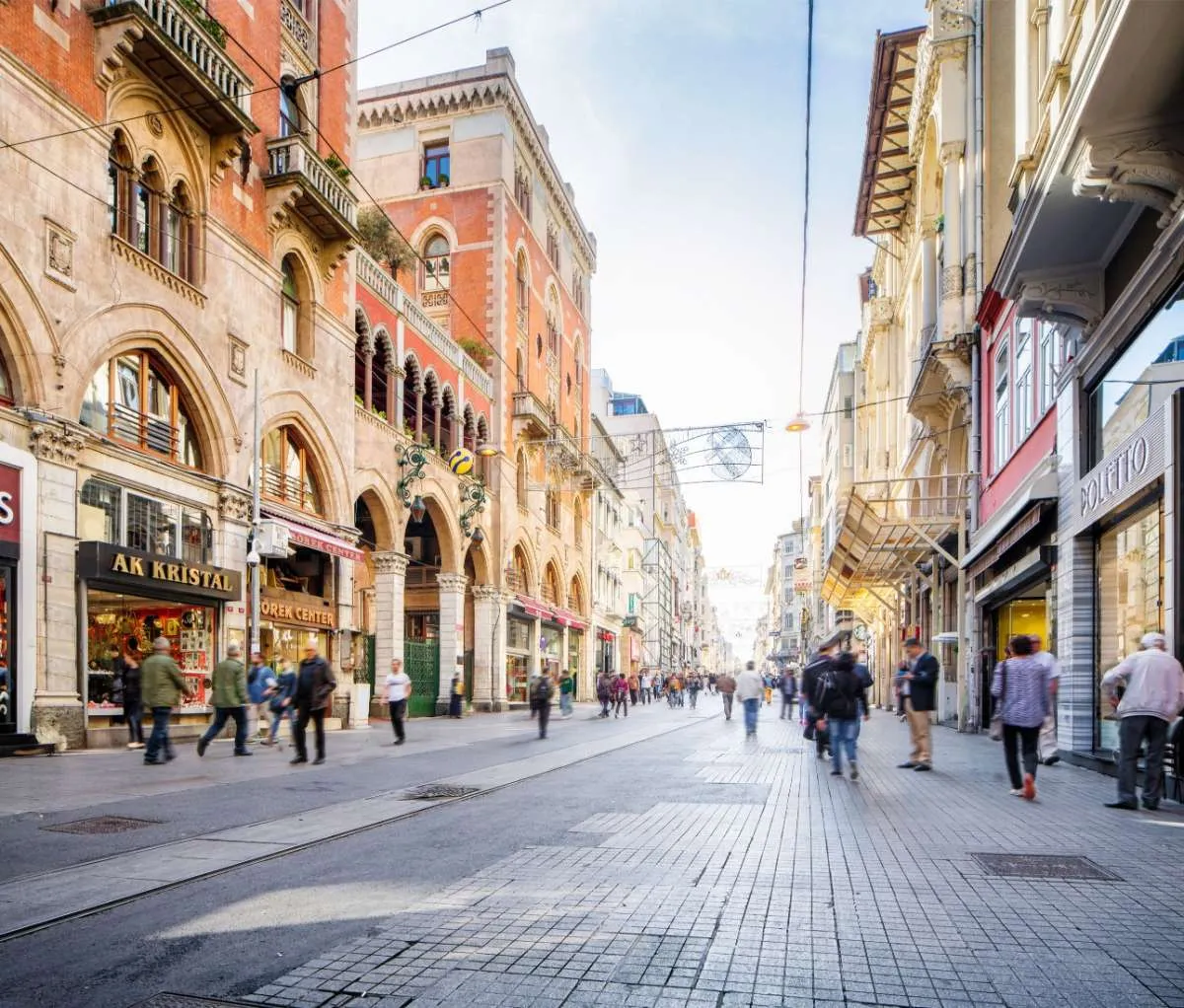
Beyoğlu is the district on the European side that you reach by crossing the Golden Horn from Sultanahmet and the old city. It has been home to many different peoples and cultures over the centuries, and that shows in what fills it today: historic hotels, churches and synagogues, three major art museums, boutique shopping, Turkish coffee shops, and the busiest nightlife streets in Istanbul.
This guide covers how the district fits together, 18 things to do in Beyoğlu and Taksim, and where to eat while you work through them.
How Beyoğlu is laid out
Think of the district as one long walk with different moods along it.
Taksim sits at the top: the square, the Republic statue, and the spot where locals meet their friends before heading out. İstiklal Street runs from the square down to Tünel, pedestrian the whole way, with the nostalgic tram, the historic passages, and the fish market along it. Galata is the lower end: the tower, the old bank buildings, the Kamondo Stairs, and SALT Galata, with Karaköy and the Istanbul Modern down by the water. Cihangir and Çukurcuma sit just off İstiklal: quieter streets, antique shops, and the Museum of Innocence.
Where to eat in Beyoğlu
This page covers the area. For the restaurants themselves, two of our guides do the heavy lifting: the ranked list of the best restaurants in Taksim and Beyoğlu covers the sit-down picks and what to order at each, and the Karaköy restaurant guide covers the waterfront quarter downhill from Galata Tower. For other districts, start with our Istanbul neighborhood food guides.
If you would rather eat with a local guide, our Taksim Evening Food Tour walks the same backstreets covered in this guide. It is number 13 on the list below.
All 18 stops on one map
Beyoğlu rewards wandering, but a map helps you wander on purpose. Open it to see what clusters where.
- Istiklal street Beyoğlu
- Cihangir and Çukurcuma Çukurcuma
- Galata Tower Galata
- Rahmi M. Koç Museum
- Pera Museum Tepebaşı
- Taksim square and Republic statue Taksim
- Çiçek Pasajı Beyoğlu
- Galata Mevlevihanesi Galata
- Saint Antuan Church Beyoğlu
- Istanbul Museum of Modern Art Karaköy
- Ayia Triada Kilisesi
- Museum of Innocence Çukurcuma
- Taksim Evening Food Tour (meeting point) Taksim
- Miniaturk Sütlüce
- Kamondo Merdivenleri Galata
- Pera Palace Hotel
- SALT Galata Galata
- Nevizade street Beyoğlu's most famous
1. Istiklal street
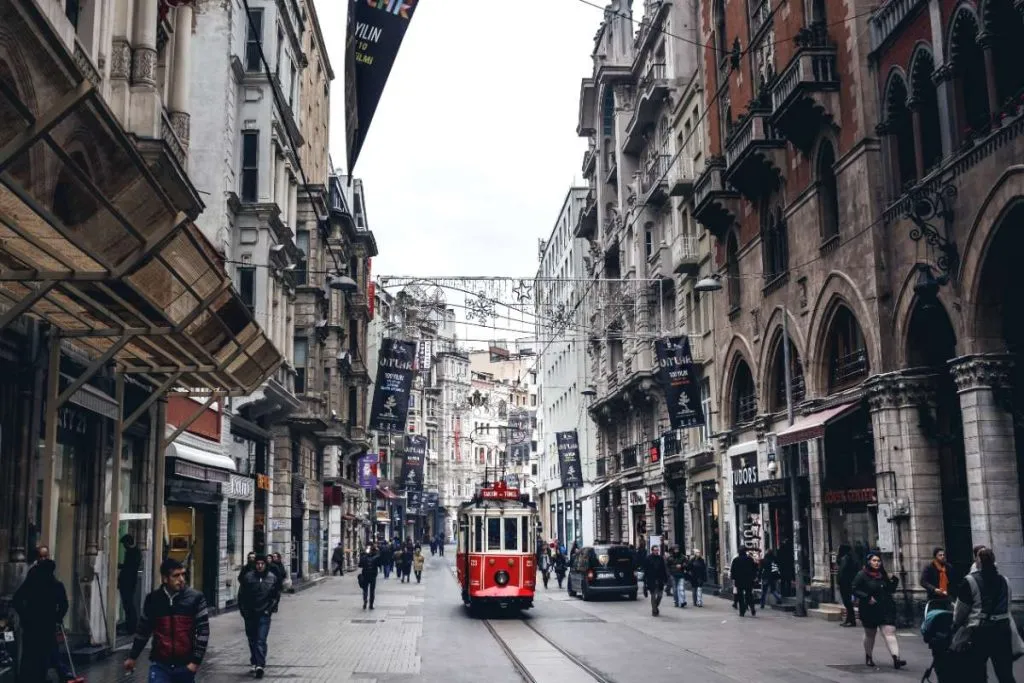
Until the 19th century, these cobbled streets were referred to as the Grand Rue de Pera. The Turkish government renamed the street “Independence Street,” now translated as Istiklal Avenue or Istiklal Street.
This pedestrian avenue used to be the gathering place of intellectuals of both Ottoman and European origin, and it still hosts the Istanbul Film Festival, Istanbul Pride, and a variety of other events and marches. Its historic buildings, which date to the Ottoman Empire, now hold restaurants, cafes, shops, art galleries, and bookstores.
If you’re interested in historical buildings, check out the churches, cathedrals, consulates, and synagogues along the avenue. Or visit the famous fish market. Galatasaray Square sits at the center, with the gates of the famous high school.
Istiklal Avenue is also known among visitors for the historic tram that still operates.
2. Cihangir and Çukurcuma neighborhoods
The Guardian once named these neighborhoods among the five best places to live, perhaps because they carry a vibe close to Montmartre in Paris. The draw is the Bohemian streets, and you’ll find writers, actors, and artists here.
One of the main attractions is the Museum of Innocence. Kedi, the widely seen documentary about street cats, was mainly filmed in Cihangir.
In Çukurcuma, you’ll find a collection of antique shops as well as 19th-century German architecture. The history of these streets goes back to Mimar Sinan, the famous architect of the Ottoman Empire.
3. Galata Tower
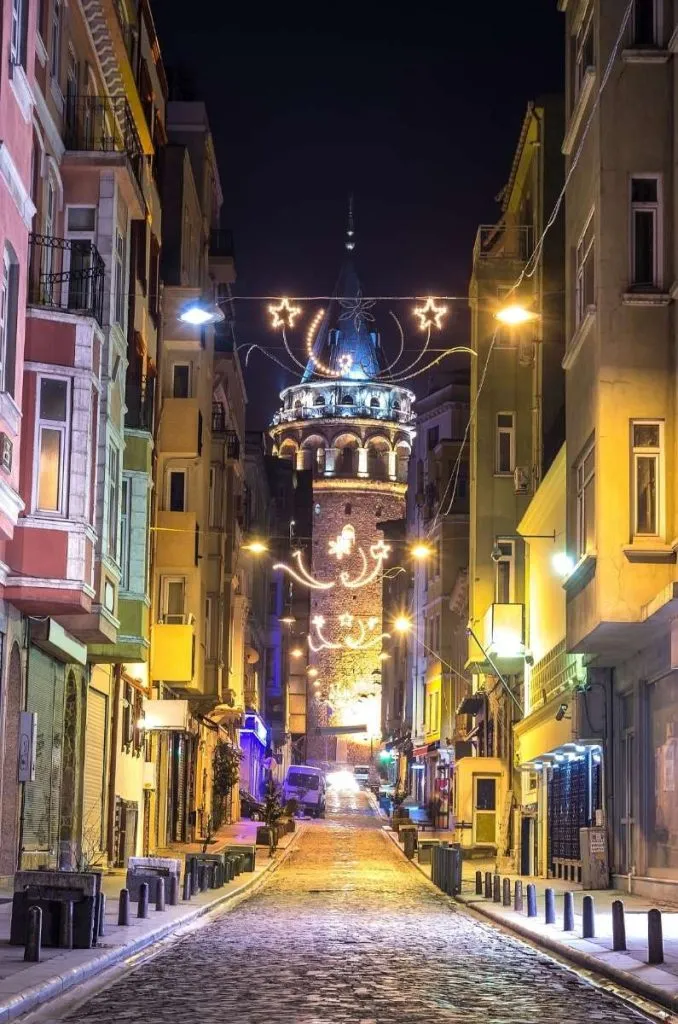
Within walking distance of the largest synagogue in Turkey, the Neve Shalom Synagogue, stands the famous tower that was once the tallest building in Constantinople.
Allegedly, Galata Tower is the spot where Hezârfen Ahmed Çelebi strapped on his artificial wings and flew. We wouldn’t recommend following his example. The upper floors hold a restaurant if you’d rather sit down with the view.
From the top, you can pick out the Blue Mosque, the Hagia Sophia, the Basilica Cistern, the Galata Bridge on the Golden Horn, and Dolmabahçe Palace, with a panoramic sweep from the European side to the Asian side.
4. Rahmi M. Koç Museum
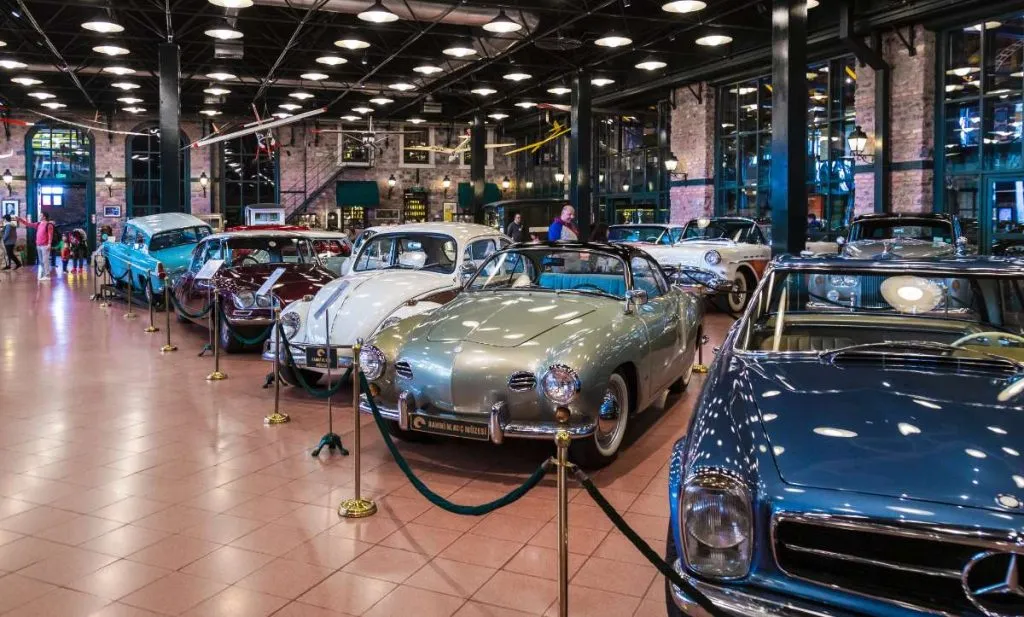
The man who paid the highest taxes in Turkey in 2013, and one of the country’s most successful businessmen, decided to open his own museum in Istanbul after a visit to the Henry Ford Museum.
In 1991, he bought a derelict site and named the museum after himself. It focuses on industry, transport, and communication, and most of the collection comes from Rahmi M. Koç’s personal holdings. The historic site was once used to host the anchors during the reign of Sultan Ahmed III (1703 to 1730).
5. Pera Museum
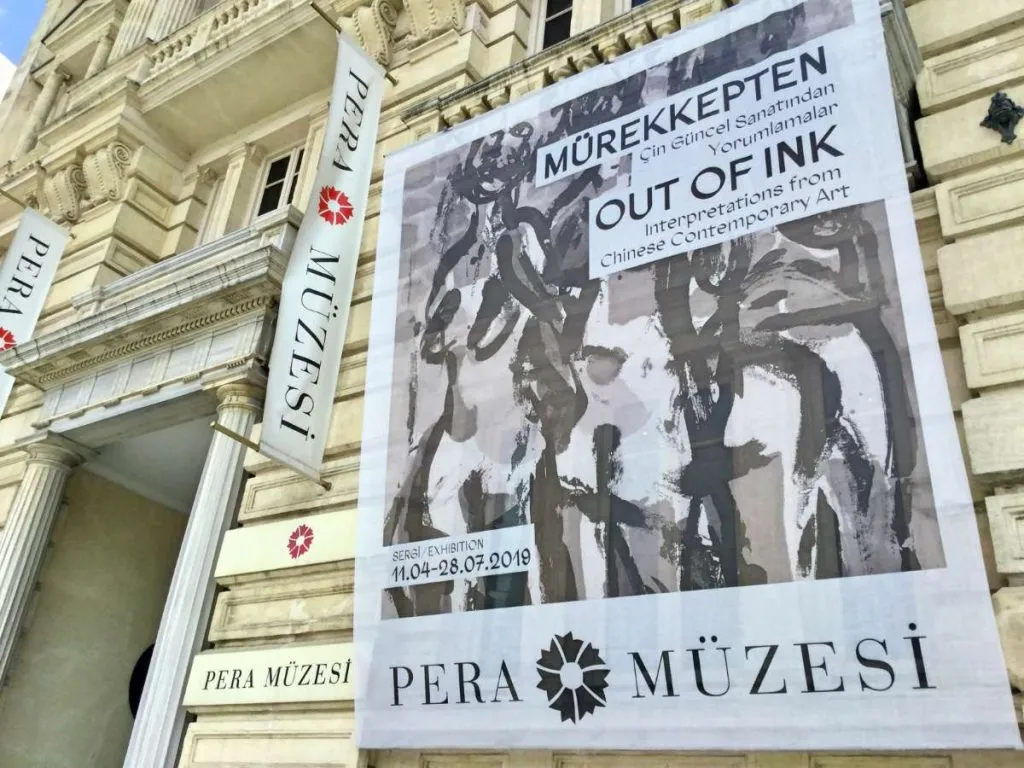
If you have an interest in the arts, visit. Founded in 2005 by the Kıraç Foundation, the gallery is still young but already has a strong identity. It focuses on Orientalism in 19th-century art, alongside exhibitions such as Anatolian weights and measures, Kütahya tiles and ceramics, and the works of Osman Hamdi Bey.
It has collaborated with many other galleries to show internationally known artists as well as artists from Turkey, with national identity as the central theme.
The building sits on one of the side streets off Istiklal Avenue, near Taksim Square.
6. Taksim square and Republic statue
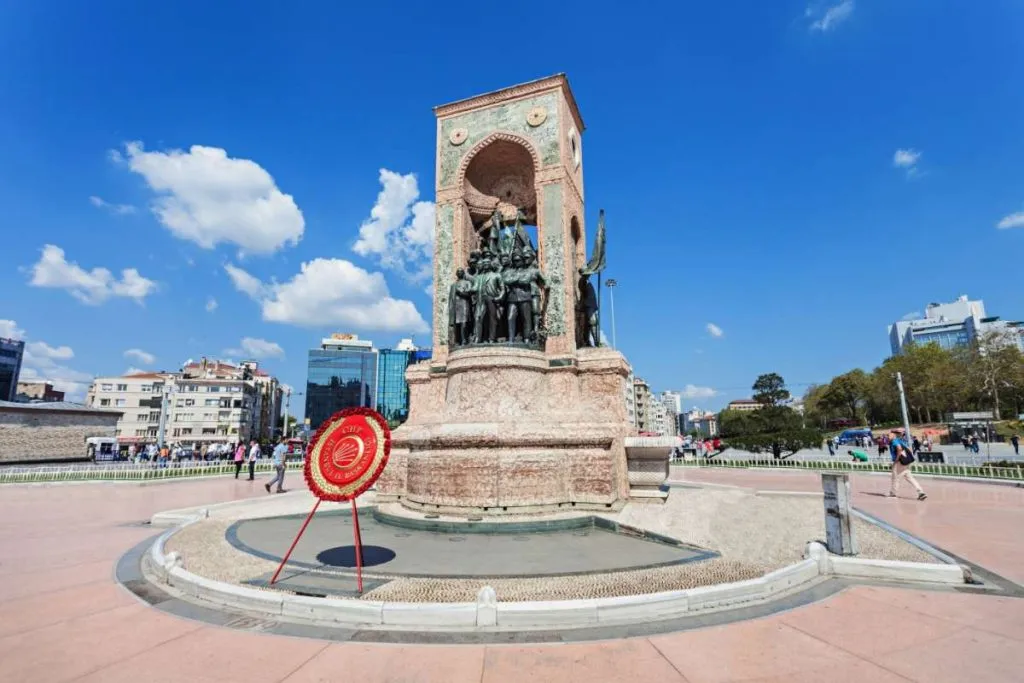
Named after a reservoir, the history of this spot goes back to the era of Sultan Mahmud the Hunchback in the 1730s. The long pedestrian avenue, Istiklal Street, ends here (or starts?). The square is known for its demonstrations, parades, and events, and for its nightlife. Crowds gather here at night to welcome the new year. The nostalgic trams start here and terminate near Tünel, the second oldest subway system after London’s.
The Republic statue was built by the Italian sculptor Pietro Canonica with funds from the public. It depicts the founding fathers of Turkey.
Taksim Square and the Republic statue serve as the meeting spot where locals find their friends before heading to the shops and restaurants of the district.
7. Çiçek Pasajı
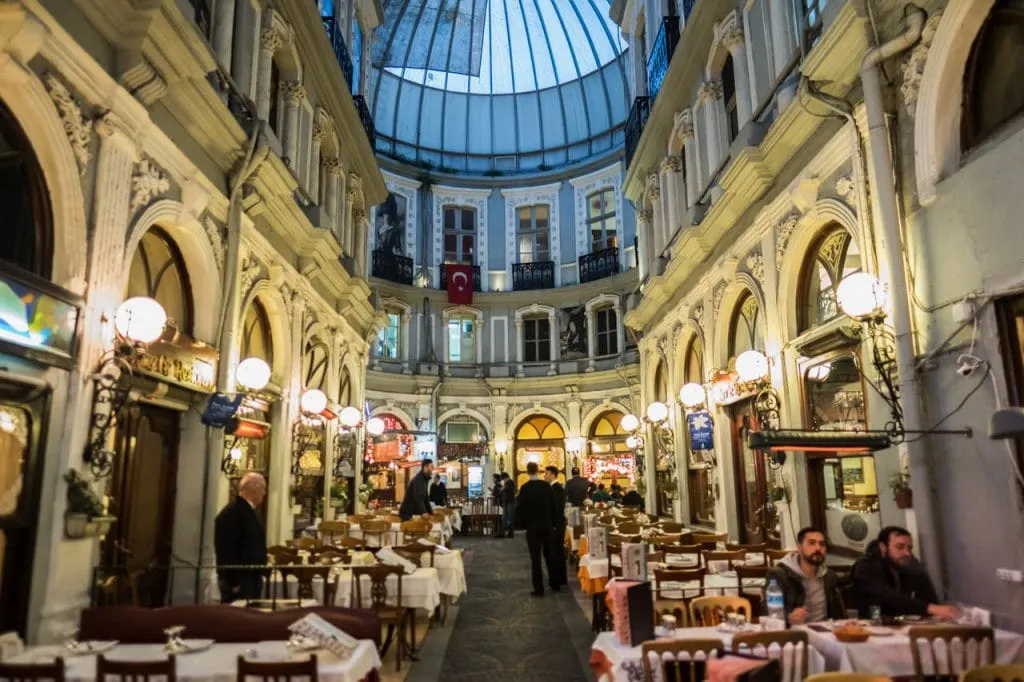
Translated as “flower passage,” this building stands on the old site of the Naum Theater, which hosted Verdi’s Il Trovatore before Paris had the chance and was a favorite of the Ottoman sultans. After a fire, the site was rebuilt into its current form.
In its early days, it was called Hristaki Passage. After the Russian revolution of 1917, impoverished Russian noblewomen sold flowers here. Hence the name.
These days, the arcade holds shops, cafes, and bars, and the building itself is a favorite of famous chefs, writers, and architects.
8. Galata Mevlevihanesi
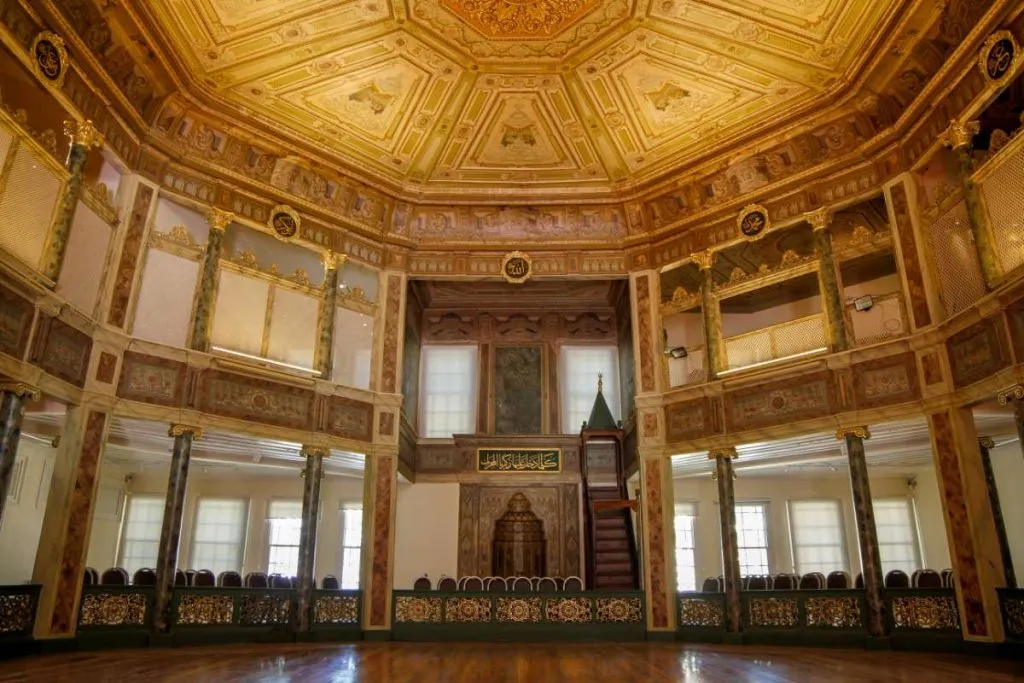
Galata Mevlevi Lodge is a historic religious building where you can watch the whirling dervishes and see Sufi instruments.
The mystical order is named after the poet Mevlana, known in English as Rumi, and was founded in the 13th century. The order was briefly banned in the early Republic days because of its religious connection, but this lodge remained.
9. Saint Antuan Church
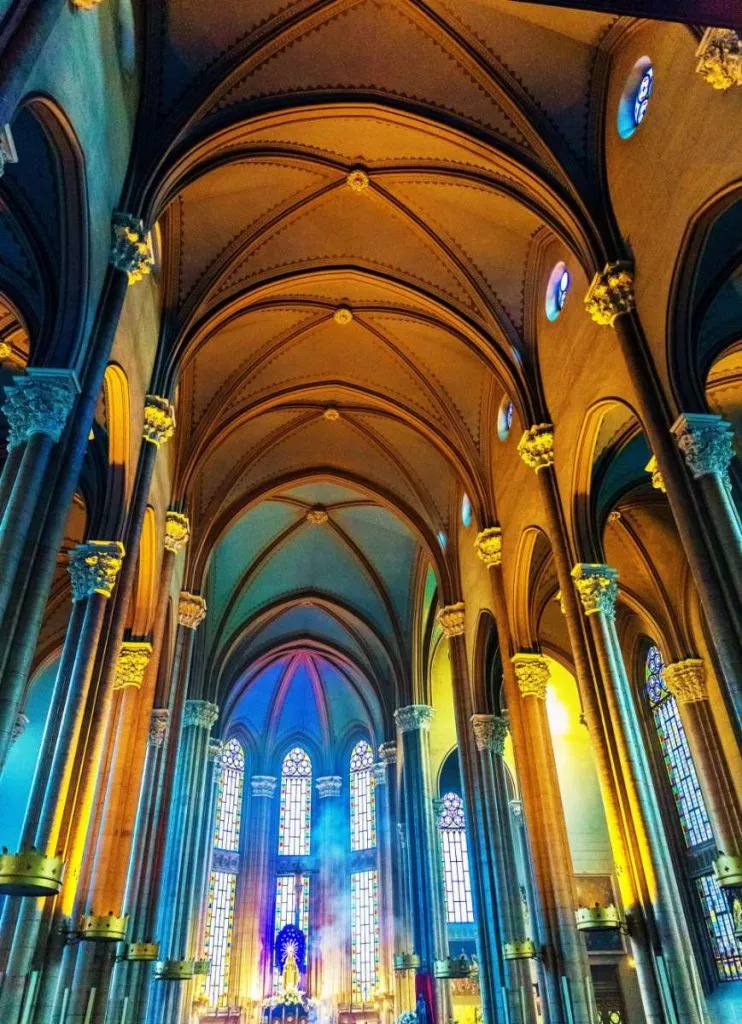
The St. Anthony of Padua Church is the largest Catholic cathedral in Turkey. It sits right on Istiklal Street and is hard to miss given its architecture. Outside of prayer times, you can visit and take photographs, or attend mass in Turkish, Polish, English, or Italian.
Built for the Italian community in Istanbul, the combination of Venetian neo-Gothic and Tuscan-Lombard styles still holds up today. Pope John XXIII preached in this church for 10 years before becoming Pope. Fun fact: a Turkish conman once attempted to sell the building.
10. Istanbul Museum of Modern Art
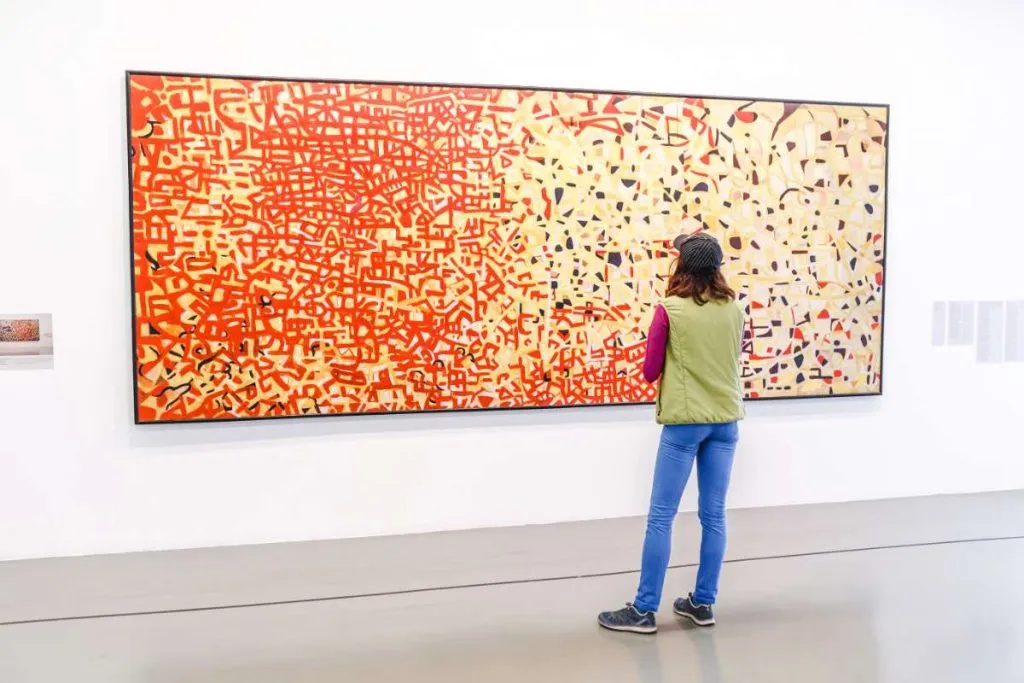
Another one for fans of the arts. Istanbul Modern focuses on artists from Turkey and stands on the site of a former maritime warehouse. The lower floor holds a cinema, temporary exhibitions, and a library, while the upper floors hold the permanent collections, education spaces, a gift shop, and a restaurant. The collections run from newer artists back to Abdulmejid II, the last Caliph of the Ottoman Empire.
11. Ayia Triada Kilisesi (Hagia Triada Church)
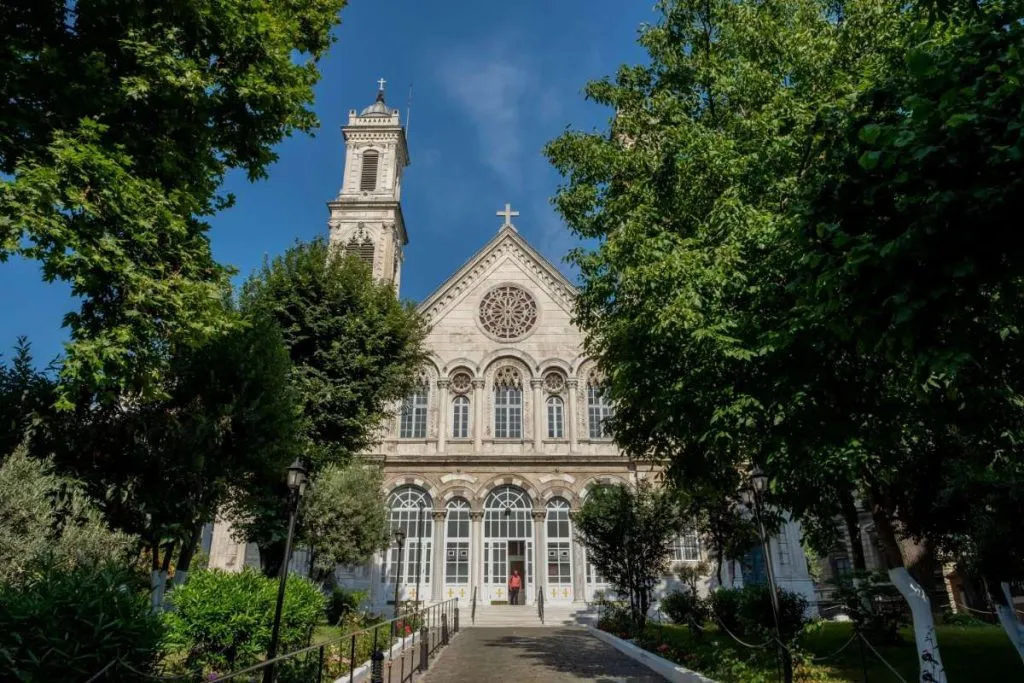
The Hagia Triada (Holy Trinity) Greek Orthodox Church dates back to 1880. It’s still in use today and is considered the most prominent Greek Orthodox shrine in Istanbul. It was also the first domed church built after Constantinople became Istanbul in 1453.
Inside, there is a selection of paintings by Sakellarios Megaklis, and the marblework was designed by Alexandros Krikelis. Stand at the altar and take in the neo-baroque interior, the neo-Gothic facade, and the work still being done by the parishioners of this church.
12. Museum of Innocence
The Museum of Innocence shares its name with the book by Orhan Pamuk, the first Turkish Nobel laureate. Although built around a fictional story, it won the 2014 European Museum of the Year Award. The collection documents life in upper-class Istanbul from the 1970s to the 2000s, and the museum sits in the same neighborhoods known for their antique shops. The book came out in 2008, the museum opened in 2012, and you don’t need to have read the novel to follow it. A curious mind and an interest in how Istanbul lived will do.
13. Taksim Evening Food Tour
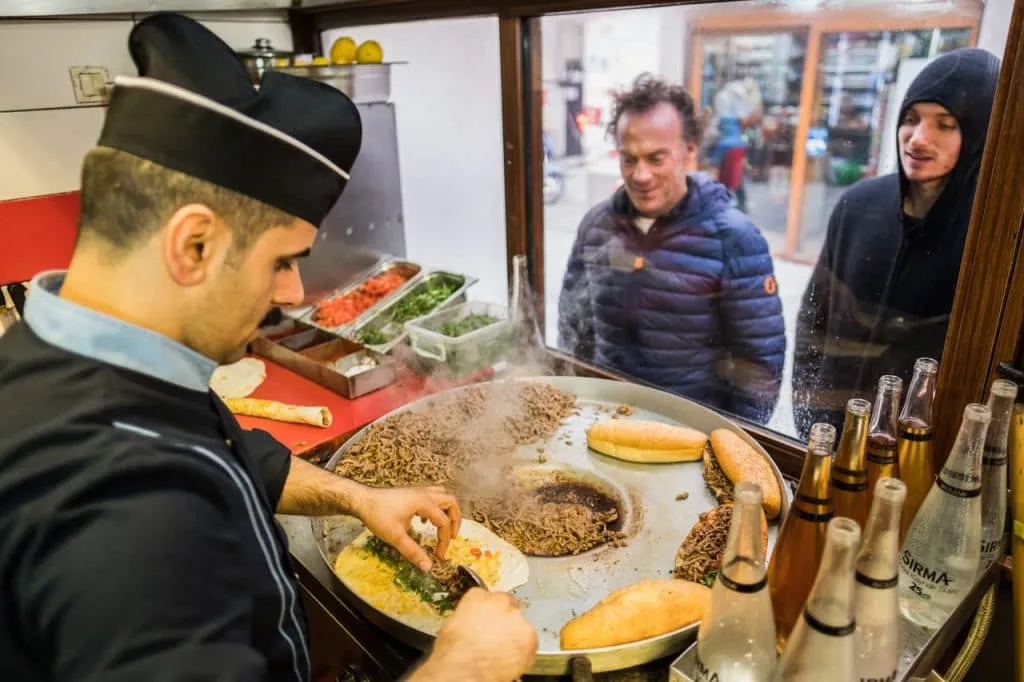
The backstreets of Taksim and Beyoğlu open up fastest with a local leading the way. Our Taksim Evening Food Tour runs Tuesday through Saturday at 18:00 (US$89), starting at Taksim Square and working through 7 local food shops before ending near Tünel at the end of Istiklal Street.
The tour is all-inclusive and covers Turkish street food, specialties from Southeastern Anatolia, and traditional Turkish desserts, with groups capped at 10 guests. If you want to be in the middle of the local evening buzz, this is the way to do it. You can book online here.
14. Miniaturk
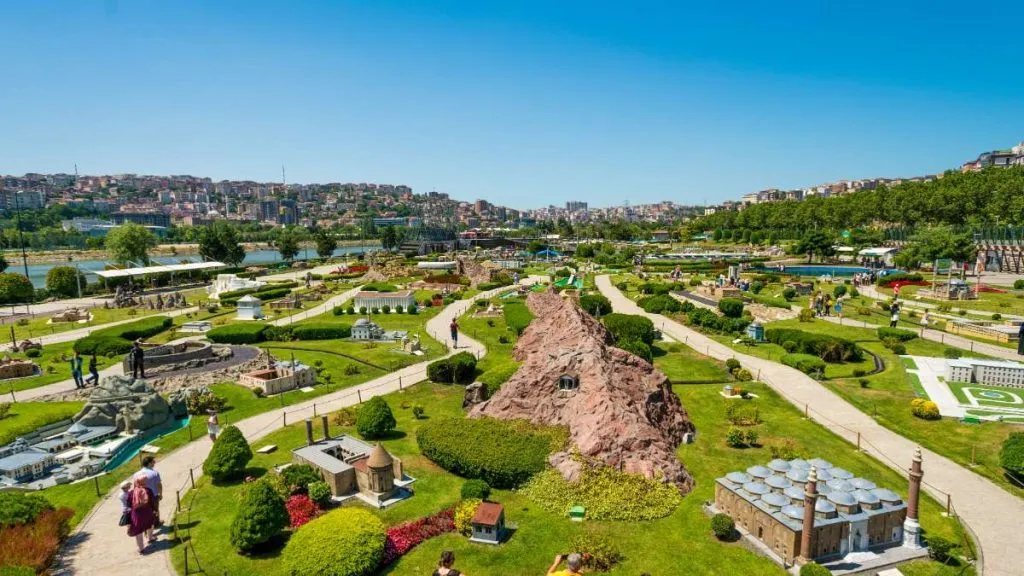
If you’re short on time and want the cultural hotspots in one sweep, head to MiniaTurk. The name translates literally as “Mini Turk,” because the park contains miniature models of the most popular historic sites of Turkey.
Built at a 1:25 scale, it includes about 135 models in a 15,000 m² space, making it one of the largest miniature parks. The models cover Istanbul, Anatolia, and sites outside Turkey, such as the Mostar Bridge, plus structures from history, with extra space reserved for expansion. Think of it as one big playground with children’s gardens, restaurants, exhibition halls, trains, ferries, and even a fairytale tree. Though technically in the Beyoğlu district and still in the city center, it sits a long way from Istiklal Avenue and Taksim Square.
15. Kamondo Merdivenleri
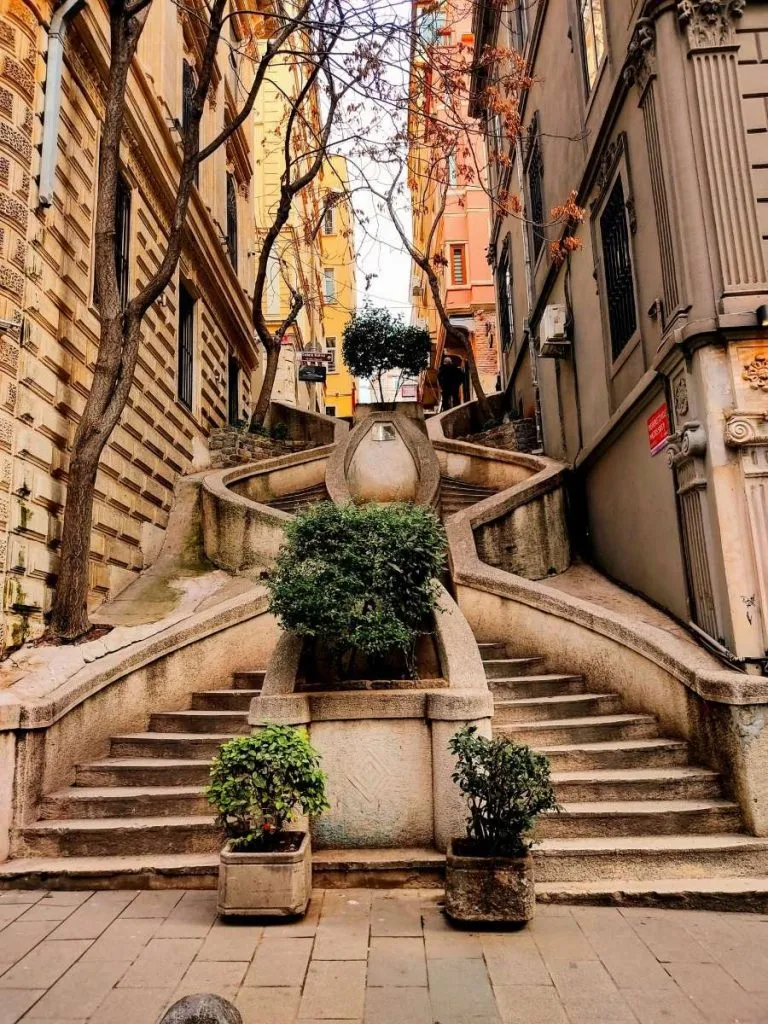
A stone’s throw from Istanbul Modern is a staircase that James Bond superfans may recognize. This neo-baroque, Art Nouveau staircase was built by Abraham Salomon Kamondo in the 1850s because his grandchildren struggled to climb the hill to school.
The family’s origins go back to the Spanish Inquisition of 1492. Although the Ottoman Empire accepted the Jews expelled from Spain, the Kamondo family first moved to Venice, then relocated to Istanbul after Austria took over Venice in 1798. They established a bank, lived in the Galata district, and became the most important bankers of the Ottoman Empire, which is why the staircase connects Voyvoda and Banks Street. The family perished in the Holocaust in World War II. The staircase remains one of many reminders of their contributions.
16. Pera Palace Hotel
Allegedly, Agatha Christie wrote Murder on the Orient Express here, and protagonists of Ernest Hemingway and Graham Greene have apparently stayed here too. The building is an odd combination of museum and hotel.
Built in 1892 by its original Armenian Ottoman owners, the Esayan family, the Pera Palace hosted travelers arriving on the Orient Express, which makes it the oldest European hotel in Turkey. The building is under the protection of Turkish law. If you visit, stop by Atatürk Room 101 to see the personal items of Atatürk, the first president of modern Turkey.
17. SALT Galata
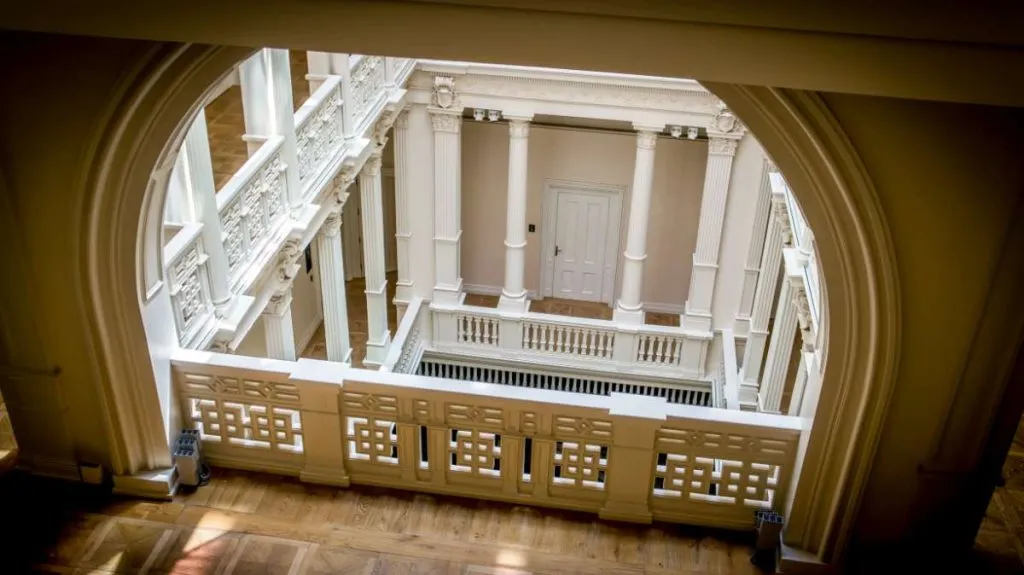
If you thought Turkey didn’t have enough art galleries, check out SALT. Vasıf Kortun, a writer and educator in the arts, joined forces with Garanti Bank in 2011 to create a combined library and gallery. The collections run from the late 19th century to the 1990s and document Turkey’s transition from the Ottoman Empire to the modern Republic. It’s one of six members of L’Internationale and a member of ALANA, and history buffs can settle in with the free wifi.
18. Nevizade street
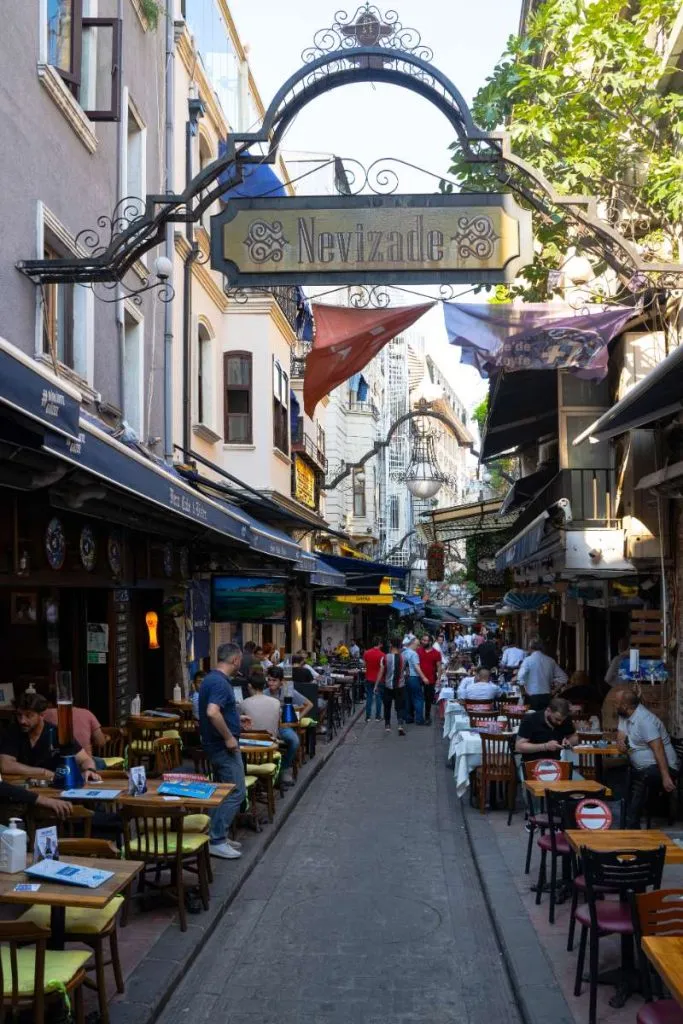
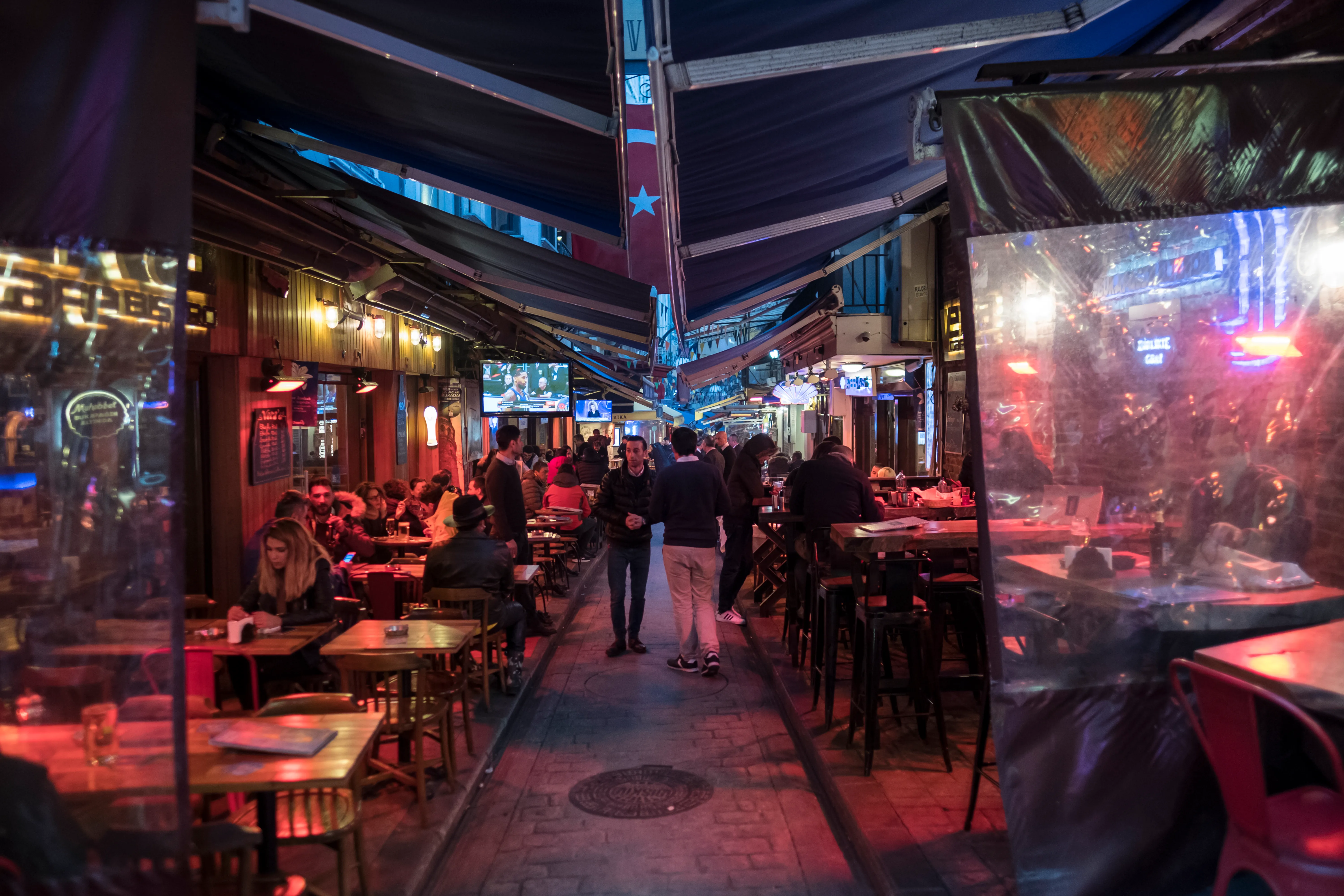
If it’s your first time in the city, the nightlife can feel intimidating. The Beyoğlu district carries a European vibe and is filled with historic pubs, bars, and clubs, so a late-night bar crawl is easy to put together, and Nevizade is its most famous street.
Final words
Beyoğlu rewards a slow day: start at Taksim Square, walk Istiklal Street with detours into the passages and the side streets of Cihangir and Çukurcuma, and end at Galata Tower or down by the water. When you get hungry, the Taksim and Beyoğlu restaurant list and the Karaköy guide have you covered, and our Istanbul food guide collects every neighborhood and dish guide we’ve written.
The Taksim Evening Food Tour covers this exact district with a local guide, in a group capped at 10 guests.