Turkish Foods: 44 Traditional Dishes Explained (With Photos)
A 44-dish Turkish food encyclopedia with photos and plain-language explanations of döner, lahmacun, mantı, meze, soups, pilafs, desserts, and drinks.
This 44-dish encyclopedia runs from breads and street snacks to slow-cooked dishes, pilafs, soups, and milk-based desserts. Use the quick-pick table for orientation, then open the individual entries for ingredients and serving context. For cultural history and meal structure, read Turkish cuisine and meal culture.
This encyclopedia links into street food, kebabs, mezes, and desserts for deeper definitions. For named restaurants and ranked place lists, use the best places for each dish. If you would rather turn the list into a day of eating, our Istanbul food tours move from market stalls to neighborhood kitchens with a local guide.
Quick-pick: 12 Turkish foods to try first
| Dish | Type | Best known for |
|---|---|---|
| Doner kebab | Street food | Sliced rotisserie meat served in bread or on a plate |
| Lahmacun | Street food | Thin dough topped with ground meat and vegetables |
| Pide | Baked | Boat-shaped dough with savory toppings |
| Kofte | Meat dish | Regional meatballs cooked by several methods |
| Iskender kebab | Plated meat | Doner over pita with tomato sauce and butter |
| Adana kebab | Grilled meat | Spicy ground-meat kebab from Adana |
| Manti | Dumplings | Tiny dumplings under garlicky yogurt |
| Menemen | Breakfast | Scrambled eggs with tomato and pepper |
| Baklava | Dessert | Filo, nuts, and sugar syrup, an Ottoman classic |
| Kunefe | Dessert | Fine kadayıf pastry and cheese, served hot |
| Maras dondurma | Dessert | Stretchy, sticky ice cream made with salep |
| Turkish coffee | Drink | Finely ground coffee brewed in a cezve |
1. Döner Kebab
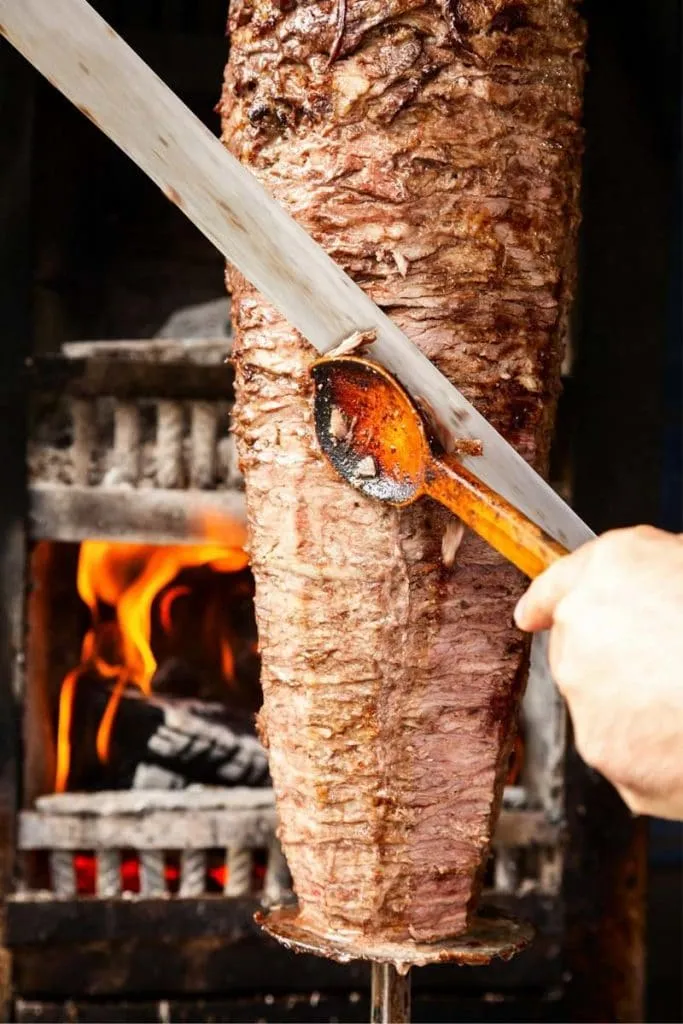
Döner is meat cooked on a vertical rotisserie and sliced from the browned surface. It may use lamb, beef, chicken, or a blend and can be served in bread, in lavash, or on a plate. Tomato, onion, lettuce, fries, and sauces are shop-specific rather than part of one fixed recipe.
Döner counters are common across Istanbul, but meat, bread, accompaniments, and serving style vary. It works as a quick sandwich or wrap, while specialist shops also serve it on a plate. For different cuts and styles, see our guide to the best doner kebab in Istanbul.
2. Baklava
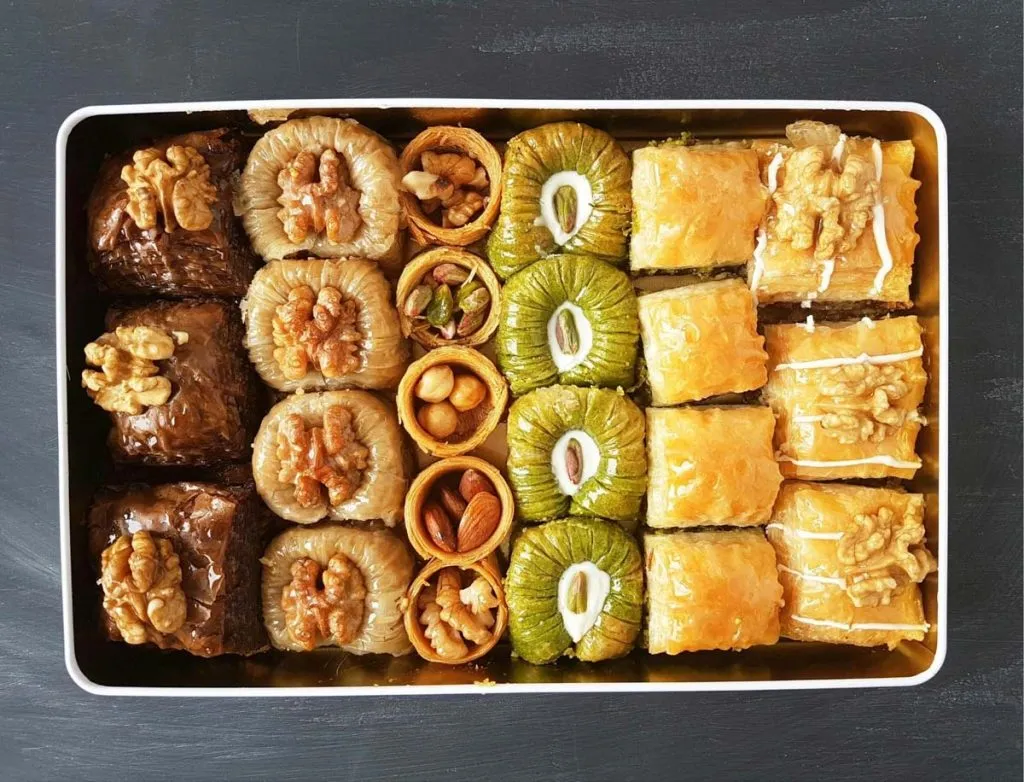
Baklava is a syrup-soaked pastry made from thin layers of dough and nuts. It developed into many named forms during the Ottoman period and remains closely associated with pastry traditions in Gaziantep and across Türkiye.
Varieties differ by shape, nut, and filling, with names such as lady’s lips, nightingale’s nest, and palace baklava. If you want to go deeper, see our breakdown of baklava types and where to find the best baklava in Istanbul.
3. Şiş Kebab
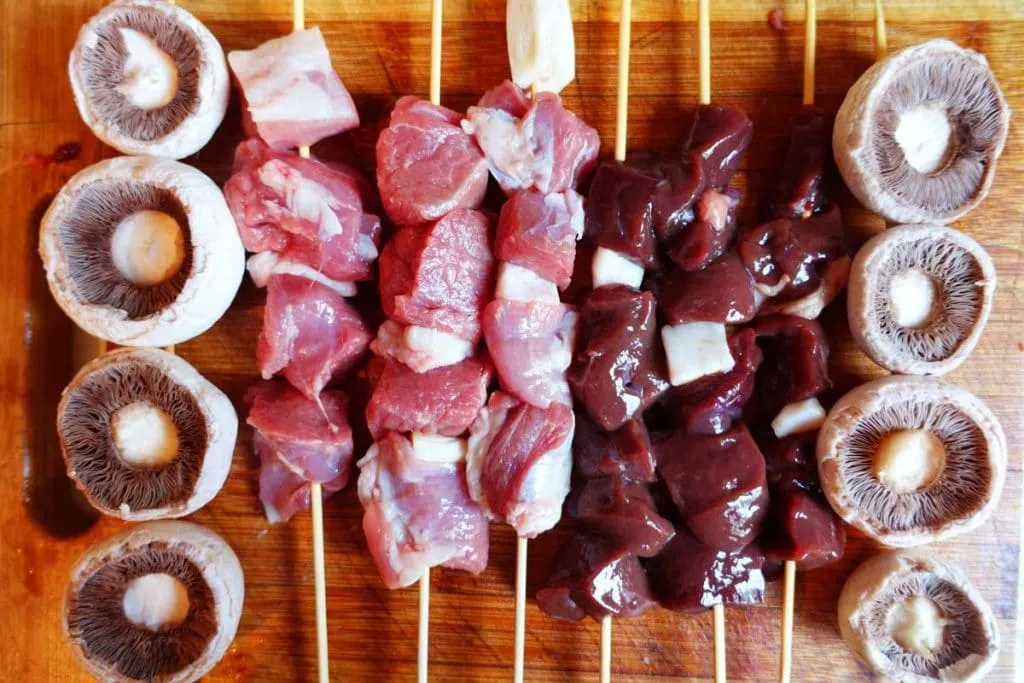
Şiş kebab uses pieces of lamb, chicken, beef, liver, or vegetables cooked on skewers, often over charcoal. Marinades and accompaniments vary by meat, region, and restaurant. Common names include tavuk şiş (chicken), kuzu şiş (lamb), ciğer şiş (liver), and çöp şiş (small pieces on short skewers).
4. Kumpir
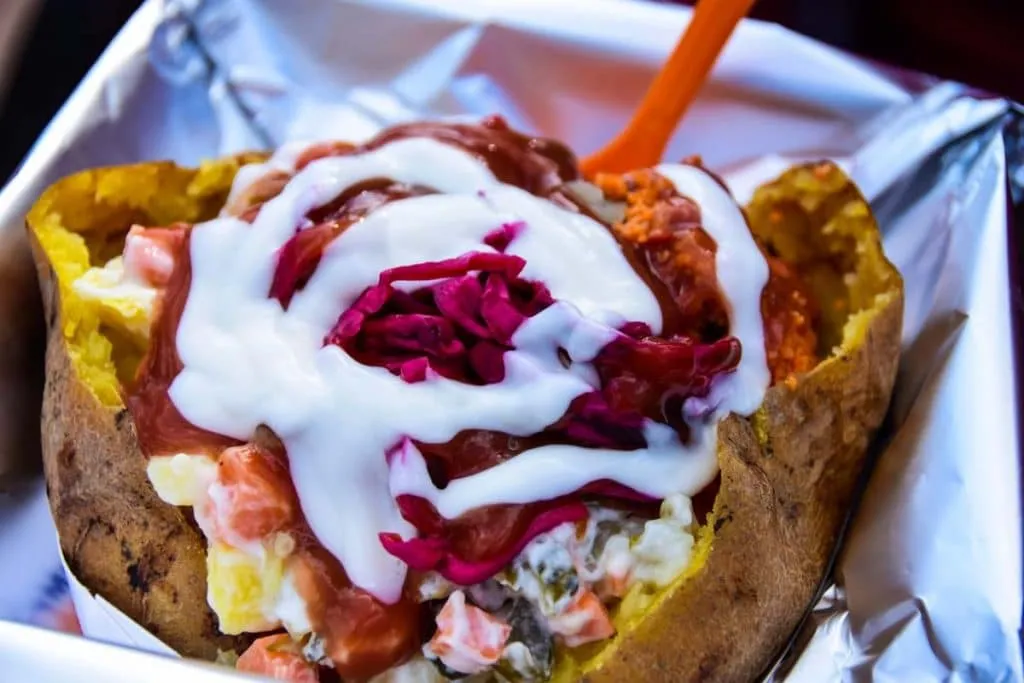
Kumpir is a popular Turkish dish that’s best described as a stuffed baked potato. It’s typically an oversized baked potato cut in half and filled with slices of various vegetables, pickles, mayonnaise, ketchup, grated cheese, olives, sausages, and other condiments.
Ortaköy is particularly associated with rows of kumpir counters, although the dish is sold elsewhere in Istanbul too.
5. Güllaç
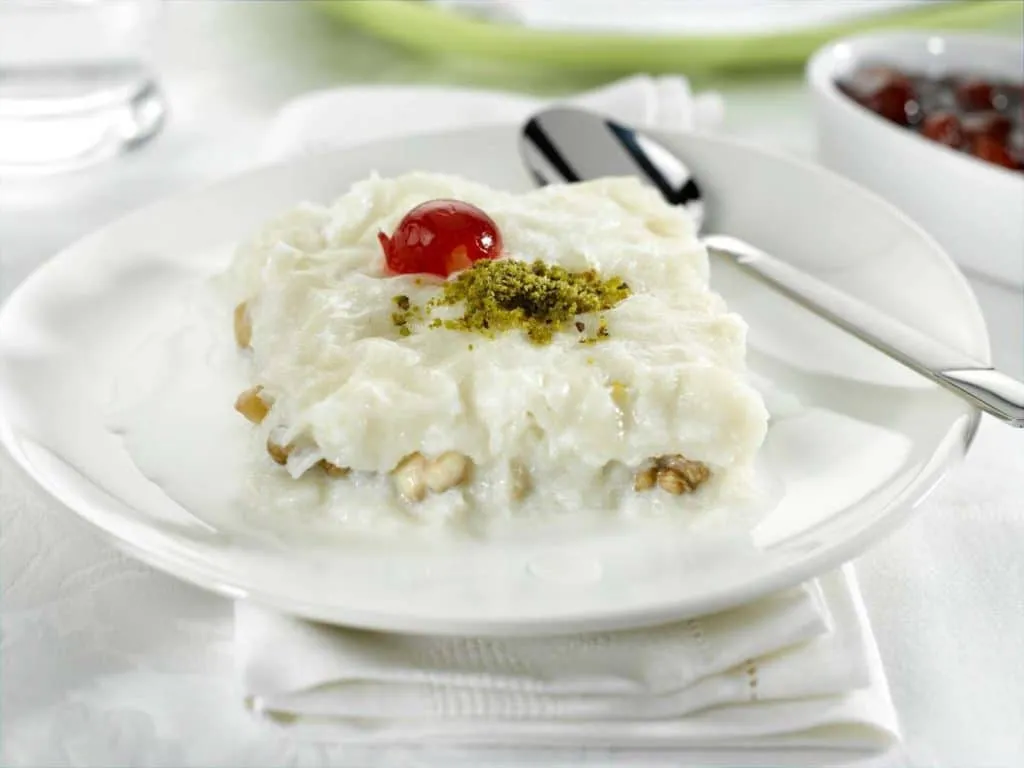
Güllaç is a milk-soaked layered dessert strongly associated with Ramadan. Pomegranate seeds, nuts, and rosewater may be added, depending on the recipe. Some dessert shops also offer it outside Ramadan, but availability is seasonal.
Güllaç sheets are made from a starch-based mixture that is cooked and dried. To assemble the dessert, the delicate sheets are softened with sweetened milk and layered with nuts; rosewater and garnishes vary by recipe.
6. Tulumba
Tulumba is a ridged, fried pastry soaked in sugar syrup. A fresh piece has a browned exterior and a syrupy center.
7. Tarhana Çorbası
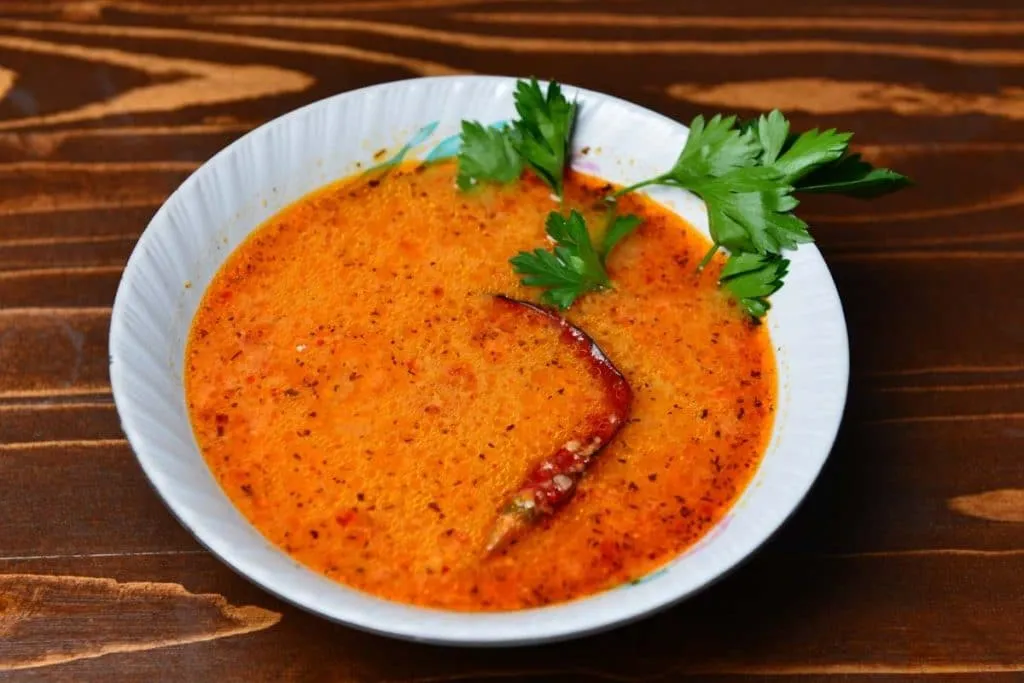
Tarhana soup begins with a fermented mixture that can contain grain or flour, yogurt, vegetables, herbs, and spices. Once properly dried, the mixture becomes a shelf-stable ingredient that is cooked with water or stock; recipes and safe storage periods vary.
Tarhana is a long-established preserved food whose ingredients and fermentation vary by region and household. It produces a tangy soup, but dietary suitability depends on the recipe and individual needs.
8. Lahmacun
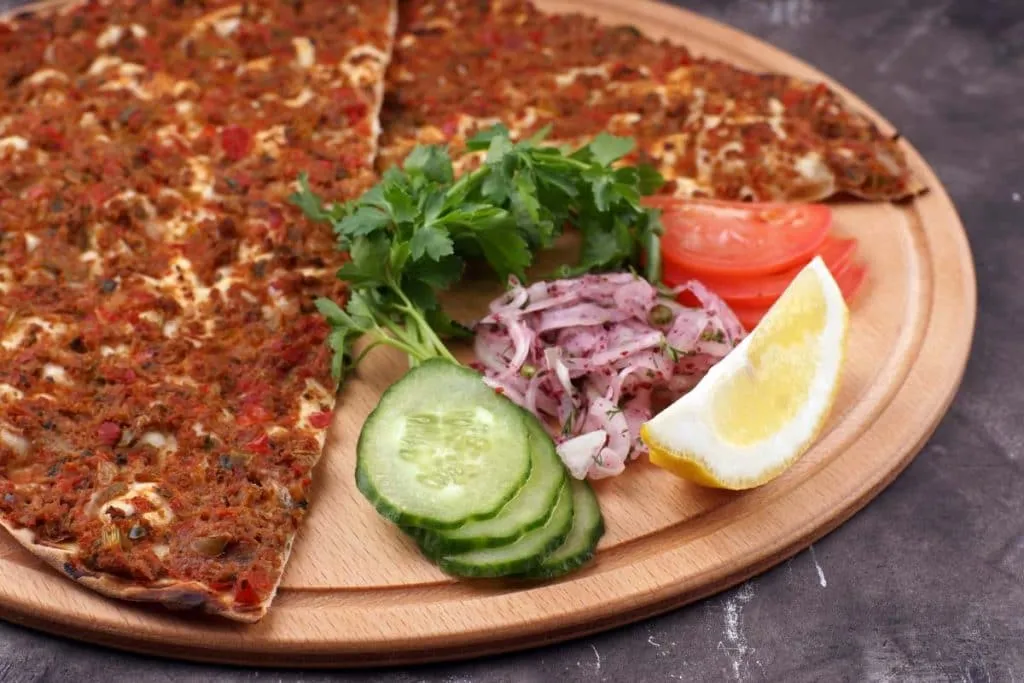
Lahmacun is a thin round of dough topped with a finely chopped mixture of meat, tomato, onion, pepper, and herbs, then baked in a hot oven. It is commonly served with parsley, onion, tomato, and lemon so the diner can roll it into a wrap.
9. Iskender Kebab
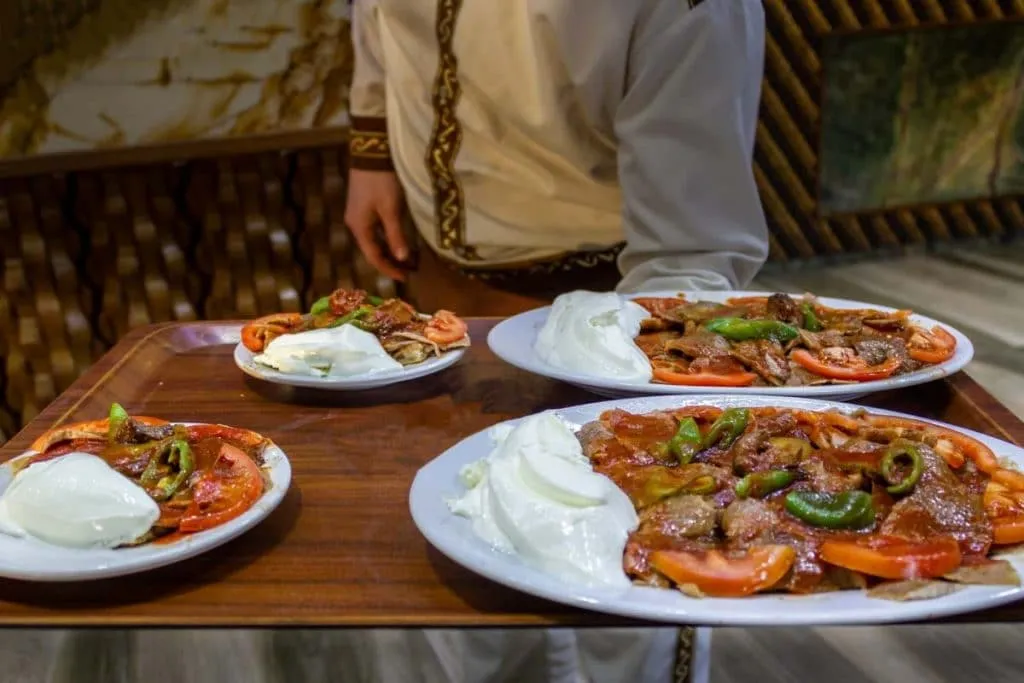
İskender kebab is normally served as a plated meal rather than a sandwich. Thin döner sits over pieces of bread with tomato sauce, yogurt, and hot butter; roasted tomato and pepper commonly appear alongside.
10. Zeytinyağlı Sarma (Stuffed Grape Leaves)
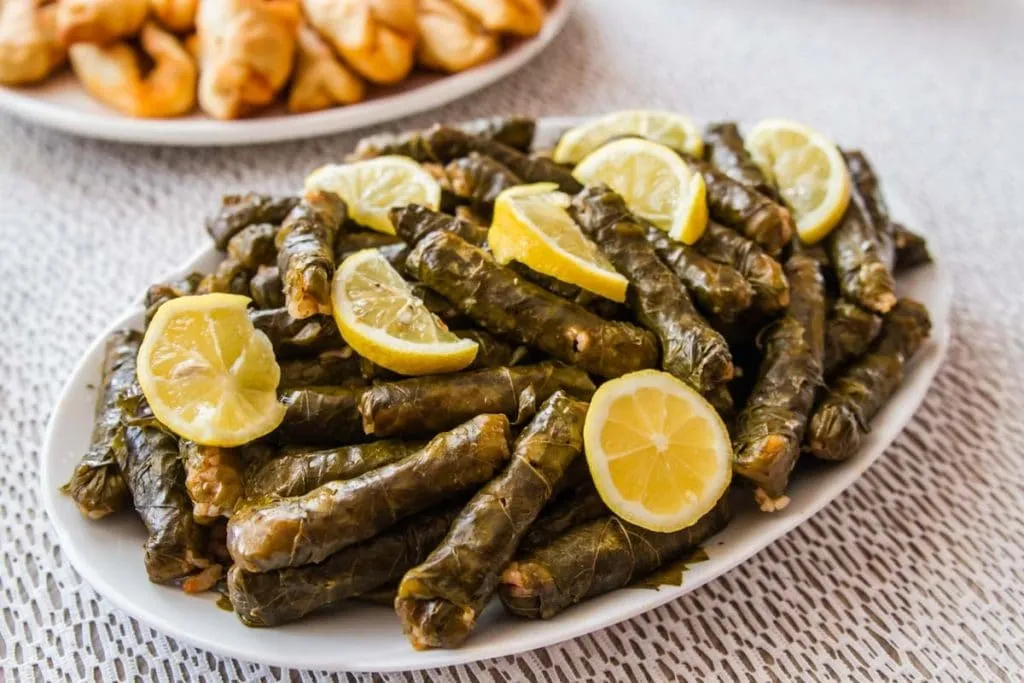
Zeytinyağlı sarma is a meat-free version of stuffed grape leaves, filled with seasoned rice and cooked with olive oil.
Fresh or brined grape, cabbage, or chard leaves are softened, filled, rolled, and cooked in a pot. Olive-oil versions typically use seasoned rice; meat-filled versions may use lamb, beef, or a blend. Yogurt may be served alongside some styles, but it is not universal.
Sarma can be served as a meze, side dish, or part of a larger meal. Meat-filled and olive-oil versions are different preparations, so ask which one is being served.
11. Köfte (Meatballs)
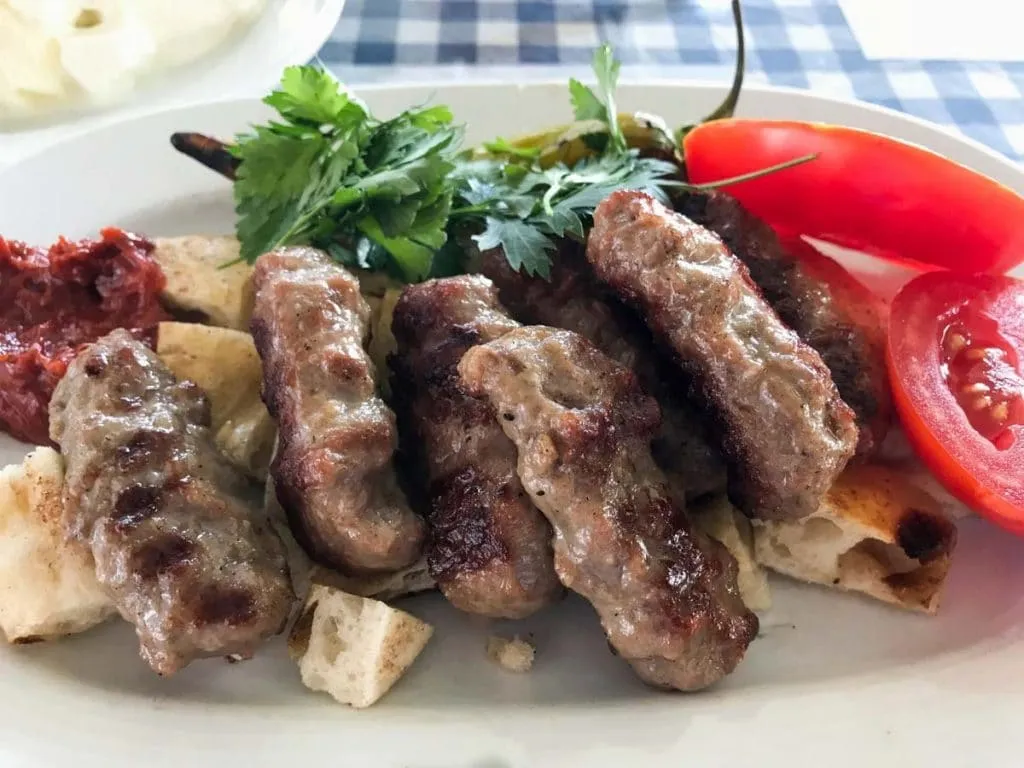
Köfte is a broad meatball category with regional recipes and different cooking methods. Depending on the style, the mixture may include breadcrumbs, garlic, onion, egg, beef, or lamb, then be grilled, fried, baked, or simmered.
Sultanahmet köftesi, İnegöl köfte, and İzmir köfte show how different the category can be. See our pick of the best köfte in Istanbul.
12. Künefe
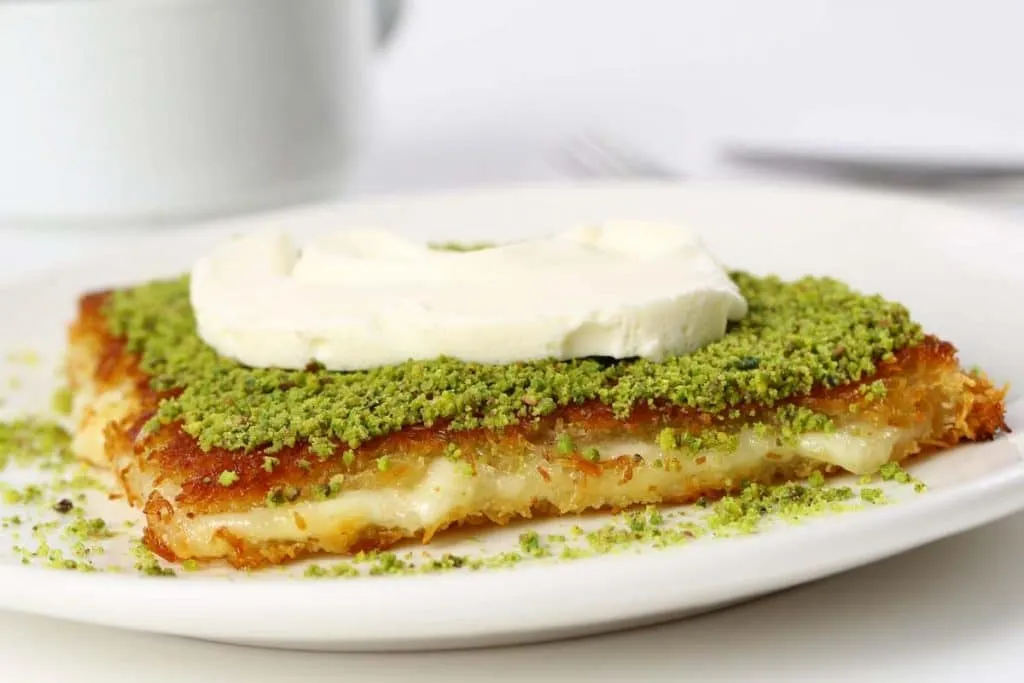
Künefe is strongly associated with Hatay and neighboring culinary traditions. It is a hot cheese-filled dessert made with fine strands of kadayıf pastry.
Künefe combines shredded kadayıf pastry, unsalted cheese, syrup, and often pistachio. It is cooked and served hot, while the pastry is crisp and the cheese still soft. For specialist shops, see the best künefe in Istanbul.
13. Mantı
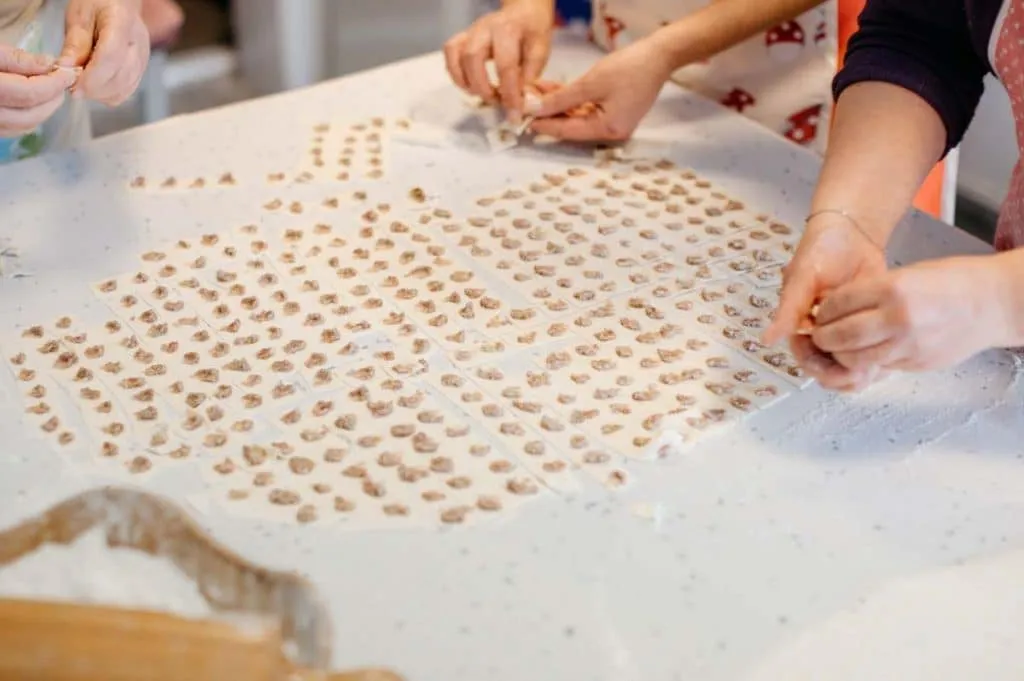
Mantı are small, filled dumplings commonly served with garlic yogurt, a butter or oil sauce, and dried herbs or pepper. Kayseri mantısı is famous for its tiny size, but size alone does not determine quality.
Mantı has regional forms across Türkiye. Kayseri mantısı from Central Anatolia is especially well known for its small size.
Mantı is a useful dish for comparing regional dumpling traditions, sauces, and sizes.
14. Menemen
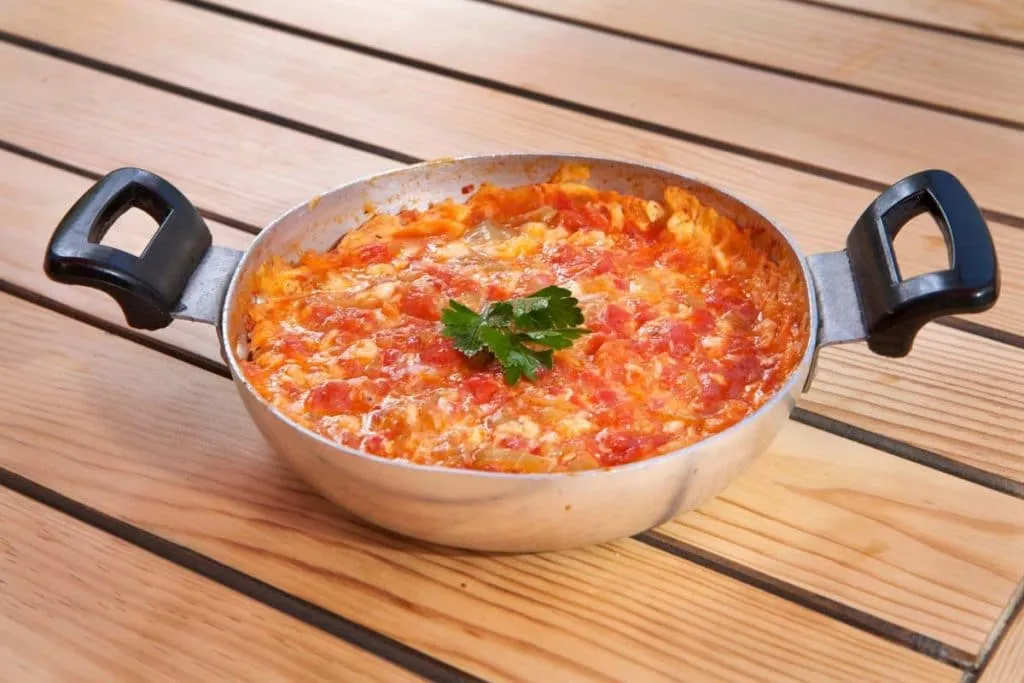
Menemen is one of Türkiye’s best-known egg dishes.
Menemen is a soft egg dish cooked with tomatoes and green peppers; onion is a well-known point of regional and personal debate. It appears at breakfast restaurants as well as in home kitchens.
15. Şakşuka
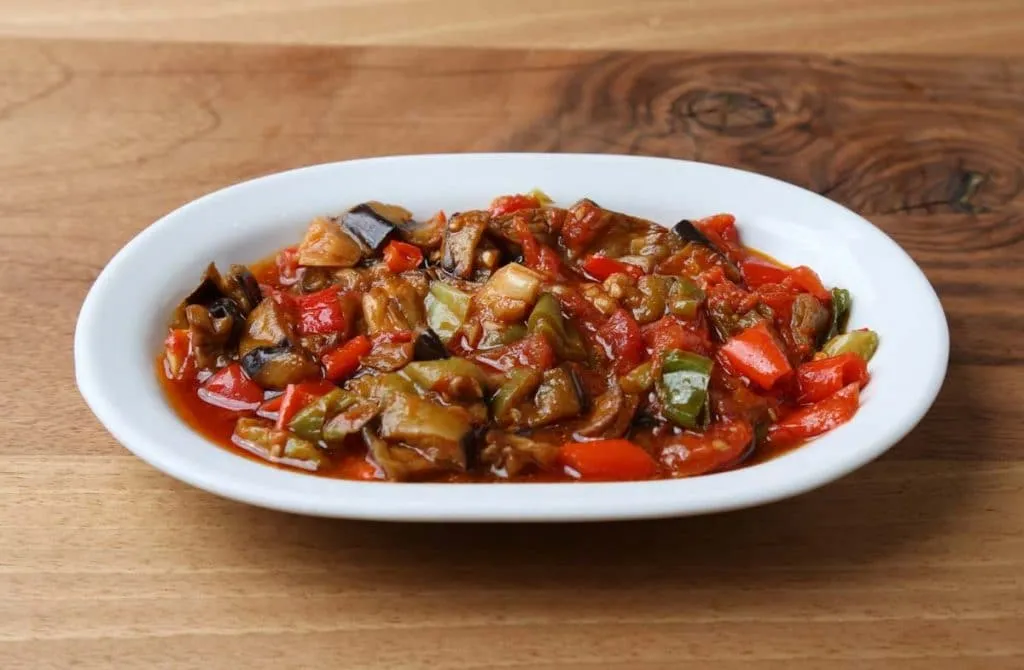
Turkish şakşuka combines fried vegetables, often eggplant and zucchini, with tomato sauce. Garlic, onion, pepper, and yogurt accompaniments vary by recipe.
Şakşuka is generally served cool as part of a meze selection or as a side dish. Its fried vegetables and tomato sauce pair well with bread and the sharper, yogurt-based dishes on a mixed table.
16. Kuru Fasulye
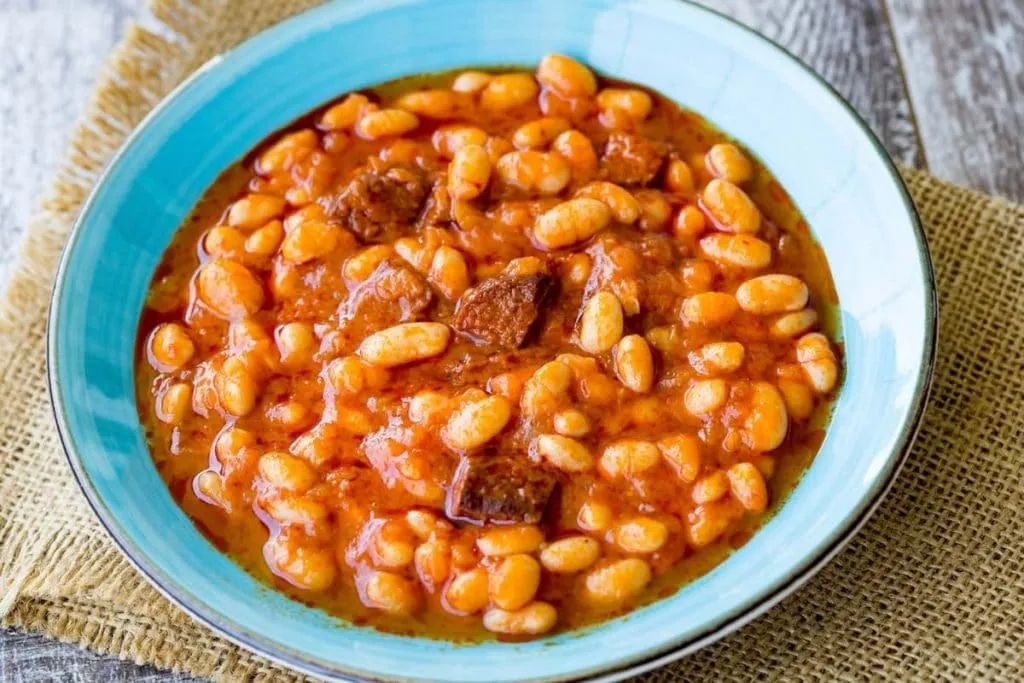
Kuru fasulye is a white-bean stew found at many lokantas and in home cooking.
Onions and tomato paste are sautéed in oil, then cooked with dried white beans into a loose stew. Some versions include beef, lamb, or sucuk, while others remain meat-free.
Lokantas commonly serve kuru fasulye with rice pilaf and pickles.
17. Tantuni
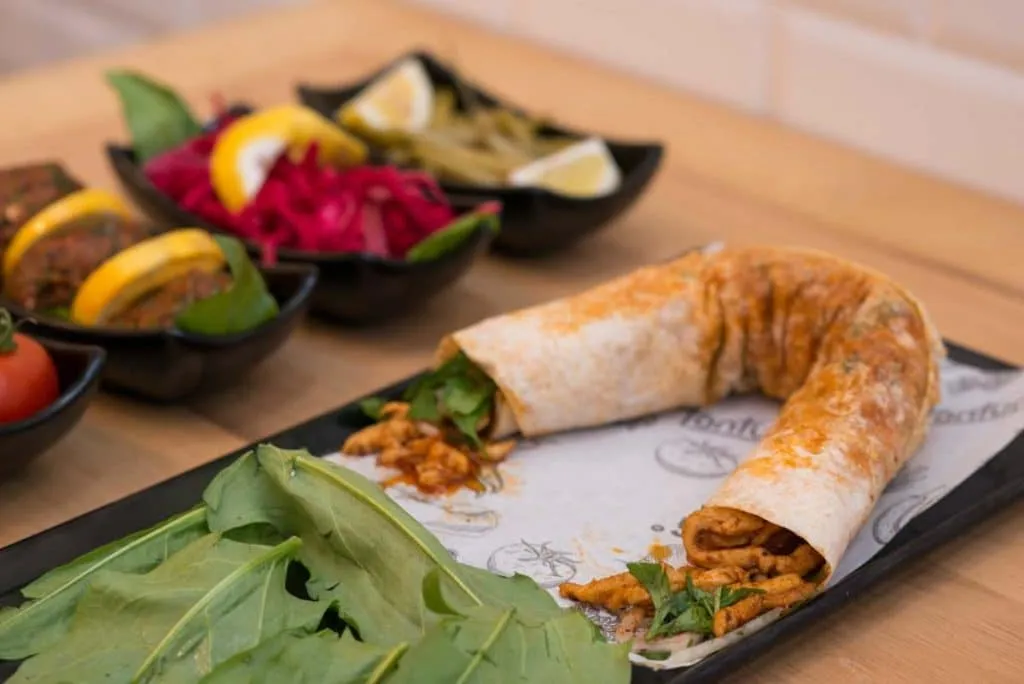
The registered Mersin tantunisi specification uses diced beef rib and cottonseed oil. Other shops may sell variants. The meat cooks on a shallow tantuni pan and is served in lavash or bread with optional tomato, onion, parsley, sumac, and lemon.
Tantuni is associated with Mersin and is also sold by specialist shops in Istanbul and other large cities.
18. Hünkar Beğendi
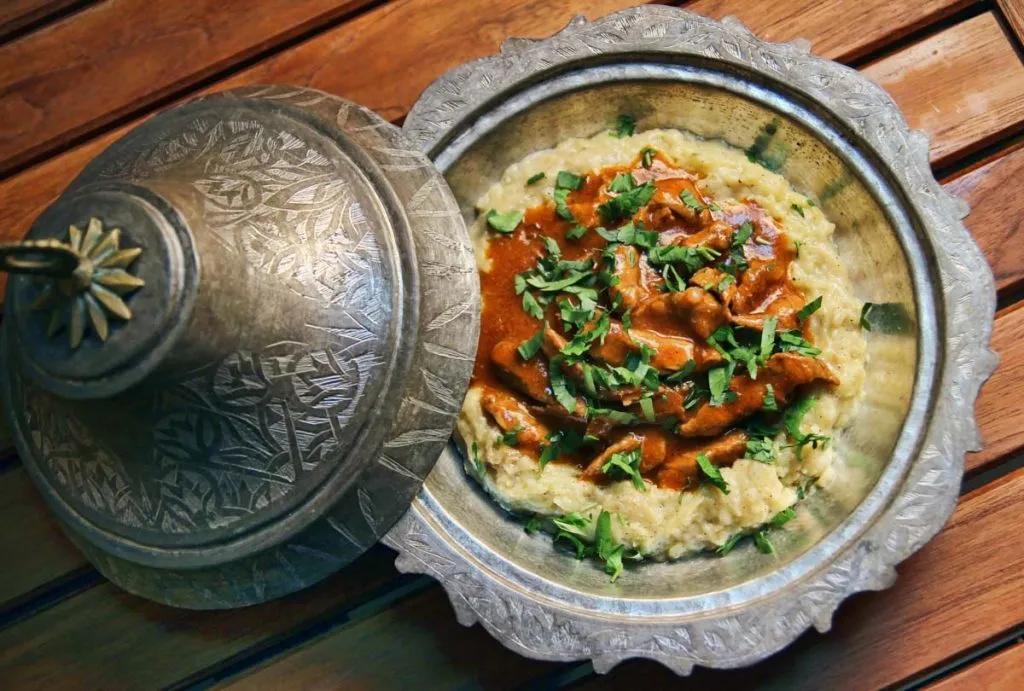
Hünkar beğendi means “the sultan liked it.” The dish pairs a smooth smoked-eggplant base with meat stew and is associated with Ottoman cooking; stories about the exact origin of its name vary.
The base combines smoked eggplant with milk, flour, butter, and cheese, then supports a lamb or beef stew. Some traditional Turkish restaurants include it on the menu.
19. Ezogelin Çorbası
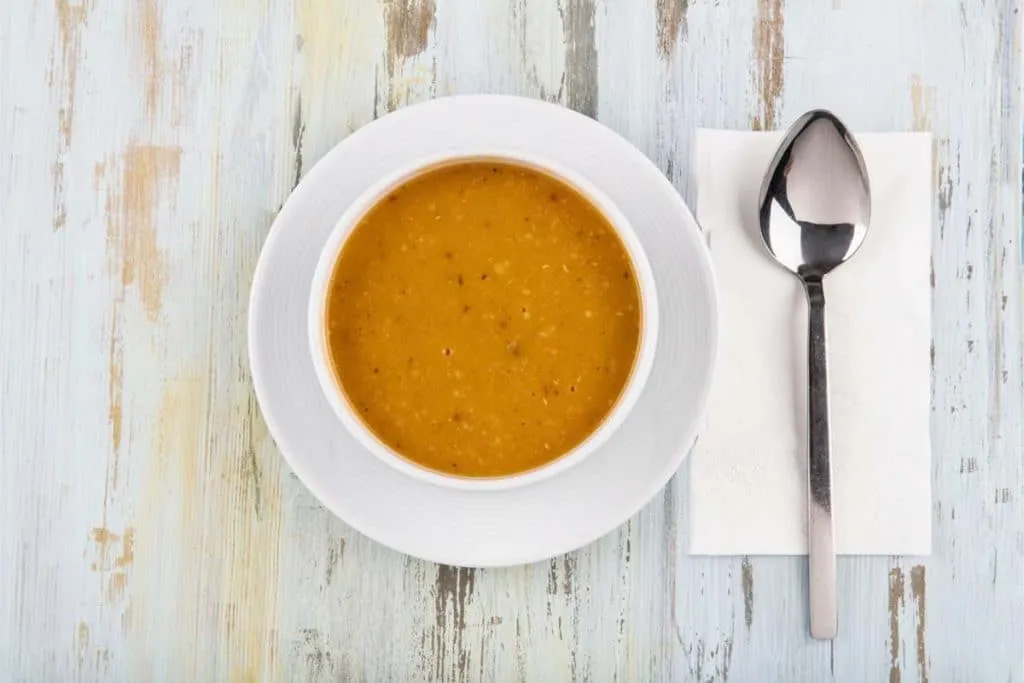
Ezogelin is a red-lentil soup that commonly includes bulgur, rice, tomato or pepper paste, onion, and dried mint. Recipes vary, and lemon is often offered at the table.
20. Cağ Kebabı
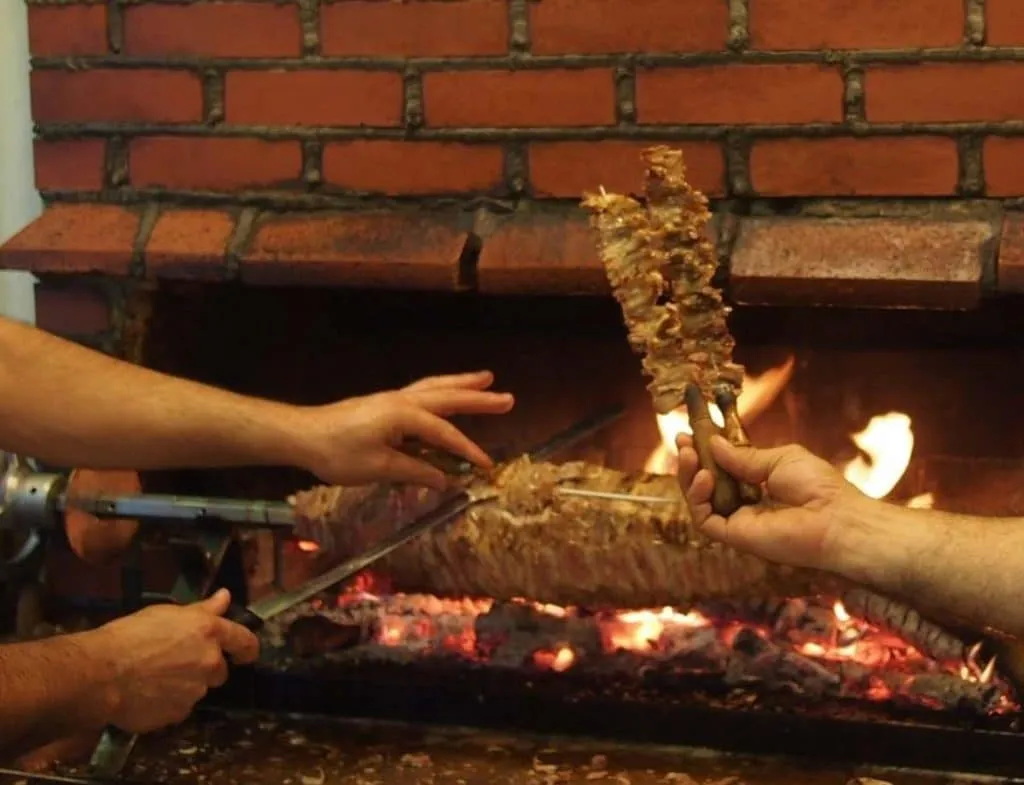
Cağ kebabı is a lamb kebab associated with Erzurum. The meat is stacked on a horizontal spit, cooked beside a wood fire, and sliced onto small skewers. Marinades vary by recipe and may include onion, salt, and pepper.
It is commonly served on small skewers with lavash, onion, or yogurt; accompaniments vary by restaurant.
21. Perde Pilavı
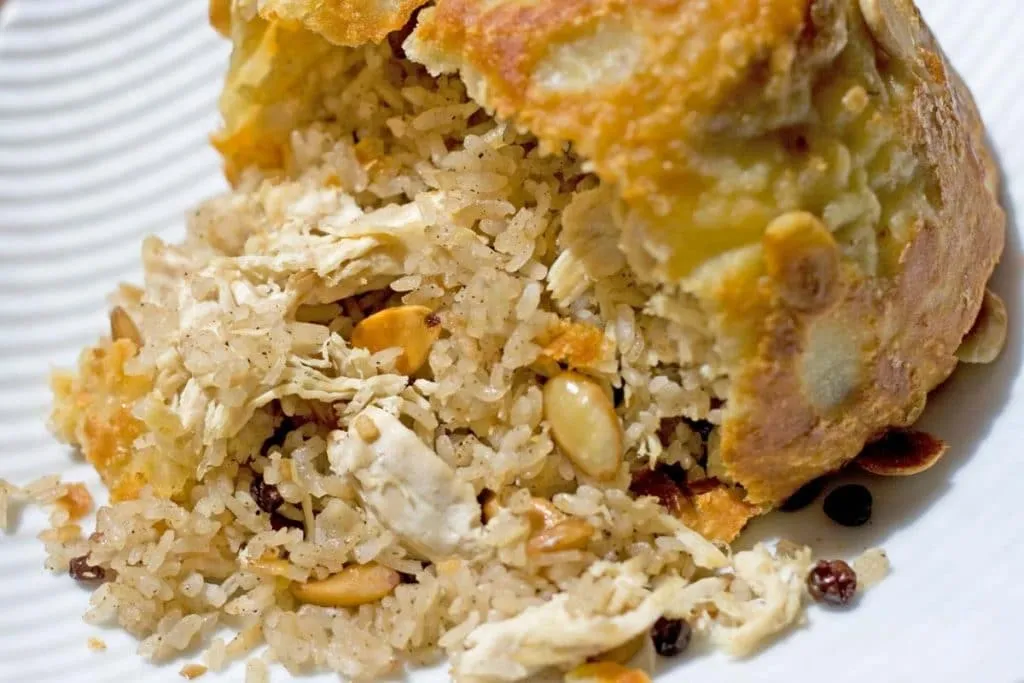
Perde pilavı encloses seasoned rice in a pastry shell and bakes it in a rounded mold. Chicken, nuts, currants, butter, and spices appear in many versions, but the filling varies.
Perde pilavı is associated with wedding and celebration tables in parts of southeastern Türkiye. Symbolic interpretations of its pastry, rice, nuts, and currants vary by community.
22. Testi Kebabı
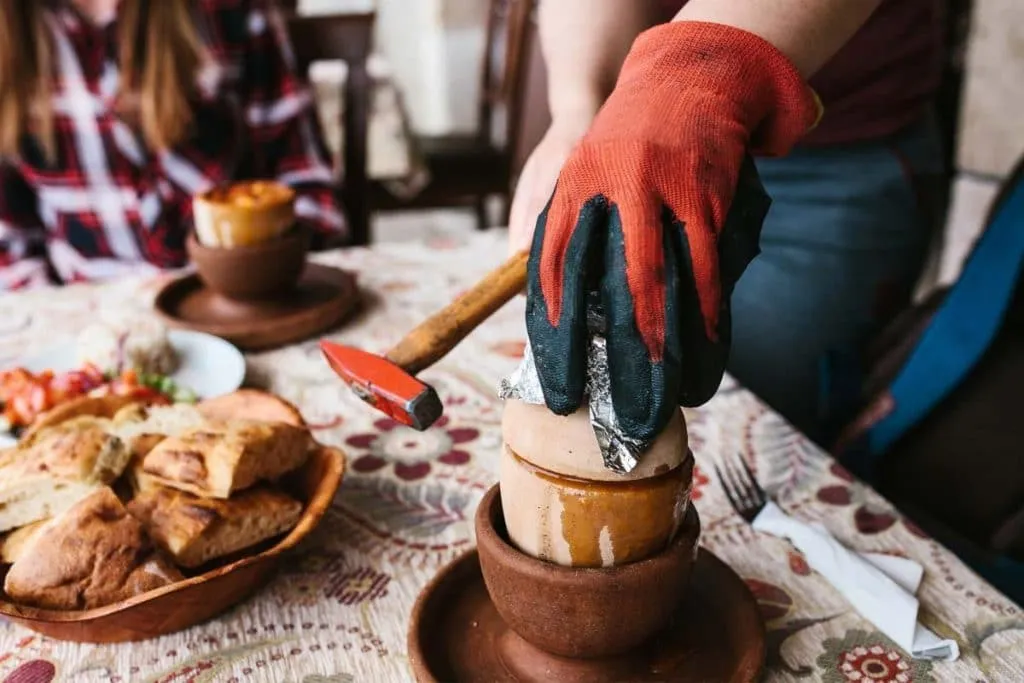
Testi kebabı, or pottery kebab, is associated with central Anatolia and Cappadocia. Meat and vegetables cook inside a sealed clay vessel; ingredients, cooking time, and heat source vary. Some restaurants break the vessel tableside, while others serve it without a performance.
23. Gözleme
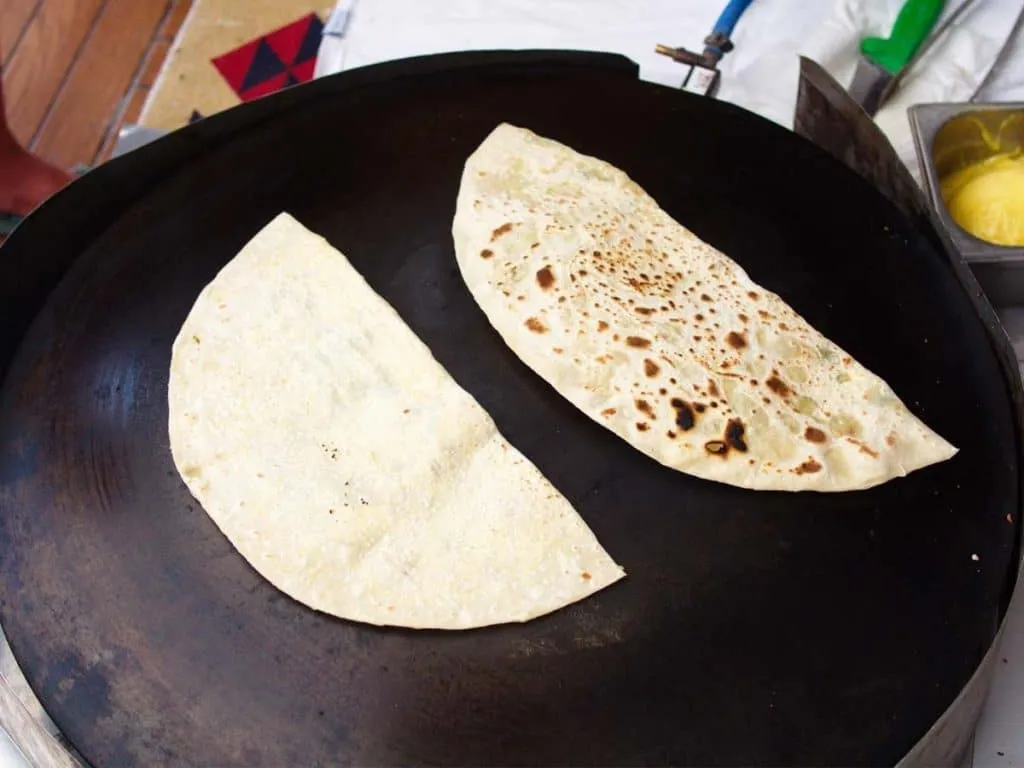
Gözleme is a thin, filled flatbread cooked on a griddle. It is sometimes described in English as a Turkish pancake, although it uses rolled dough rather than pancake batter. Common fillings include cheese, spinach, potato, and ground meat.
24. Pide
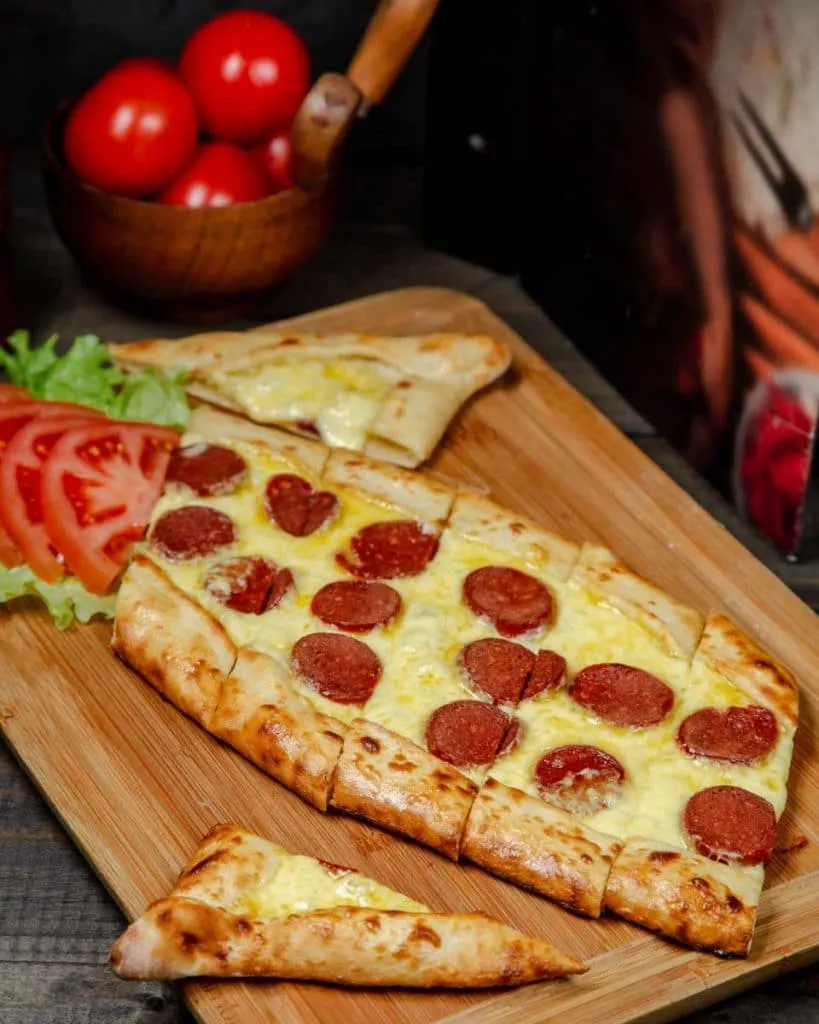
Pide is a boat-shaped baked dough with toppings that vary by bakery and region.
The base of the pide is a boat-shaped dough similar to western pizza crust without tomato sauce. Toppings vary widely and include but are not limited to Turkish cheese, sucuk (spicy Turkish sausage), green peppers, ground meat, chopped meat, spinach, tomatoes, pastrami, eggs, mushrooms, doner meat, chicken meat, and spices.
Vegetarian pide toppings are common. For a vegan order, confirm the dough, toppings, and shared preparation with the bakery. This topped dish is distinct from the plain bread also called pide.
25. Su Böreği
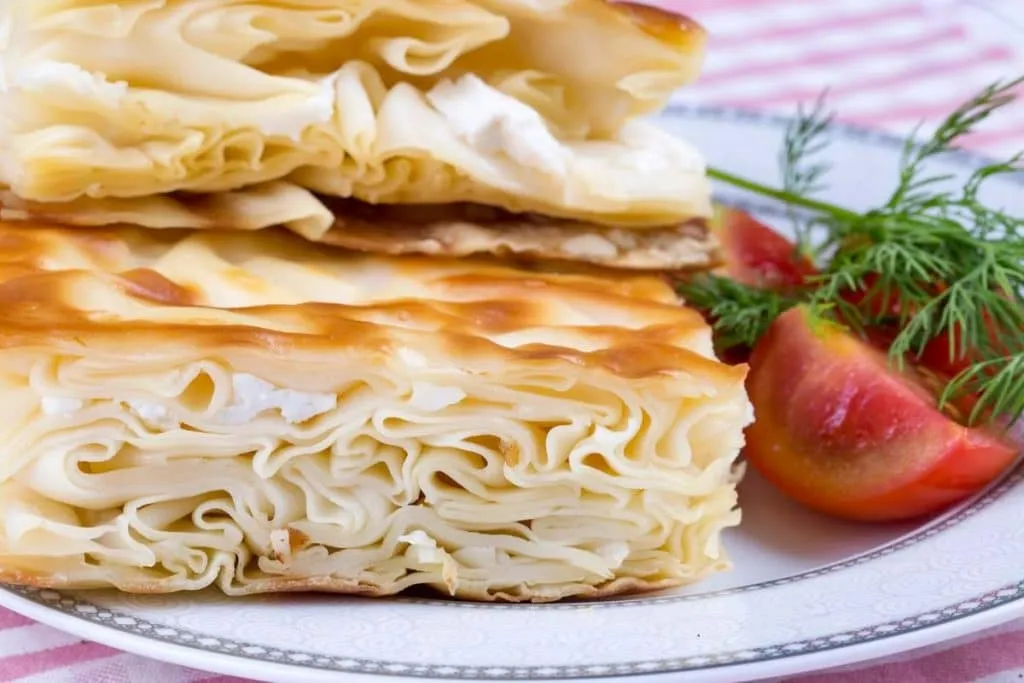
Su böreği, literally “water börek,” is a layered pastry whose dough sheets are briefly boiled before assembly.
Thin sheets of dough are briefly cooked in water, layered with butter and a filling such as cheese, then baked. The number of layers and filling vary by recipe.
It can be served at breakfast or as a savory snack and is sold by many börek shops.
26. Simit
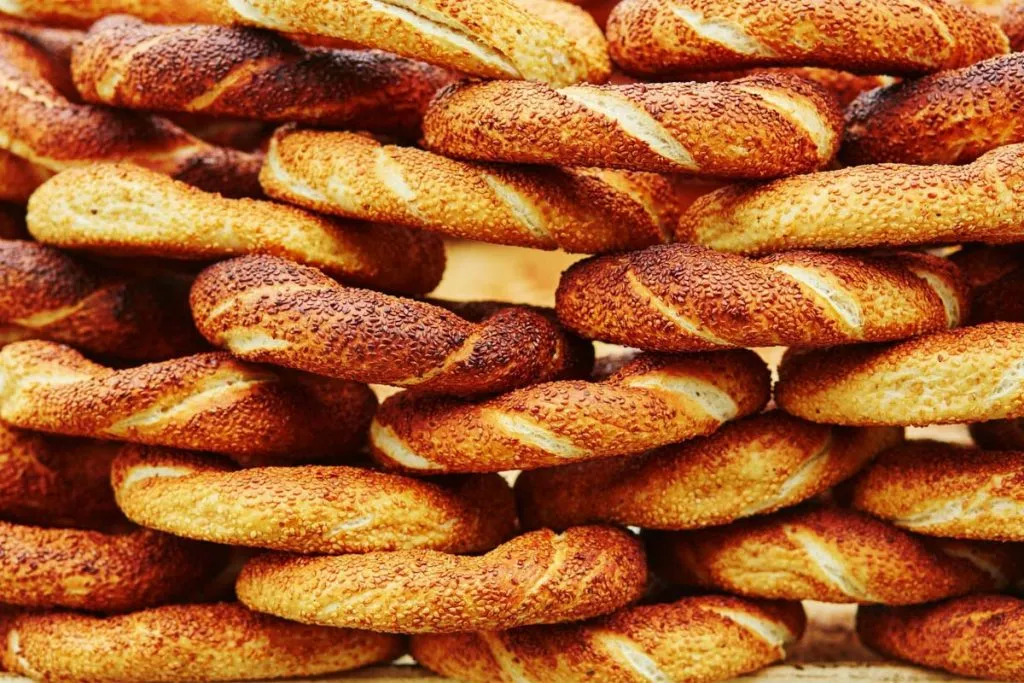
Simit is a sesame-crusted bread ring sold by street carts, bakeries, and specialist shops across Türkiye. Regional versions differ in shape, texture, and coating.
Before it is cooked, traditional simit is covered in sesame seeds and dipped in grape molasses, giving it a caramelized color and a hint of sweetness.
It can be eaten alone or paired with cheese, kaymak and honey, or Turkish tea.
27. Çiğ Köfte
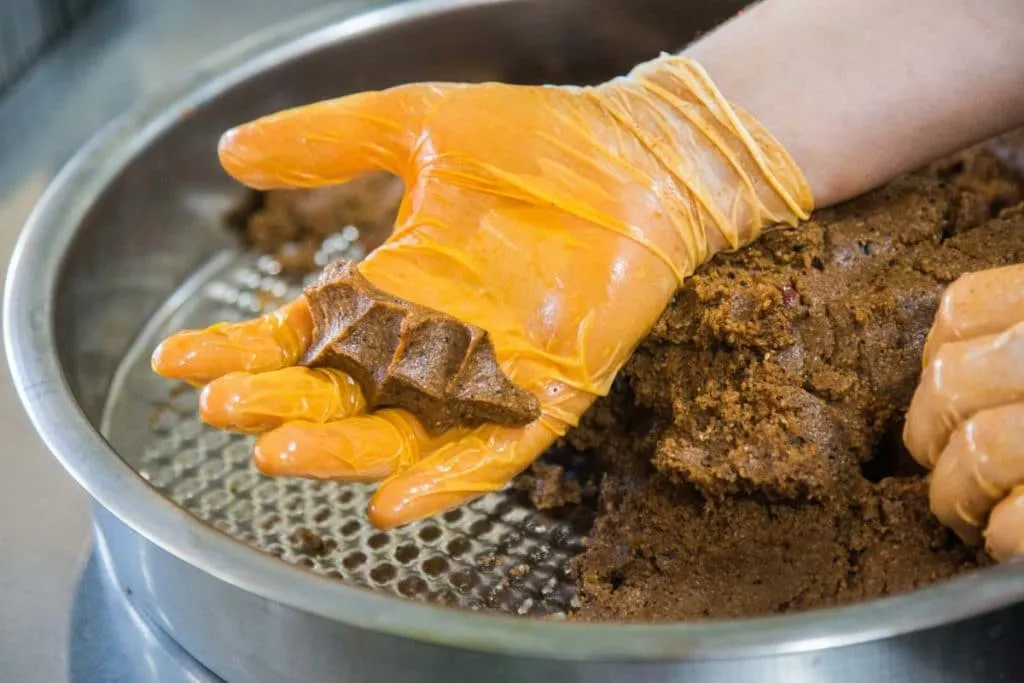
Historical versions of çiğ köfte combined finely ground raw meat with bulgur, onions, garlic, pepper paste, and spices, kneaded together rather than cooked with heat. The commercial versions widely sold in Istanbul today are generally prepared without meat.
It is usually served in lettuce or wrapped in lavash with lemon, herbs, and sauce. The base mixture may be meat-free, but sauces, wraps, and shared preparation vary, so ask the seller before treating the complete order as vegan or allergen-safe.
28. Maraş Dondurması (Maraş Ice Cream)
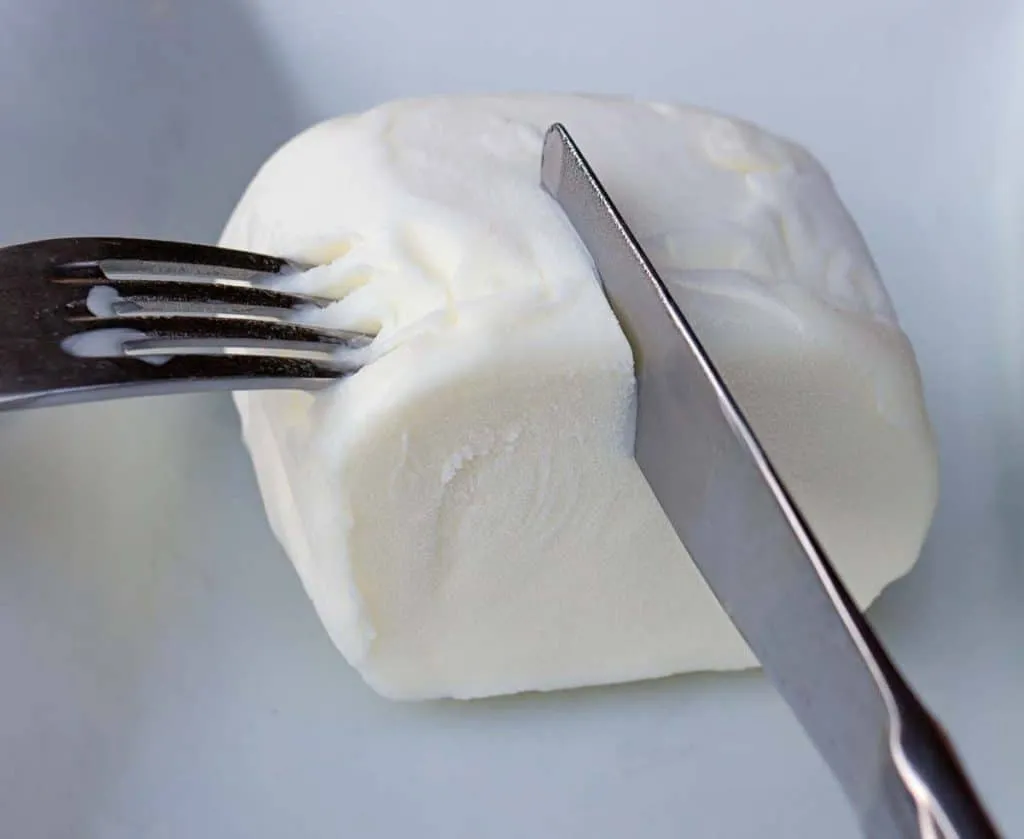
Maraş-style dondurma is denser and more elastic than most familiar ice creams. Its distinctive texture comes from salep, a flour made from orchid tubers, together with milk and sugar.
Traditional Maraş dondurması is associated with Kahramanmaraş and can be firm enough to cut with a knife and fork. Street sellers often use its elasticity for the familiar cone performance, but the performance is not what defines the ice cream.
29. Lokum (Turkish Delight)
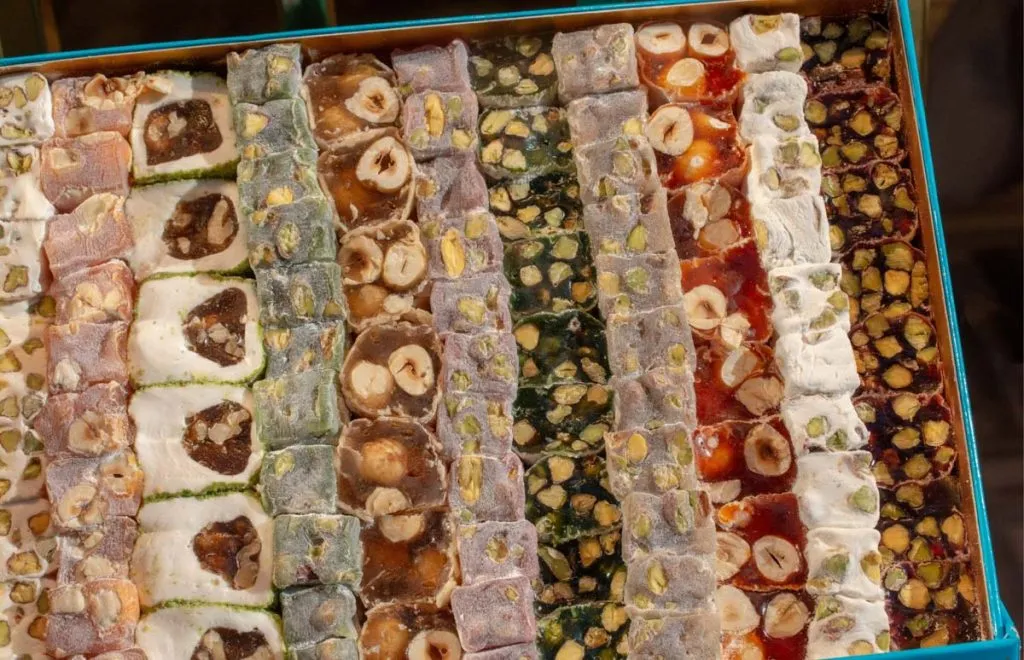
Lokum is based on a gel of starch and sugar. Varieties may contain pistachios, hazelnuts, or walnuts, or use flavors such as rose, mastic, pomegranate, and lemon. Texture and nut content differ significantly between products, so compare ingredients when buying it as a gift.
30. Aşure
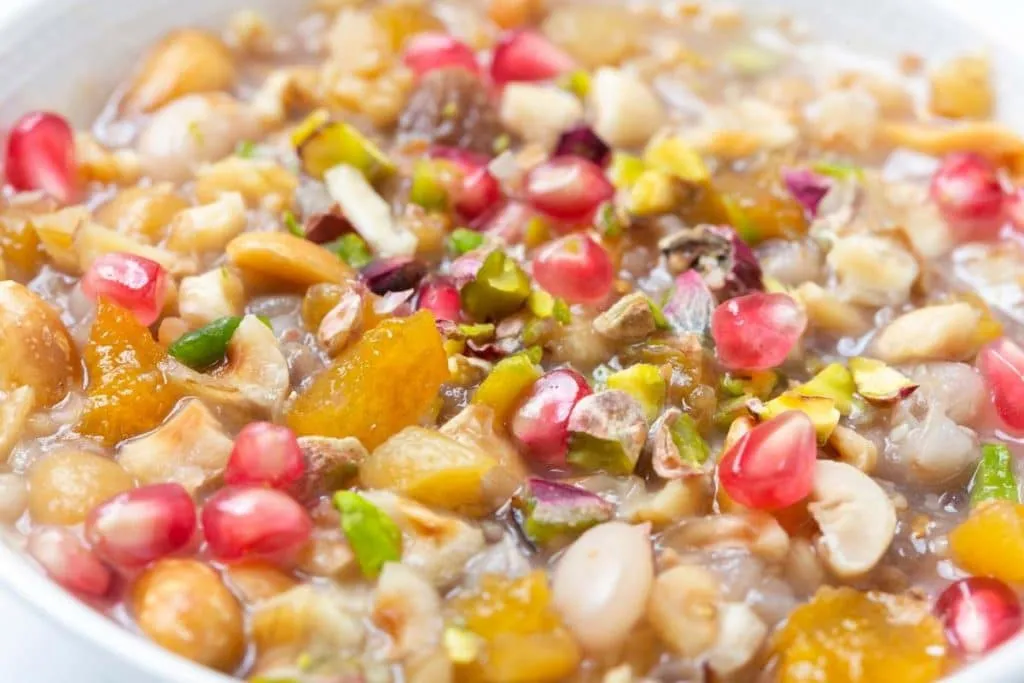
This dessert is often called Noah’s Pudding in English because one popular story connects it with the ingredients left on Noah’s Ark. The association is a tradition rather than a fixed recipe or historical record.
Recipes vary, but wheat, chickpeas, beans, dried fruit, nuts, and sugar are common. The ingredients are cooked together, then bowls are decorated with colorful toppings.
Aşure is associated with Muharram and traditions of preparing bowls to share with neighbors. Recipes and the meanings attached to the dish vary among communities.
This dish is easily identifiable in dessert shops by its vibrant toppings.
31. Sütlaç
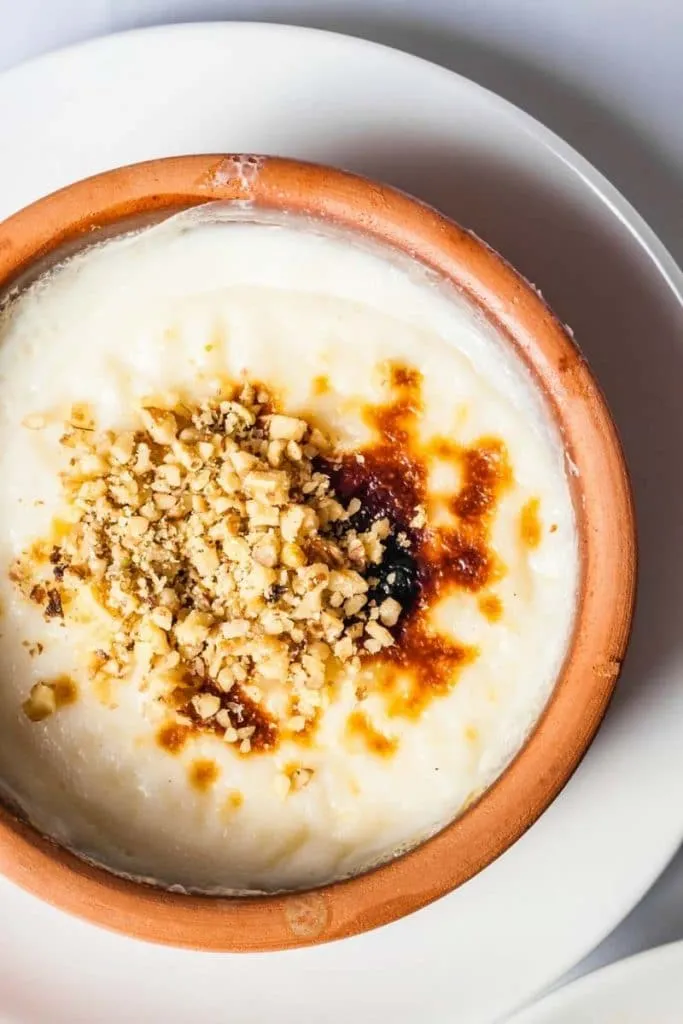
Sütlaç is a Turkish milk-and-rice pudding related to rice puddings found in many cuisines.
It is usually served cool and often follows a rich meal. Dessert shops and many traditional restaurants offer it, although recipes and sweetness vary.
Fırın sütlaç is a familiar baked version with a browned surface.
32. Mücver
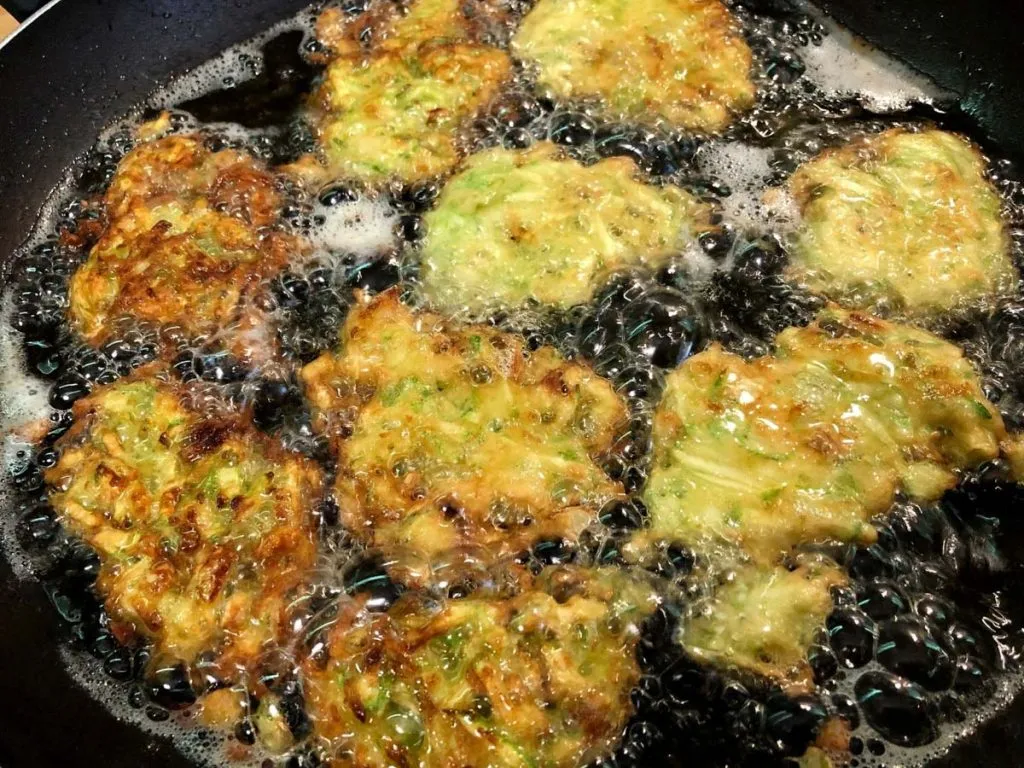
Mücver is a vegetable fritter commonly made with grated zucchini, egg, flour, and herbs. Recipes may use other vegetables or seasonings.
It can be served hot or cool as a meze, side dish, or light meal, sometimes with yogurt.
33. Türk Kahvesi (Turkish Coffee)
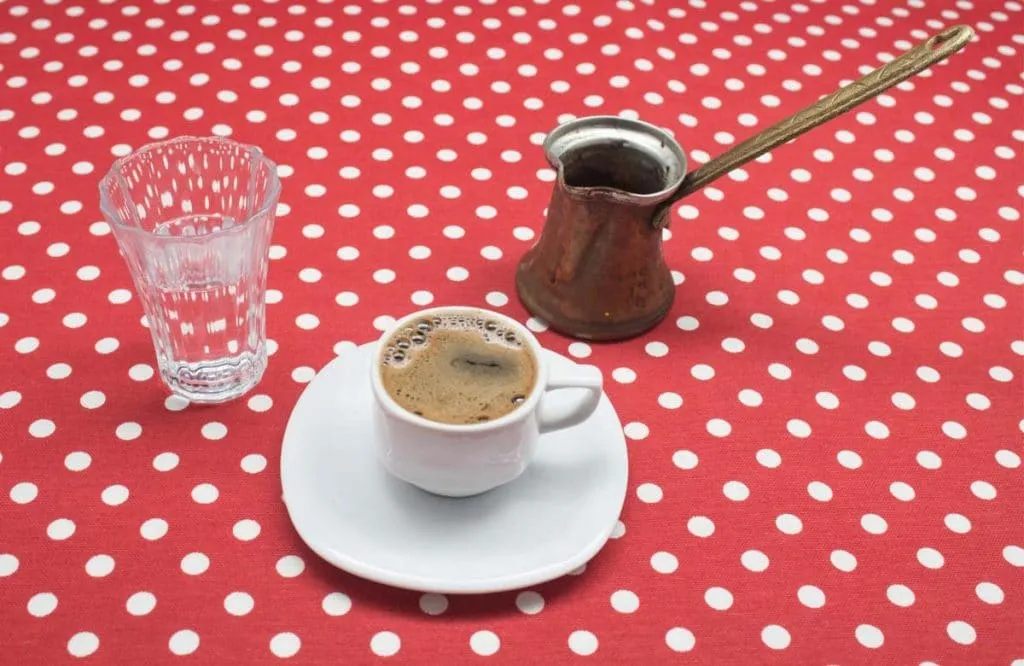
Coffee reached the Ottoman court through Yemen in the 16th century, and coffeehouses appeared in Istanbul later that century. The familiar origin stories differ on the exact person and year.
Turkish coffee is brewed slowly in a cezve from very finely ground coffee, water, and any requested sugar. The grounds are not filtered out. It is often served after meals or to guests.
Turkish coffee has a strong taste and is usually served in espresso-sized cups. Serving a Turkish delight or a small piece of chocolate with it is a common tradition in Turkey.
Reading patterns in the grounds after the cup is turned over is a social tradition known as kahve falı.
34. Karnıyarık
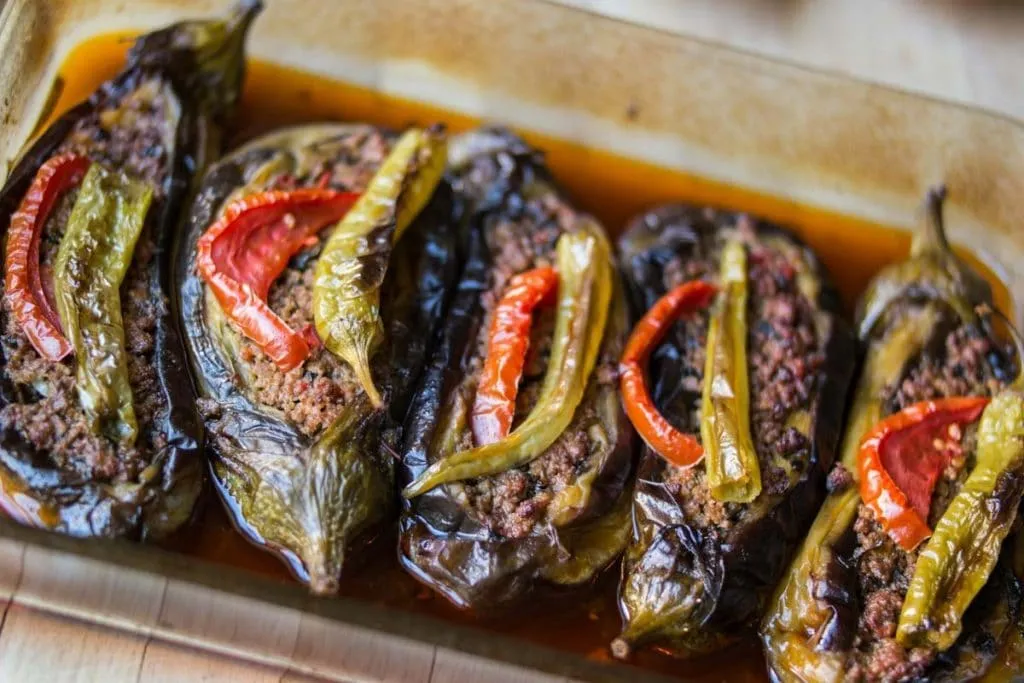
Eggplant appears in many Turkish dishes, including meat-free imam bayıldı and meat-filled karnıyarık.
Karnıyarık translates as “split belly.” Eggplants are opened and filled with ground meat, onion, tomato, and pepper, then cooked until tender. Rice, yogurt, or cacık may be served alongside.
35. Adana Kebab
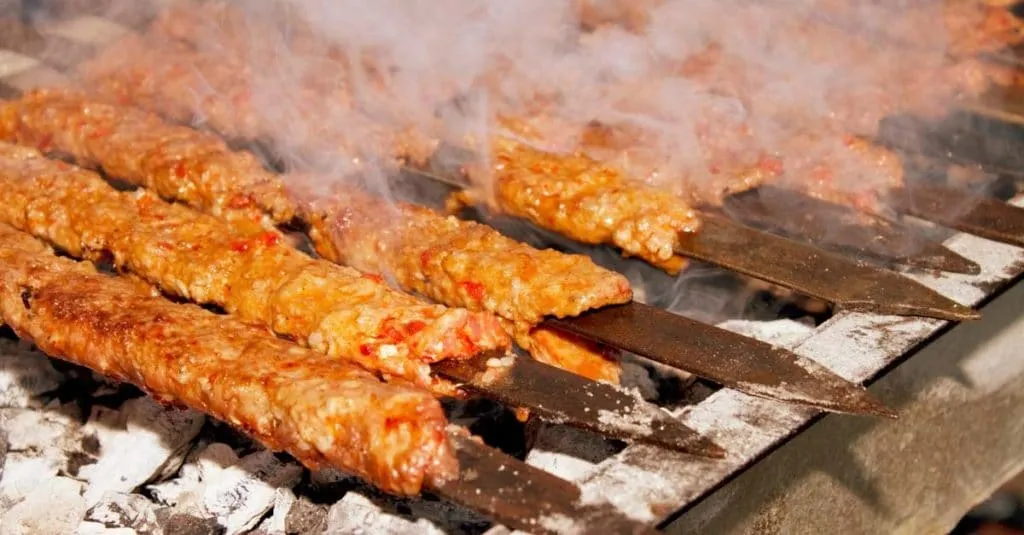
The registered Adana kebabı specification uses meat from male sheep at least one year old, with tail fat added if needed, plus red pepper and salt. The ground mixture is pressed onto a long metal skewer and cooked over charcoal. It may be served on a plate with flatbread, grilled vegetables, herbs, and sumac-onion salad, or wrapped in lavash.
The dish is closely tied to Adana, while kebab restaurants elsewhere in Türkiye serve versions under the same name.
36. İçli Köfte
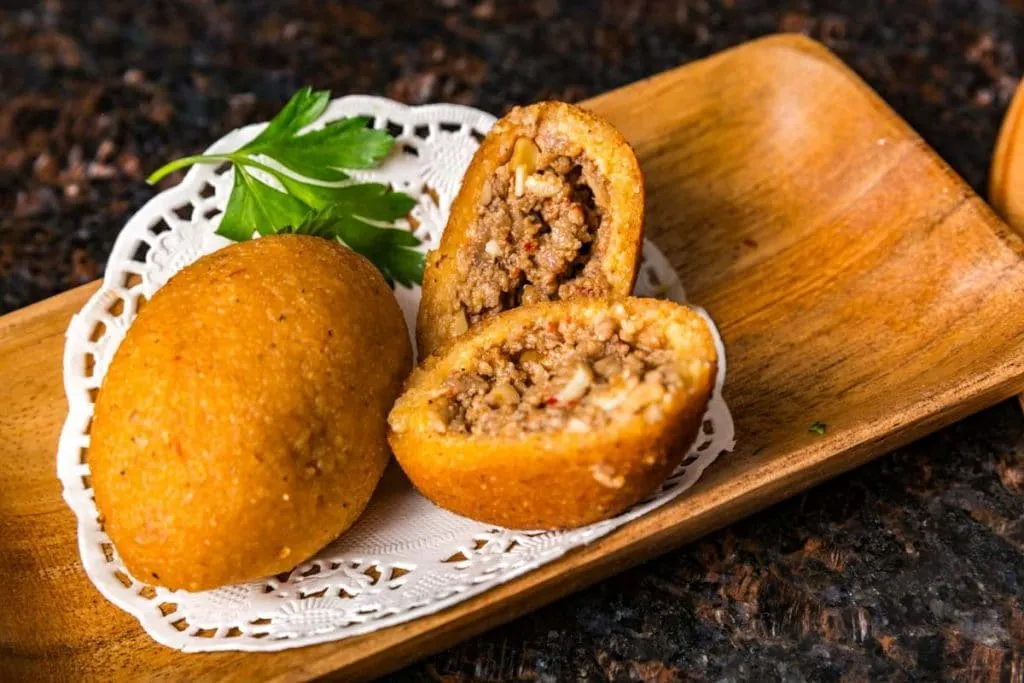
İçli köfte, which translates as stuffed meatballs in English, is a traditional Turkish appetizer or main meal and is sometimes found as street food in Istanbul.
Bulgur-based shells are filled with a seasoned meat-and-onion mixture, then boiled or fried. Recipes differ in whether the shell also contains semolina, flour, potato, or meat.
Shaping the thin bulgur shell takes practice, so restaurants and home cooks may prepare the dish in batches.
37. Tavuk Göğsü (Chicken Pudding)
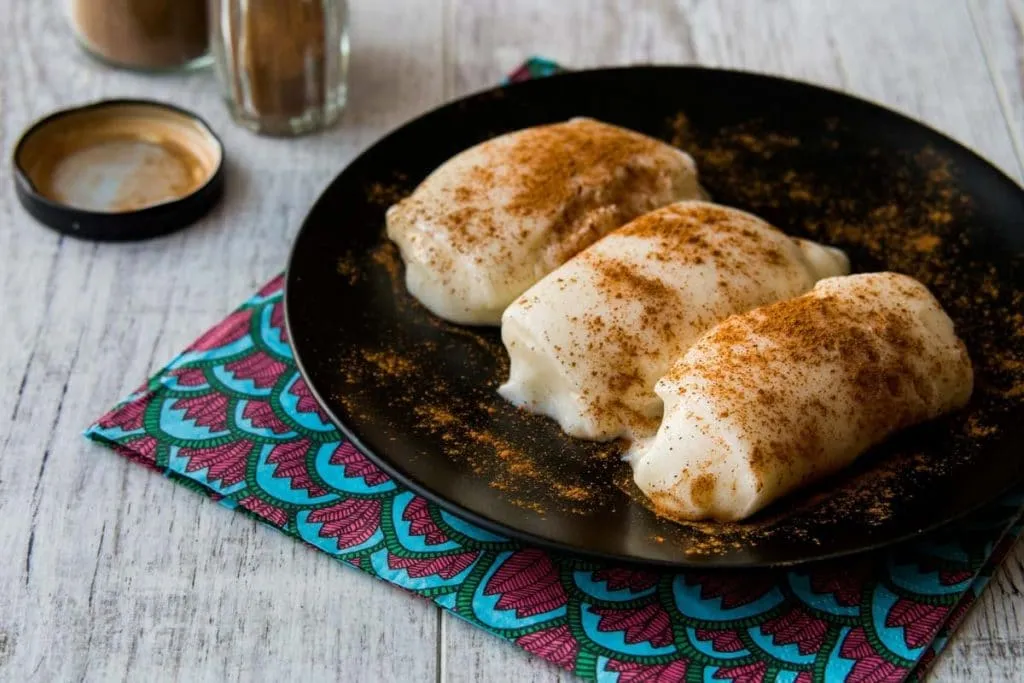
Traditional tavuk göğsü contains finely shredded chicken, but modern shop versions vary. Ask the producer if the ingredient matters to you.
Traditional tavuk göğsü combines finely shredded chicken breast with milk, sugar, and a starch or rice-based thickener. Modern recipes and shop versions vary, and a similar caramelized pudding called kazandibi may or may not contain chicken depending on the producer.
38. Bal & Kaymak (Honey & Water Buffalo Clotted Cream)
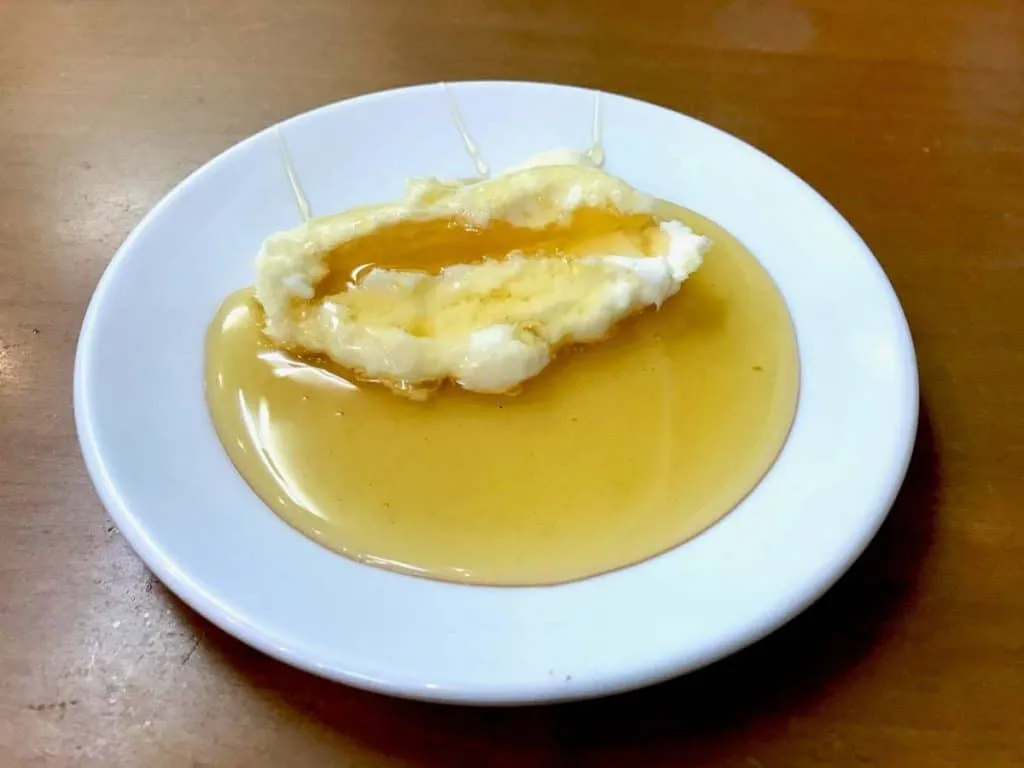
This underrated Turkish specialty belongs near the top of any list of great flavor combinations.
Kaymak is a thick dairy cream traditionally associated with buffalo milk, although cow’s-milk versions also exist. Commercial preparation and food-safety controls vary, so this entry describes the finished food rather than giving a raw-milk method.
Kaymak and honey are rich, so a small portion goes a long way. Eat the pairing with fresh bread or simit as part of breakfast.
39. Çöp Şiş
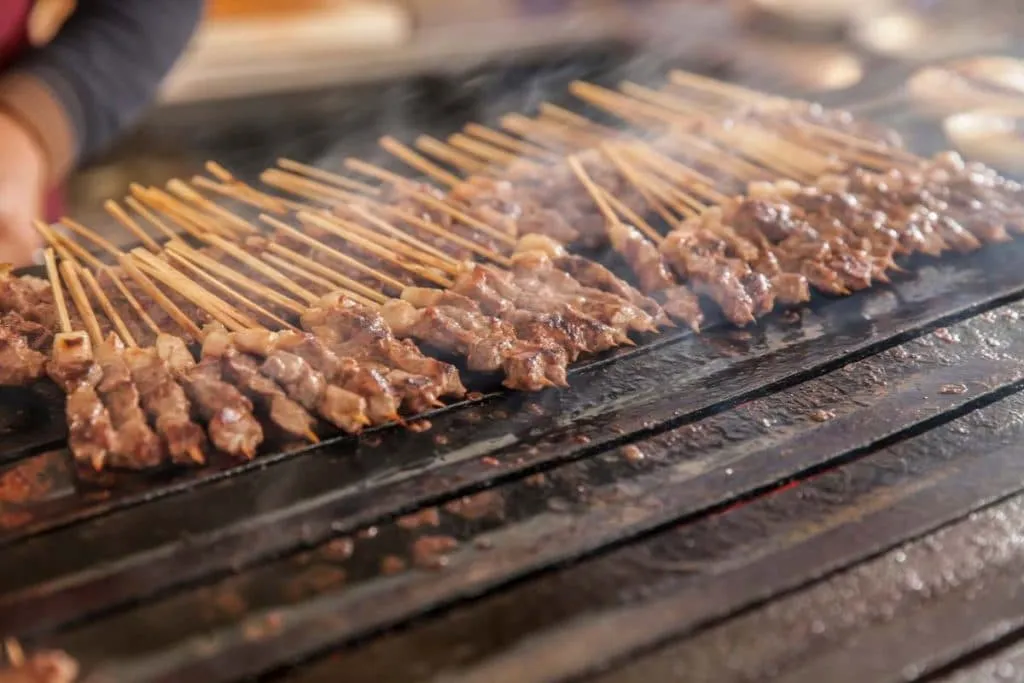
This is a type of Turkish shish kebab, but çöp şiş is generally cooked on wooden skewers rather than iron ones and the pieces of meat are pretty small.
Some versions alternate the small meat pieces with tail fat to add richness; others rely on the cut and marinade.
This popular Turkish dish is often served with lavas, a kind of flatbread you can use to wrap your çöp shish kebab with fresh onions and tomatoes.
40. Etli Ekmek
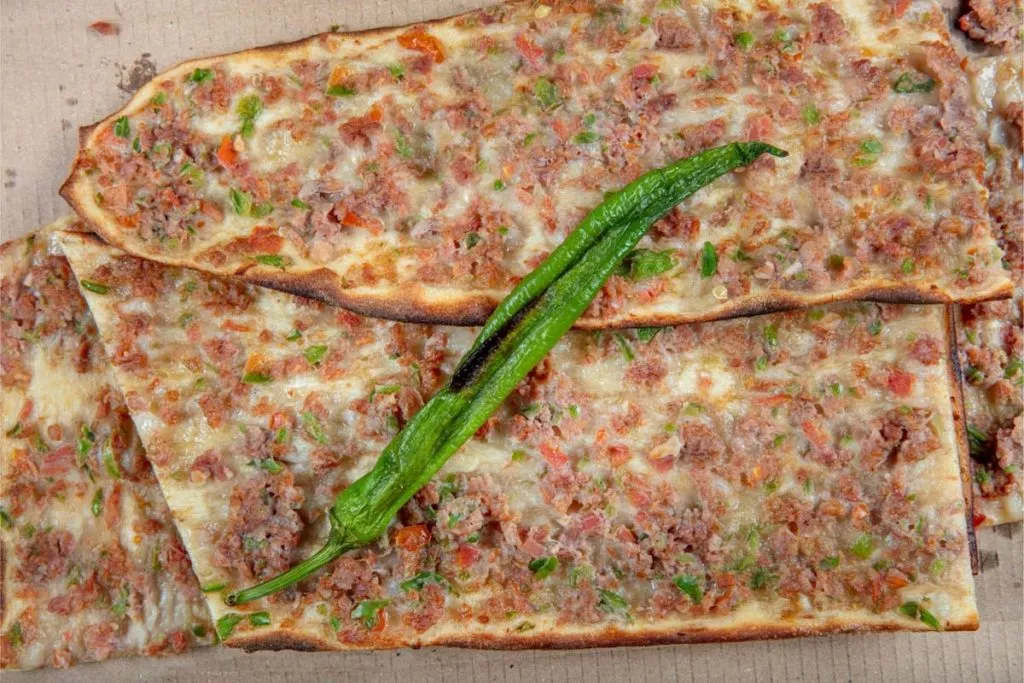
Etli ekmek is a long, thin flatbread associated with Konya. It resembles pide, but the base is typically thinner and the topping is spread in a fine layer. Traditional preparation may use finely chopped meat; methods vary by bakery.
Konya, Turkey’s hometown for etli ekmek as well as many other traditional Anatolian dishes such as Arabaşı Çorbası, Fırın Kebabı, Tirit and Höşmerim. Konya is also a scenic locale that was home to the renowned mystic, Rumi.
41. İşkembe Çorbası (Tripe Soup)
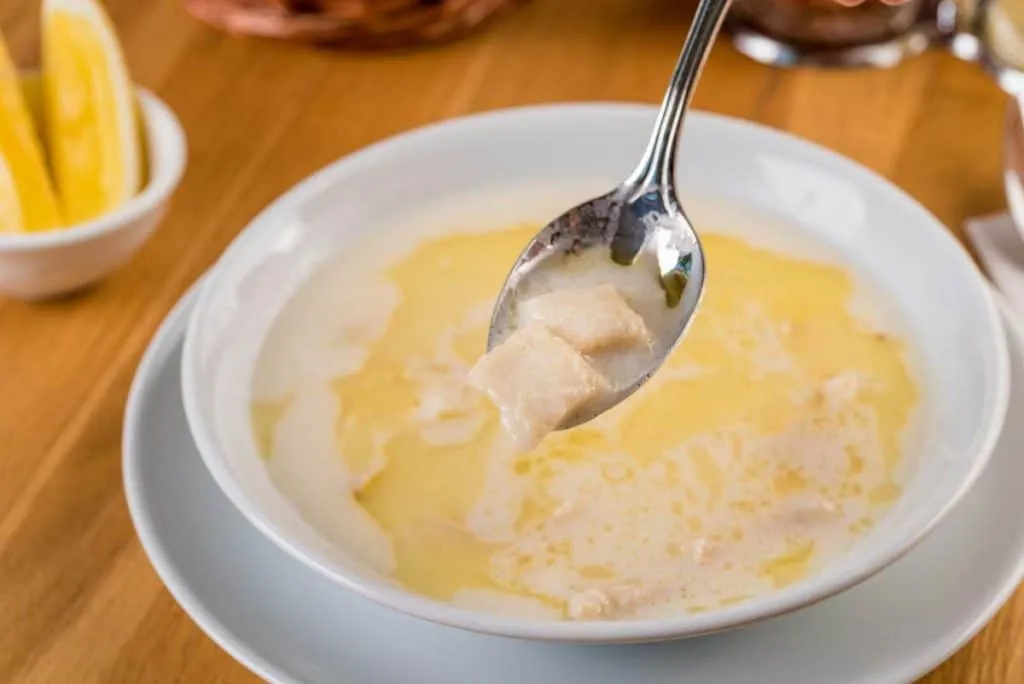
İşkembe çorbası is a tripe soup sold by specialist soup restaurants and prepared in some home kitchens.
The cleaned tripe is simmered or pressure-cooked until tender, then finished according to the restaurant or household recipe.
Tripe soup is often served with a vinegar-garlic sauce on the side, or it can be mixed with an egg yolk and lemon juice sauce after cooking.
42. Kısır
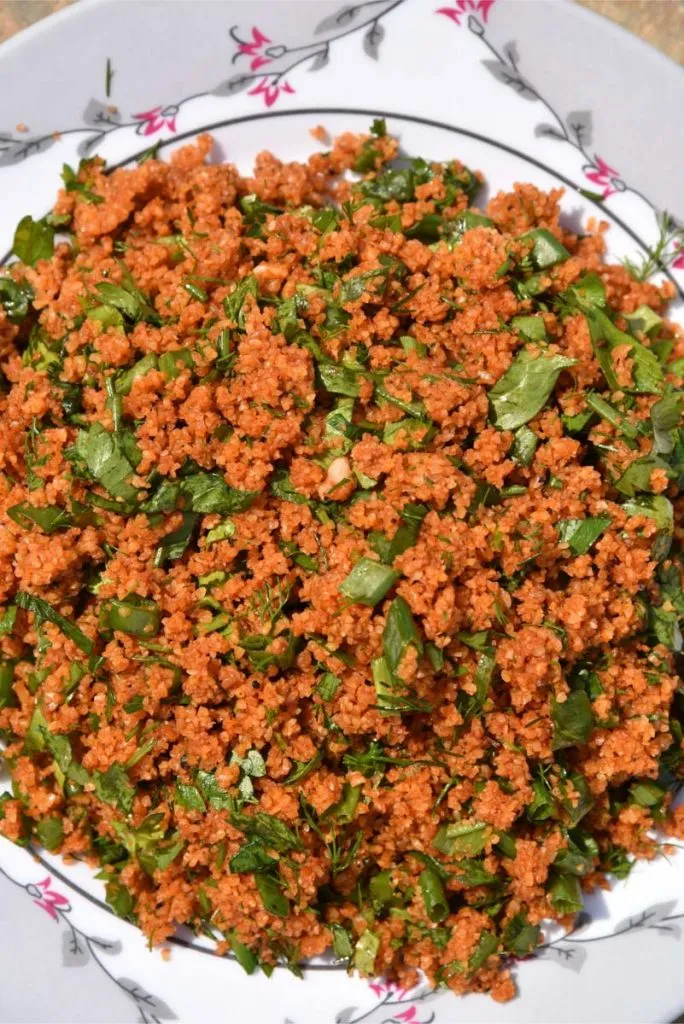
Kısır is a bulgur salad made with tomato or pepper paste, green onions, parsley, mint, lemon, and often pomegranate molasses. Recipes vary by region and household.
It is a practical dish for shared home tables, picnics, and informal gatherings because it can be prepared ahead and served at room temperature.
Kısır is also offered as an appetizer in many restaurants.
43. Katmer
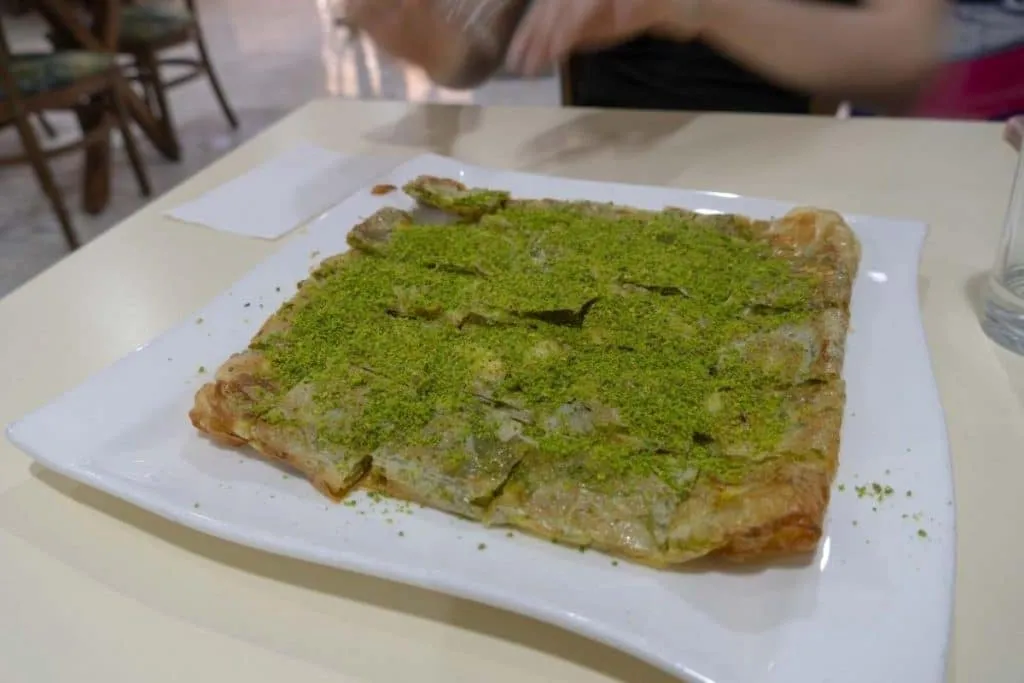
Katmer is a thin, folded pastry associated especially with Gaziantep. A common sweet version layers pistachio, sugar, and kaymak inside stretched dough, then folds it into a square and bakes it. It may be eaten at breakfast or as dessert; fillings and availability vary.
44. Bulgur Pilavı
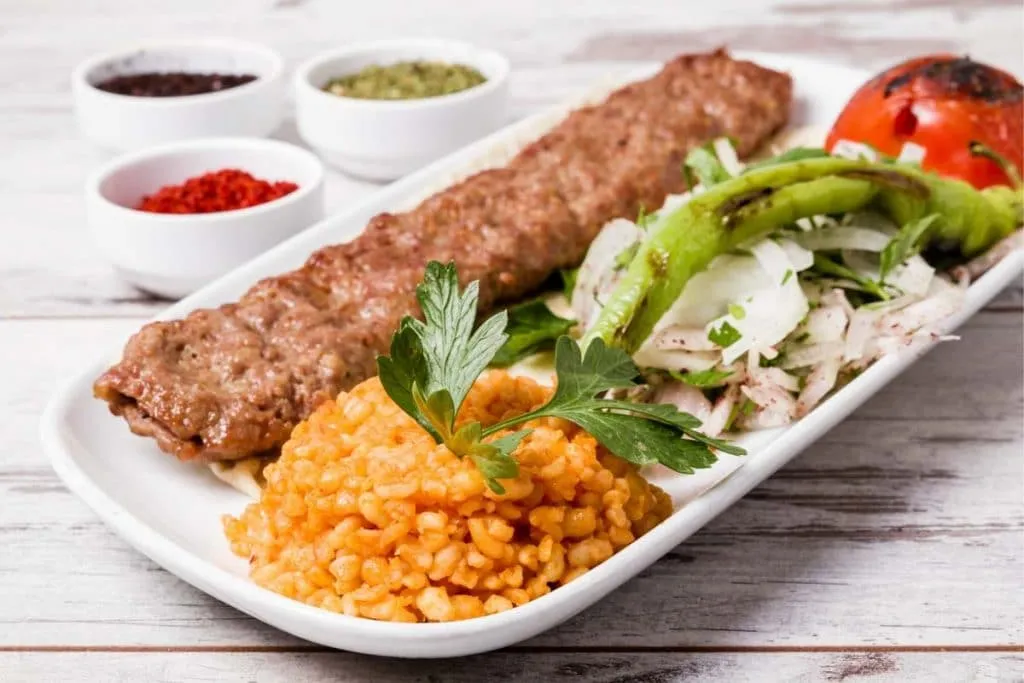
Bulgur is an ancient cereal food made from the cracked parboiled groats of wheat. It can be cooked to make various dishes, pilafs, and it’s often used as an ingredient in soups or salads for added texture and flavor.
Bulgur pilavı is an alternative to rice pilaf and is served with dishes such as taze fasulye, kuru fasulye, kebabs, and vegetable stews.
Bulgur pilaf recipes may add tomato, onion, green pepper, butter or oil, and water or stock.
Final Words
Turkish food is broad, and these 44 entries are a practical vocabulary. From home dishes like kısır to bakery staples and milk puddings, the page explains what each name points to. If you only have a few days, the separate first-timer eating guide turns that vocabulary into a realistic plan.
If you would rather explore with a guide, see the current route and availability for our Taste of Two Continents tour. Keep reading the Istanbul food guide for more on where to eat.