20 Turkish Kebabs, Explained: Döner Is Just the Start
Turkey has at least 110 kinds of kebab. This guide sorts the 20 worth knowing by how they are cooked: charcoal skewers, spits, ovens, and clay pots.
Ask most travelers to name a Turkish kebab and they stop at two: döner and şiş. Turkey counts at least 110 named kebabs, cooked on charcoal grills, on horizontal and vertical spits, in wood-fired ovens, and inside sealed clay pots. This guide covers the 20 most popular, grouped by how they are cooked, with a comparison table to keep them straight at the menu. It is one chapter of our larger Istanbul food guide.
This list is for first-timers who want to order past döner with confidence, returning visitors hunting regional styles like cağ and testi, and anyone planning meals around a Turkey trip. Vegetarians, fair warning: every entry here involves meat, even the eggplant one.
What does kebab mean?
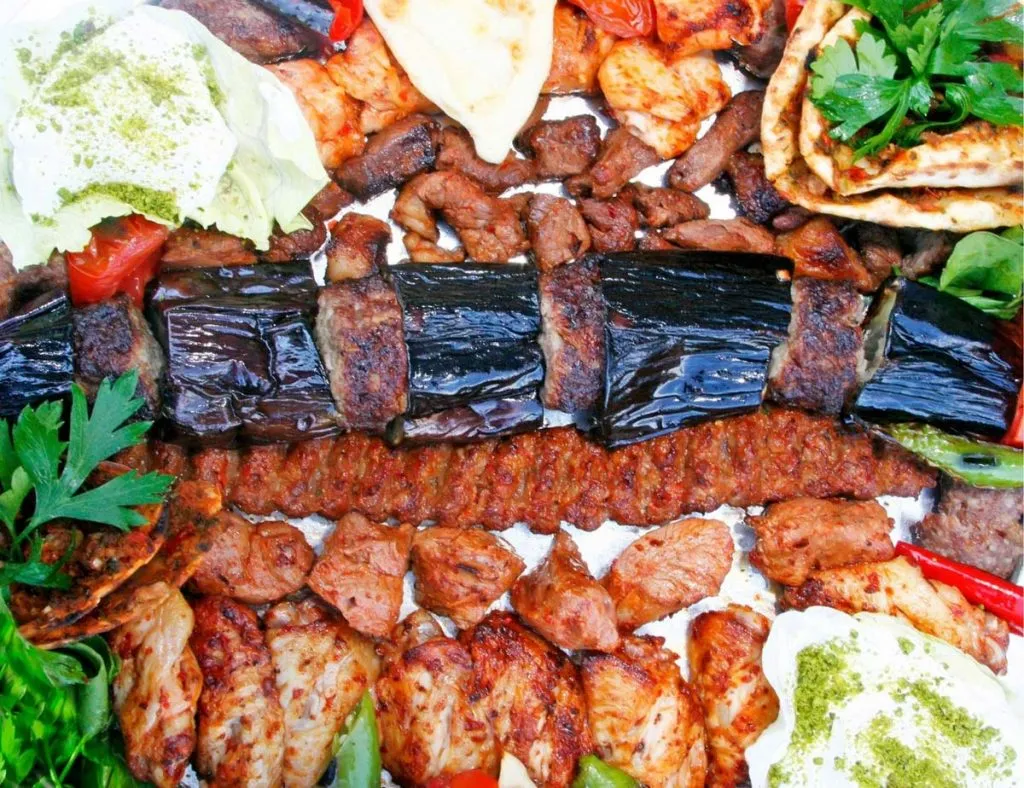
Kebab refers to any dish of meat, fish, or vegetables grilled on a skewer or roasted on a rotisserie. In Turkey the word stretches further to cover anything cooked over, or next to, a flame. Small cuts, large cuts, ground meat, all of it counts. You will see kebab served on a plate (porsiyon), in a sandwich, or rolled in flatbread as a dürüm.
What kind of meat is used for kebabs?
Traditionally, lamb. As tastes shifted and regional specialties developed, beef, chicken, and fish joined the repertoire. Vegetables have always had a place too; eggplant, tomato, peppers, and onion turn up constantly, sometimes as supporting cast and sometimes as the point of the dish.
Origins of kebabs
The first kebabs in Turkey are generally traced to Erzurum province in the east, as cağ kebab: meat stacked and roasted on a horizontal spit. Ottoman travel books mention these kebabs as far back as the 18th century. Later, İskender Efendi of Bursa wrote that he and his grandfather “had the idea of roasting the lamb vertically rather than horizontally” and built a vertical rotisserie. That invention became döner, the dish most of the world now pictures when it hears the word kebab.
How many types of kebab are there?
At least 110 in Turkey alone, each with its own taste. The 20 below are the most popular, the ones worth trying at least once, sorted into four families by how they are cooked.
The 20 kebabs at a glance
| Kebab | Where it’s from | What you get | Worth knowing |
|---|---|---|---|
| Şiş | Across Turkey | Cubed meat and vegetables grilled on a skewer | Çöp şiş is the small-piece version on wooden skewers |
| Adana | Adana | Spicy ground meat on a wide skewer, charcoal-grilled | Urfa is the milder twin |
| Ciğer | A favorite in Istanbul | Marinated lamb liver grilled on skewers | Comes with bread and salads |
| Tavuk şiş | Across Turkey | Chicken cubes marinated in yogurt, milk, and tomato paste | Usually plated with bulgur pilaf |
| Yoğurtlu | Widely served | Grilled ground meat over pita, yogurt, and melted butter | The bread soaks up the cooking juices |
| Beyti | Istanbul (Florya) | Grilled ground meat rolled in lavash | Topped with tomato sauce and yogurt |
| Patlıcan | Across Turkey | Kebab meat with eggplant, skewered or baked in a tray | Comes in skewer and tray versions |
| Cağ | Erzurum | Lamb off a horizontal spit, finished on a skewer | The ancestor of modern döner |
| Döner | Everywhere | Thin slices shaved from a vertical spit | Plate, sandwich, or dürüm |
| İskender | Bursa | Döner over bread with melted butter and yogurt | Named for its inventor, İskender Efendi |
| Tandır (büryan) | Central and Eastern Anatolia | Lamb slow-baked for hours in a clay tandır oven | Served with bread and raw onions |
| Fırın | Konya and Karaman | Lamb and salt, oak-wood fire oven, 4 to 10 hours | Lands on pita with onions and ayran |
| Kağıt | Malatya | Spiced lamb baked inside oiled paper | 8 to 12 hours in a wood-fired oven |
| Kilis (tepsi) | Kilis | Ground lamb kneaded flat in a tray and baked | Tomatoes and peppers ring the tray |
| Testi | Central Anatolia, Black Sea | Meat and vegetables sealed in a clay pot | The pot is opened at your table |
| Hünkar beğendi | Ottoman palace kitchens | Sliced lamb over creamy eggplant puree | The sultans’ favorite |
| Çökertme | Aegean coast | Julienned fillet over thin fried potatoes | Garlic yogurt and tomato sauce on top |
| Orman | Bolu | Lamb stewed in a pot with vegetables | The peas are the giveaway |
| Soğan | Widely served | Kofte tucked inside onion slices | Pomegranate sauce, small red winter onions |
| Tokat | Tokat | Lamb cooked with potatoes, eggplant, tomatoes, and peppers | Made there for hundreds of years |
From the charcoal grill
The biggest family, and the one you will smell from the street.
1. Şiş kebab (shish kebab)
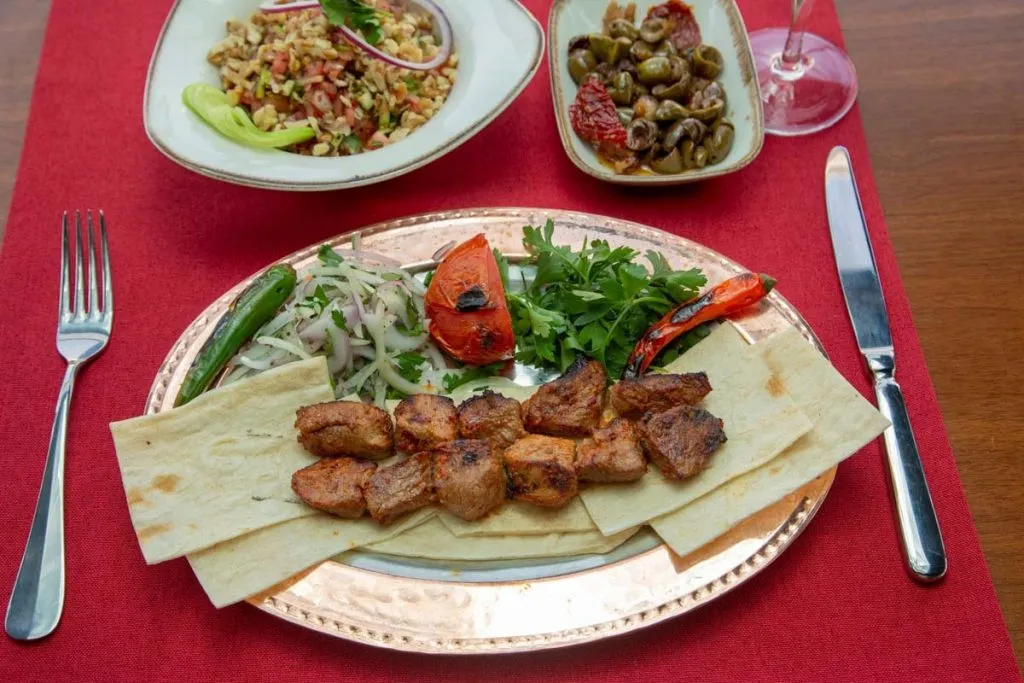
The familiar starting point. Cubes of meat and vegetables are threaded onto a skewer, grilled, and served with bread, rice, and salad. Keep an eye out for çöp şiş, a variant made with smaller pieces of meat, usually cooked on wooden skewers instead of iron.
2. Adana kebab
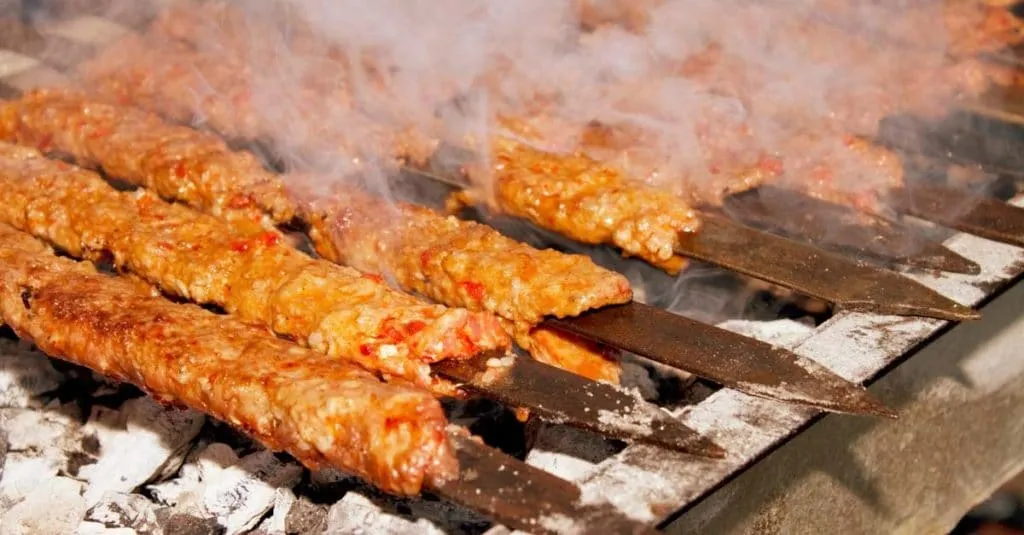
Named for the southeastern province it comes from. Ground meat is formed along a wide skewer and grilled over charcoal, and it arrives with real heat. Grilled vegetables and bulgur pilaf come standard.
3. Ciğer kebab (liver kebab)
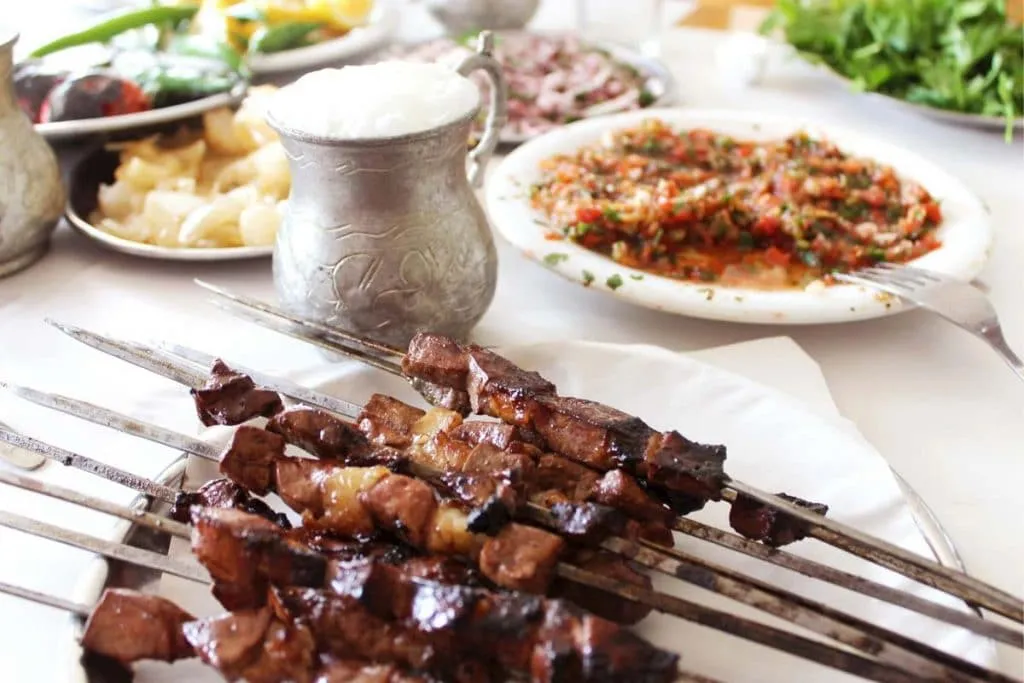
Lamb liver, diced, marinated with herbs, grilled on a skewer, and served with bread and salads. The name puts people off. The flavor wins most of them back.
4. Tavuk şiş (chicken shish kebab)
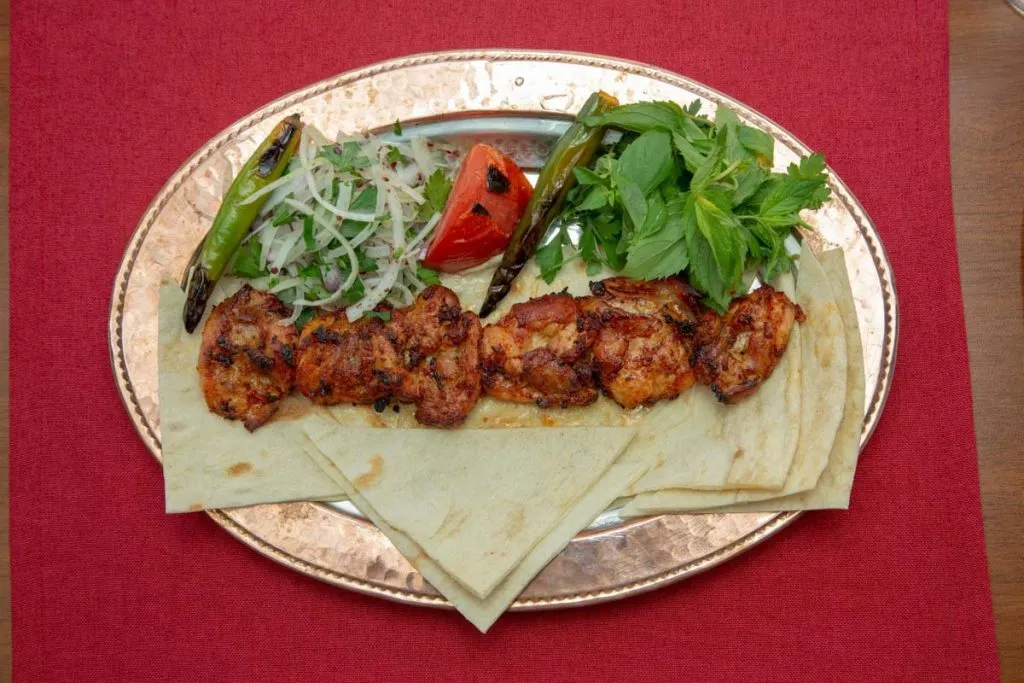
One of the most popular kebabs in the country. Cubes of chicken breast are marinated in yogurt, milk, and tomato paste, then skewered and grilled. Most restaurants serve it with bulgur pilaf, grilled tomatoes, and green peppers.
5. Yoğurtlu kebap (kebab with yogurt)
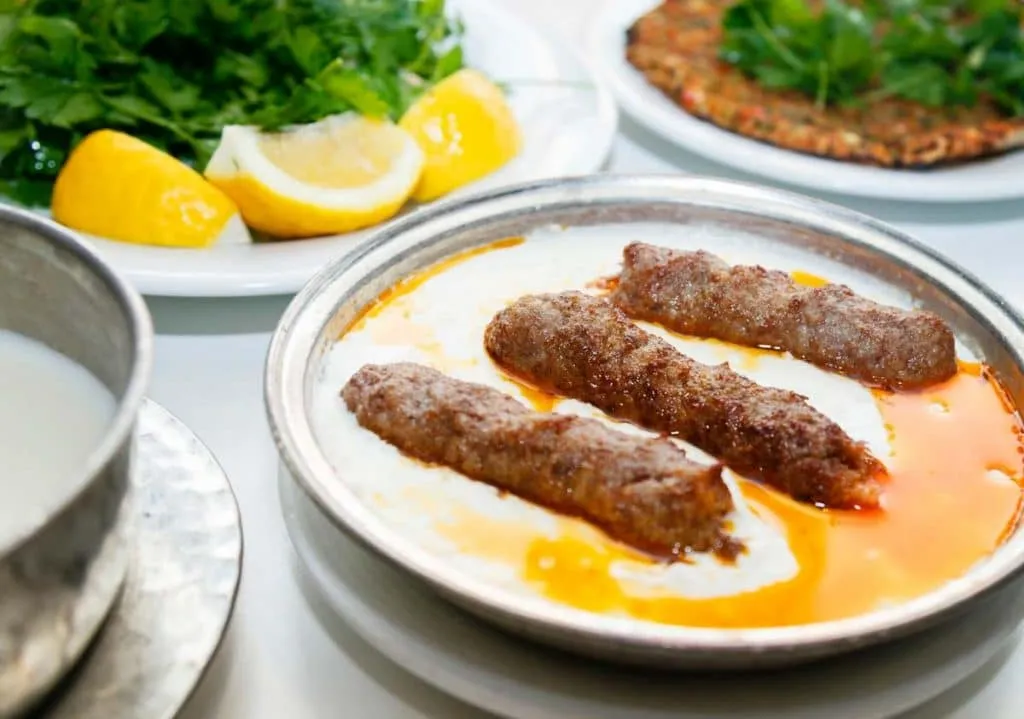
Ground meat is kneaded with salt, black pepper, and Aleppo pepper flakes, then skewered and grilled over charcoal. Pita bread softens in the cooking juices and goes on the plate first. Freshly whipped yogurt covers the bread, the meat sits on the yogurt, and melted butter finishes everything.
6. Beyti
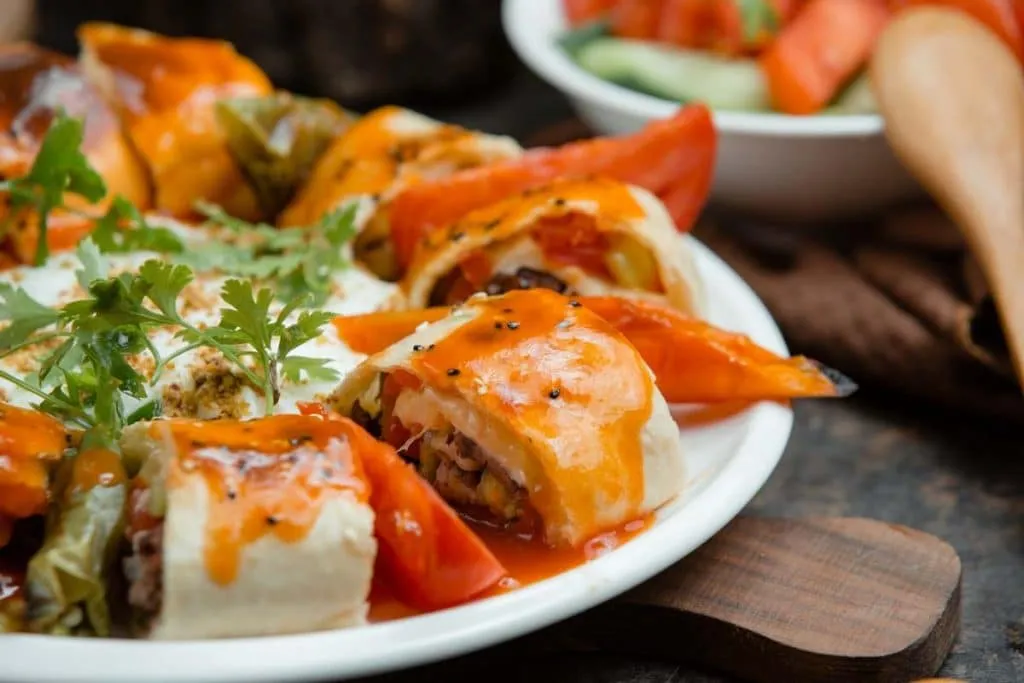
A recent invention by kebab standards. Ground beef or lamb is skewered, grilled, wrapped in lavash, and topped with tomato sauce and yogurt, and it stays juicy at both ends. The name comes from its creator, Beyti Güler, whose restaurant sits in Istanbul’s Florya district on the city’s European side.
7. Patlıcan kebabı (eggplant kebab)
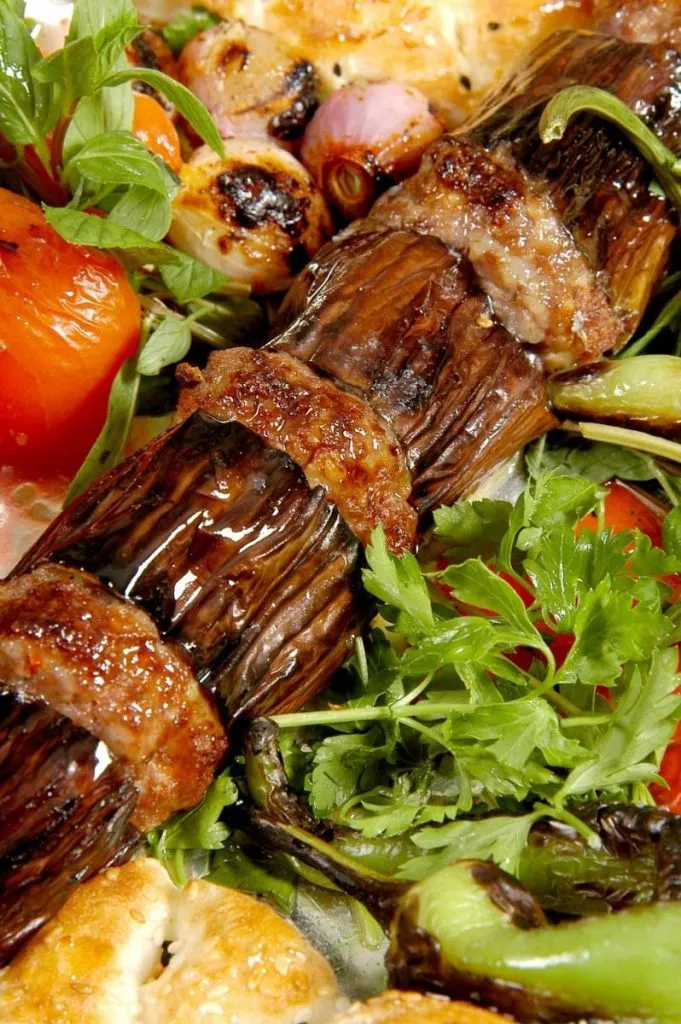
Turkey takes eggplant seriously, and this kebab proves it twice. One version skewers marinated kebab meat with eggplant, cooks it on the grill or in the oven, and serves it with yogurt sauce. The other arranges meatballs or large pieces of lamb with onions, tomatoes, and chunks of eggplant in a wide round tray, then bakes everything together.
From the spit
The family that gave the world döner, in order of seniority.
8. Cağ kebab
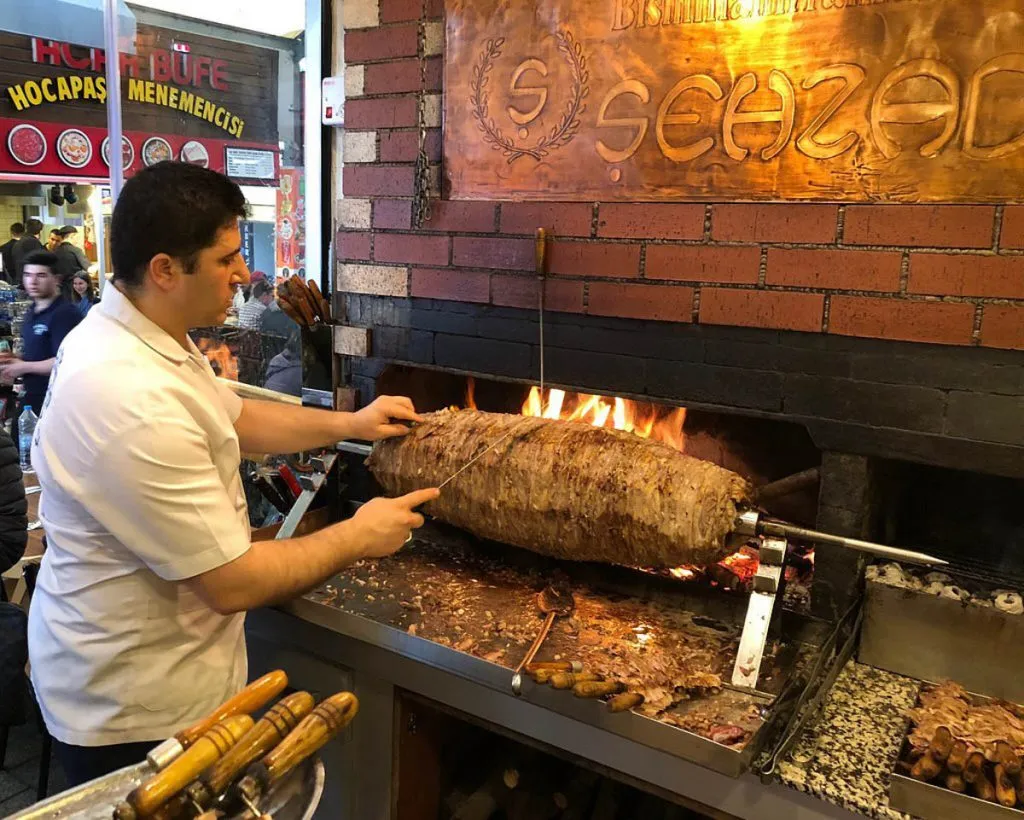
The commonly accepted predecessor of modern döner. Lamb roasts on a horizontal rotisserie, gets sliced off, and is finished on a skewer, then eaten with lavash bread. It started in Erzurum and earned a following far beyond it. We wrote a separate guide to cağ kebab in Istanbul for tracking it down in the city.
9. Döner kebab
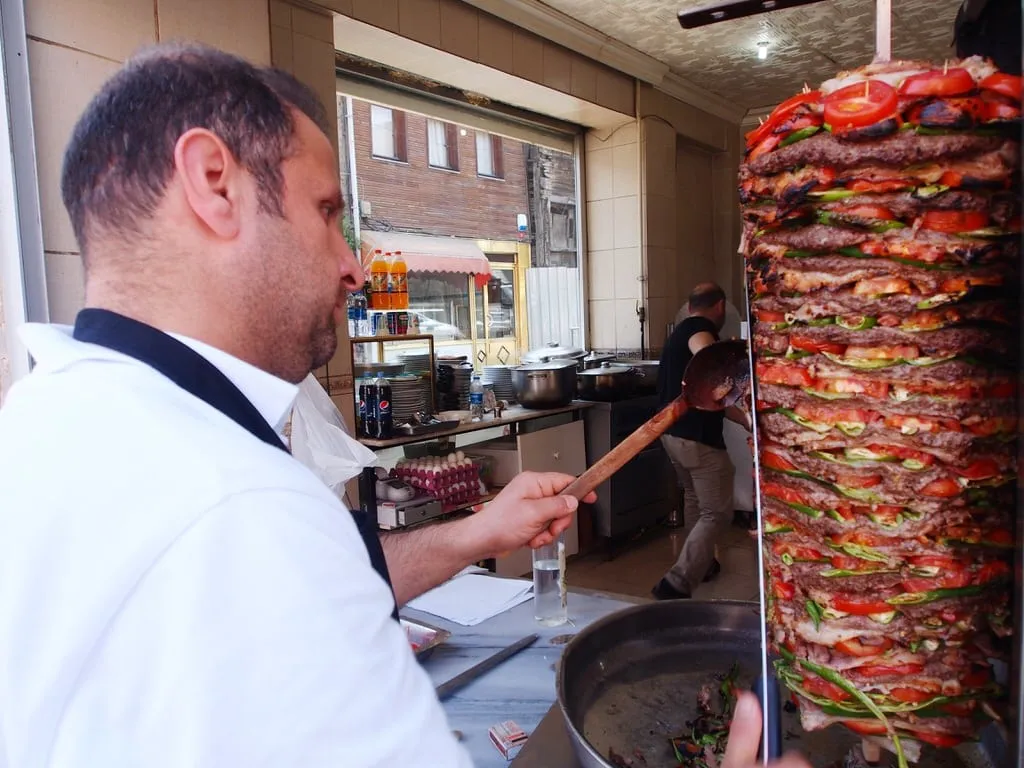
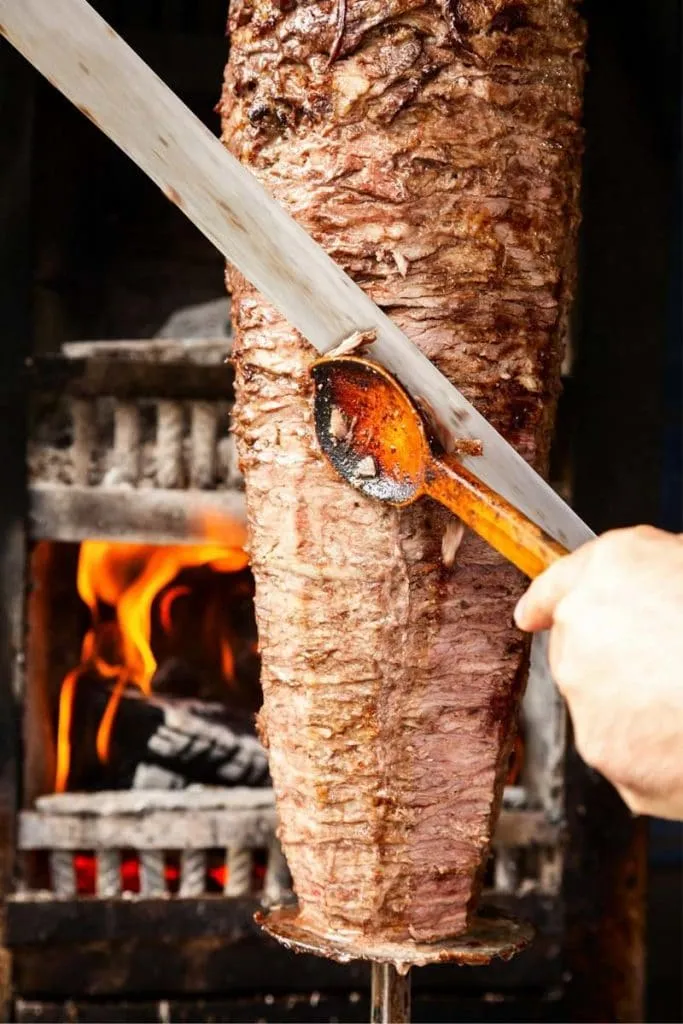
Döner means rotating in Turkish, which describes the cooking exactly: lamb, chicken, or beef roasts slowly on a vertical spit and gets shaved off in thin slices. Order it on a plate with salad and rice or potatoes, in bread as a sandwich, or rolled as a dürüm. Our list of the best döner kebab in Istanbul narrows the field.
10. İskender kebab
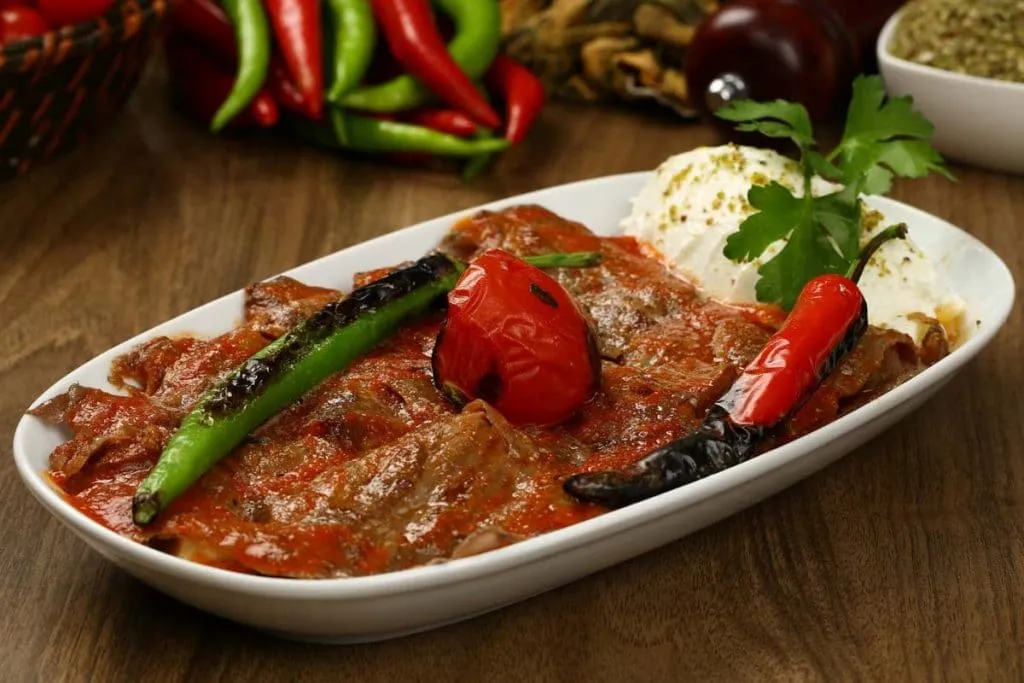
The dish that pushed İskender Efendi to build the vertical spit, from his seaside hometown of Bursa. At its core it is döner, laid over a bed of bread, covered in melted butter, with yogurt on the side. Our İskender kebab guide goes deeper on the dish and where to eat it.
From the oven
Hours of low heat instead of minutes over flame.
11. Tandır kebabı (büryan)
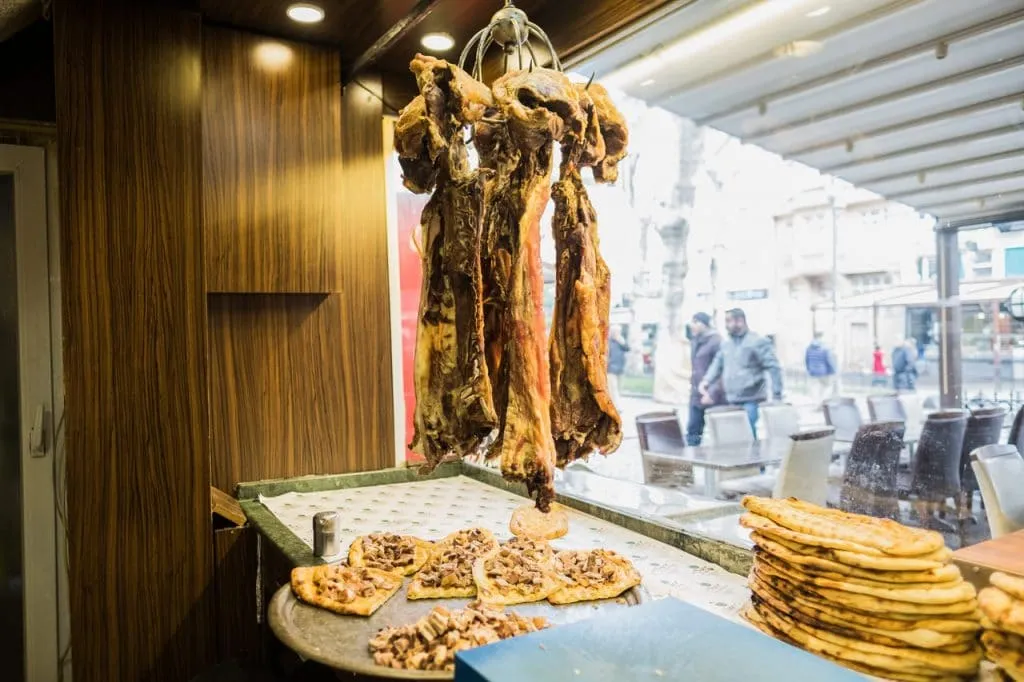
Mostly from Central and Eastern Anatolia. Lamb pieces, sometimes a whole lamb, bake slowly for many hours in a traditional oven called a tandır. The meat comes out tender enough to fall apart and is served with bread and raw onions.
12. Fırın kebabı (woodfire oven kebab)
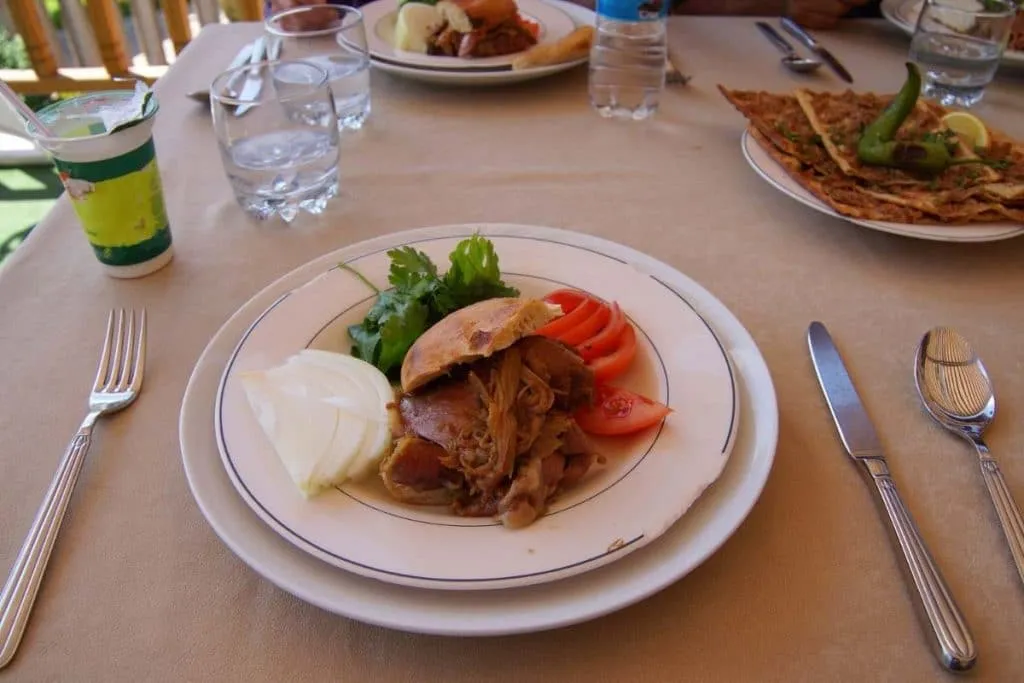
Two ingredients: lamb and salt. Only the forearm and ribs are used. Lamb cooks in an oak-wood fire oven for 4 hours; mutton needs 8 to 10. The finished meat is placed on pita bread and served with fresh onions and ayran. You will find it in Konya and Karaman, both in Central Anatolia.
13. Kağıt kebabı (paper kebab)
A mainstay of Malatya cuisine, and the only kebab here cooked inside paper. Lamb is cut into manageable pieces, marinated with spices, and wrapped in oiled paper, with tail fat laid on top to keep the meat juicy. It then bakes in a wood-fired oven for 8 to 12 hours.
14. Kilis kebabı (tepsi kebabı)
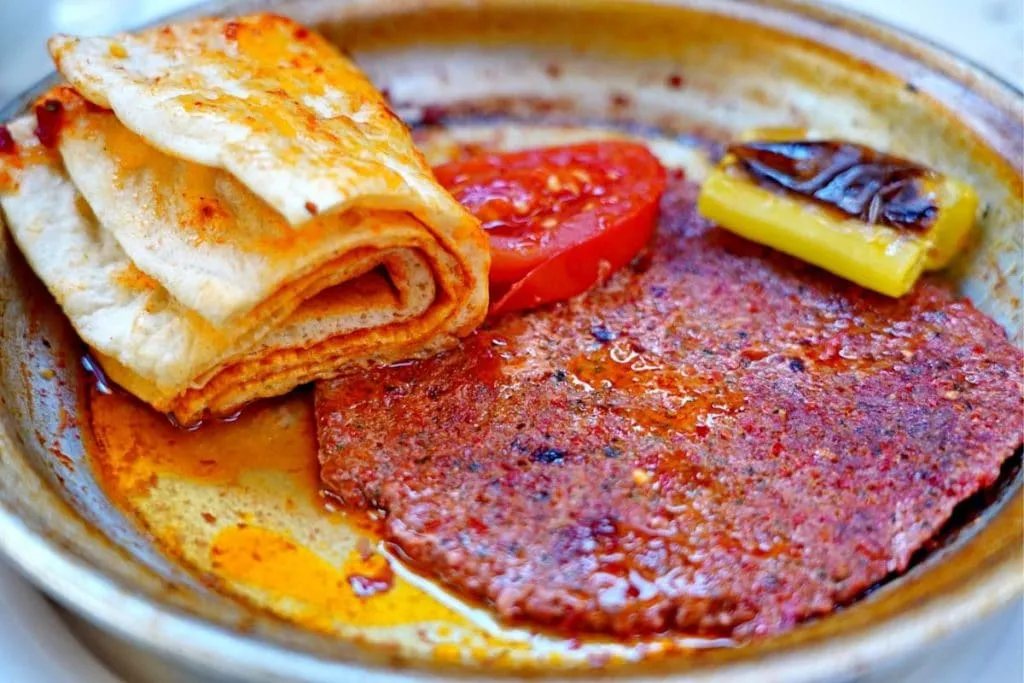
The ingredient list is short: ground lamb, red peppers, onion, and garlic. The marinated mince is kneaded flat into a tray and baked with sliced tomatoes and peppers arranged around the edge. The name comes from Kilis, the city where it originated.
From pots, trays, and plates
No skewer required.
15. Testi kebabı (pottery kebab)
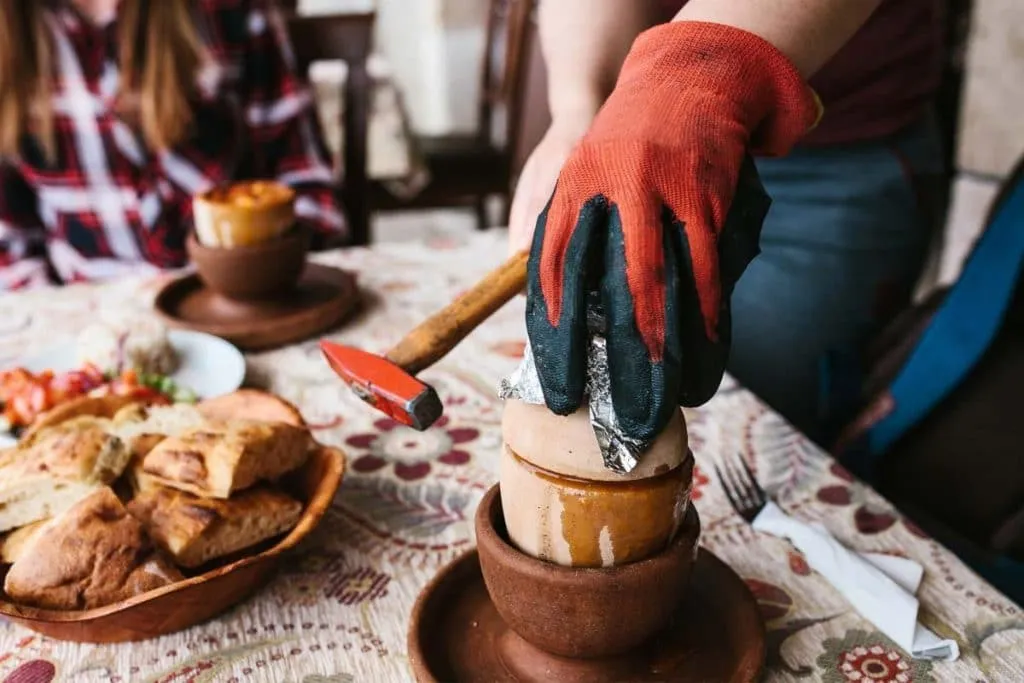
Meat and vegetables cook inside a sealed clay pot over fire; testi means jug in Turkish. The seal is broken at your table right before you eat. The style comes from Central Anatolia and the Black Sea region.
16. Hünkar beğendi (sultan’s kebab)
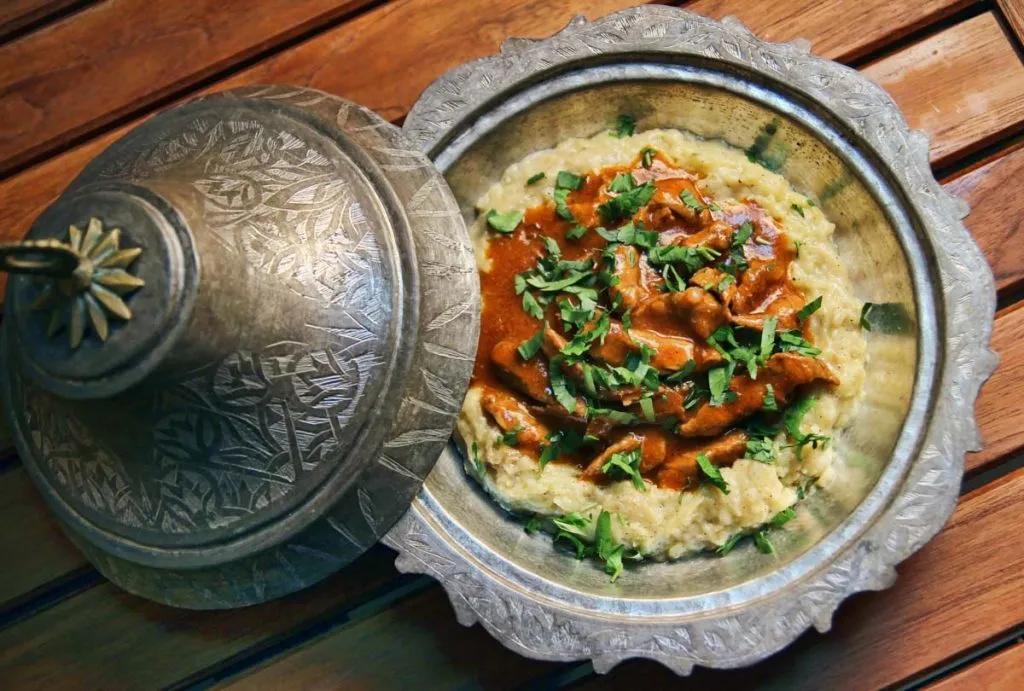
The favorite kebab of the Ottoman sultans, which earned it the nickname. Sliced lamb is served over a bed of creamy eggplant puree flavored with herbs. Comfort food with palace credentials.
17. Çökertme kebabı
Julienne-cut fillet served over thin fried potatoes with garlic yogurt and tomato sauce. Ground cumin, chili pepper, onion, and thyme handle the seasoning. You will run into it along Turkey’s Aegean coast.
18. Orman kebabı (forest kebab)
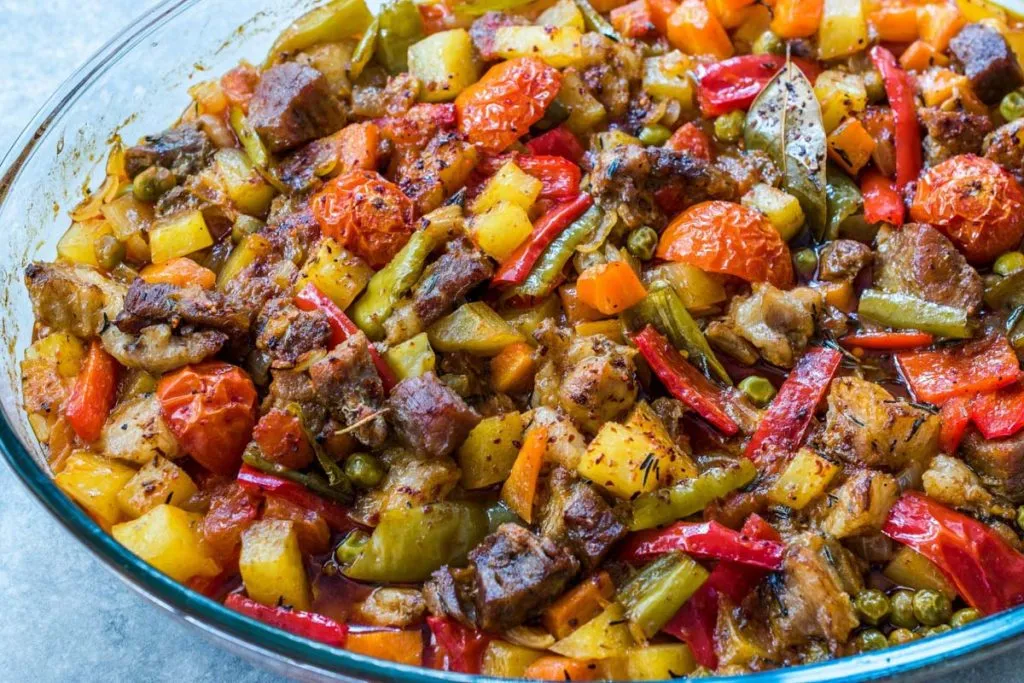
A pot kebab, cooked as a stew. It traces back to Ottoman cuisine and belongs to the Bolu region: lamb simmered with celery, eggplant, peppers, carrots, and peas. The peas are the giveaway; no other kebab on this list uses them.
19. Soğan kebabı (onion kebab)
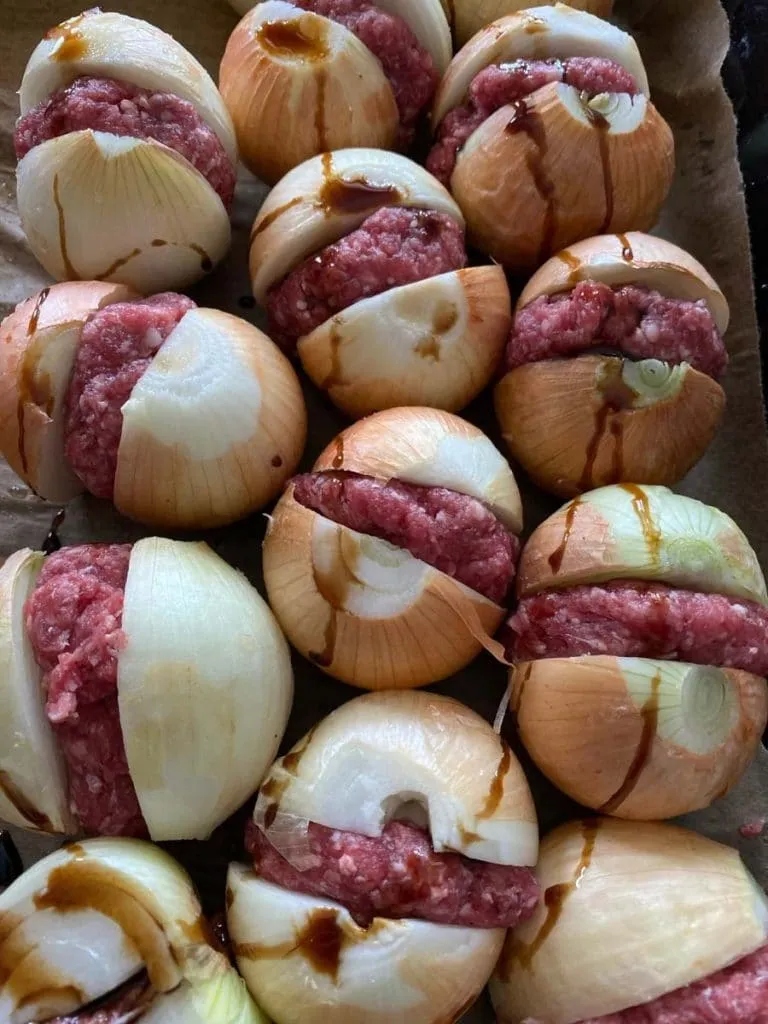
Ground lamb kofte is tucked inside onion slices and flavored with pomegranate sauce and freshly ground black pepper. The dish calls for small, fresh, red-skinned winter onions. It is also one of the easier kebabs on this list to cook at home.
20. Tokat kebabı
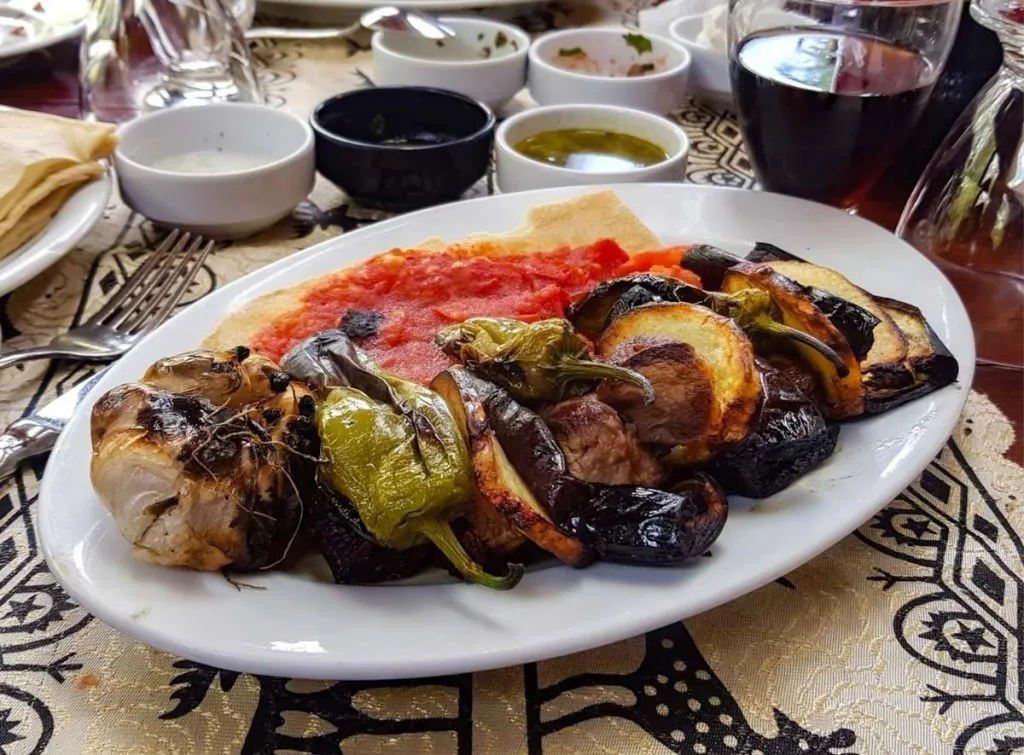
From the Tokat region, where it has been made for hundreds of years. Lamb cooks together with potatoes, eggplants, tomatoes, green bell peppers, garlic, olive oil, and onions, plus spices. Its rich flavor is why the rest of the country adopted it.
Where to go from here
Döner and şiş will carry you through a first day in Turkey. The other eighteen entries are why people keep coming back. If Istanbul is your starting point, our guide to kebab in Istanbul covers where to eat it across the city.