Street Food in Istanbul: 20 Turkish Classics and Where to Find Them
The 20 street foods to eat in Istanbul, from balık ekmek boats at Eminönü to late-night wet burgers near Taksim, with where and when to eat each one.
Twenty street foods are worth your stomach space in Istanbul, and this guide covers every one of them: what each dish is made of, where to find it, and when to eat it. The short version first. Look for balık ekmek around the Eminönü waterfront during the day. Eat simit warm, early in the morning. Save midye dolma and wet burgers for later in the day, and try kokoreç at least once. This page is the street-food chapter of our full Istanbul food guide.
Who this list is for
First visit? Treat the countdown below as a checklist and tick off as many as your stay allows. Vegetarians can eat well from carts here: çiğ köfte (meat free in its commercial form), simit, cheese or spinach börek, kumpir, grilled corn, and roasted chestnuts. Travelers with sensitive stomachs can favor food cooked to order, skip raw toppings that do not look fresh, and ask about ice if water quality is a concern. If you are feeding younger travelers, our guide to eating in Istanbul with kids covers portions, spice, facilities, and a manageable pace. And if sit-down meals are more your speed, our best food in Istanbul guide covers the restaurant side of the city.
If you would rather have a local build the route and handle the ordering, you can explore Istanbul’s food neighborhoods on one of our guided tours; keep this page for the snacks you chase on your own.
Street food prices in Istanbul
There is no fixed price structure. What you pay depends on the dish, the seller, and the neighborhood; the same item costs more from a restaurant in a touristy area than from a cart on a side street. Nearly everything on this list counts as a cheap eat. Two exceptions read as delicacies rather than snacks: kokoreç and içli köfte, which land closer to mid-range. Mid-range restaurants also serve dressed-up versions of many of these dishes for more money.
All 20 at a glance
Most of these dishes are sold citywide, but a few cluster in specific areas: fried mussels along the water in Beşiktaş, Ortaköy, Kadıköy, and Kumkapı, fish sandwiches at the Eminönü shore, wet burgers around Taksim Square, börek specialties in Karaköy and Sarıyer. Our neighborhood food guides break those areas down street by street.
| Dish | Where to find it | Eat it with | Price level |
|---|---|---|---|
| Tantuni | Tantuni shops citywide | A squeeze of lemon | Cheap eat |
| Lahmacun | Widely available; wood-fired if you can | Lettuce, parsley, lemon | Cheap eat |
| Midye dolma | Carts around busy squares and nightlife areas | Fresh lemon juice | Cheap eat |
| Dondurma | Ice cream shops | Turkish coffee or tea | Cheap eat |
| Döner kebab | Thousands of shops | Pita, salad, sauces | Cheap eat |
| Kumpir | Kumpir stands | Toppings of your choosing | Cheap eat |
| Dürüm (Adana/Urfa) | Kebab shops | Ayran | Cheap eat |
| Tavuk pilav | Street carts | Black pepper, pickled peppers | Cheap eat |
| Börek | Börek shops; Karaköy, Sarıyer | Çay, before noon | Cheap eat |
| Kokoreç | Kokoreç shops citywide | Bread, red pepper | Mid-range |
| İçli köfte | Restaurant-front carts; Istiklal | Hot or cold | Mid-range |
| Simit, açma, çatal | Bakeries and carts, early morning | Cheese, tea, honey and clotted cream | Cheap eat |
| Islak burger | Corner shops near Taksim Square | A second one | Cheap eat |
| Balık ekmek | Boats at Eminönü, daytime | Turnip or pickle juice | Cheap eat |
| Çiğ köfte | Shops all over the city | Lettuce wrap, lemon | Cheap eat |
| Köfte ekmek | Around stadiums on match days | Grilled green peppers | Cheap eat |
| Midye tava | Beşiktaş, Ortaköy, Kadıköy, Kumkapı | Tarator sauce | Cheap eat |
| Corn (boiled or grilled) | Carts year-round | Nothing needed | Cheap eat |
| Roasted chestnuts | Street carts, especially in fall and winter | Nothing needed | Cheap eat |
| Halka tatlısı | Carts almost anywhere | A sweet tooth | Cheap eat |
Is it safe to eat street food in Istanbul?
No food seller is risk-free, and a permit or busy location is not a guarantee. Use visible signals: choose a seller with steady turnover, look for clean hands and utensils, and favor food cooked, fried, or carved to order. Be more cautious with cooked food that has been sitting at room temperature and raw toppings that look tired. If you have a serious allergy, a specialist restaurant with staff who can explain ingredients is a safer choice than an unlabeled cart.
A three-hour DIY Istanbul street-food route
This public route stays on the European side and does not reproduce one of our guided-tour itineraries. Start in Karaköy in the late morning with a fresh slice of börek and çay. Walk across the Galata Bridge to Eminönü for balık ekmek by the water. Then cross back and continue uphill toward İstiklal Avenue, choosing one final specialist stop for içli köfte, döner, or tantuni. Three shared portions are plenty for most people; the point is to compare formats, not finish a full serving at every stop.
Opening patterns change, so treat the neighborhoods as the route and choose a busy seller when you arrive. For more self-guided plans, use our Istanbul food itineraries.
Now the full countdown, from worth-a-detour to drop-everything.
20. Halka Tatlısı (Ring-Shaped Dessert)
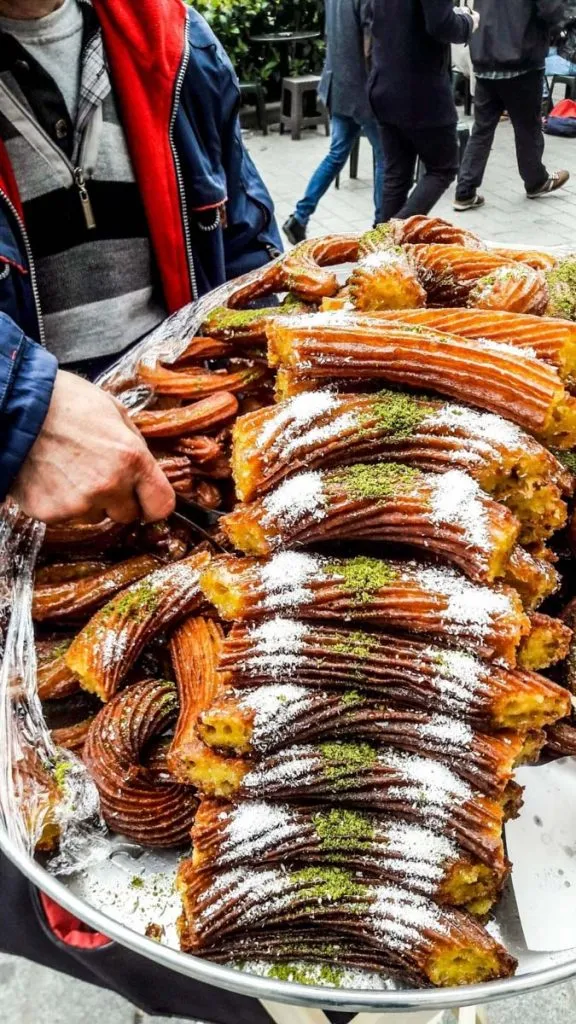
Halka tatlısı is sold from carts almost anywhere in the city, and the recipe is surprisingly basic. Dough is deep-fried, dipped in syrup, and left to cool. The result is crispy outside and very, very sweet.
Istanbul’s hills will drain you. This is the sugar boost that fixes it.
19. Kestane Kebab (Roasted Chestnuts)
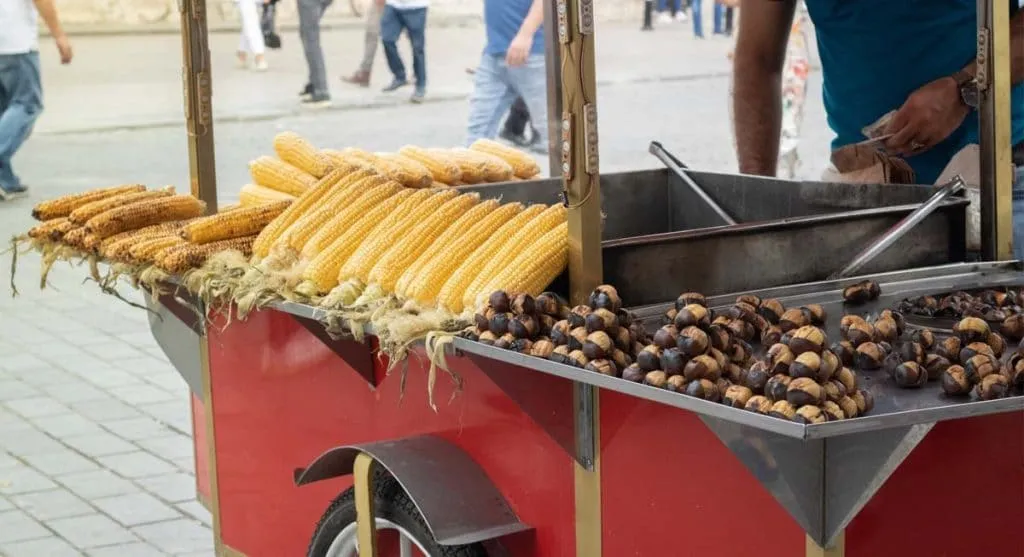
Street food does not get simpler: chestnuts roasted on a grill with the skin still on. No meat anywhere near it, yet Turks call it a kebab anyway.
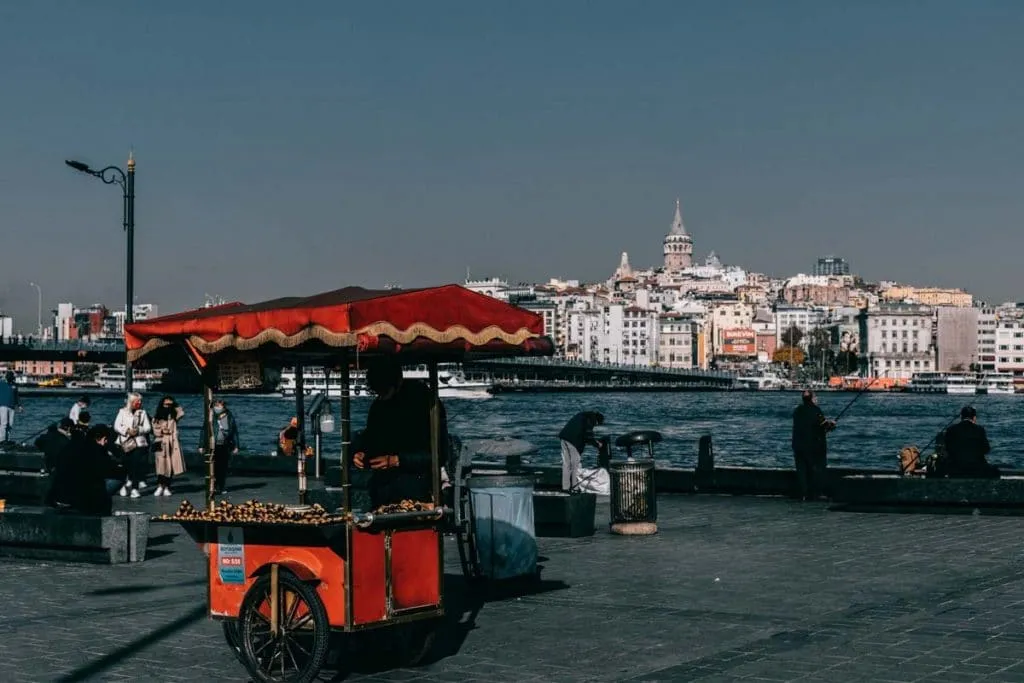
Roasted-chestnut carts are easiest to spot in fall and winter, when the nuts are in season and sold hot from the grill. The colder months are the natural time to try them.
Roasted chestnuts are mild and nutty, and they are best eaten hot from the cart.
18. Koçan Mısır & Közde Mısır (Boiled & Grilled Corn)
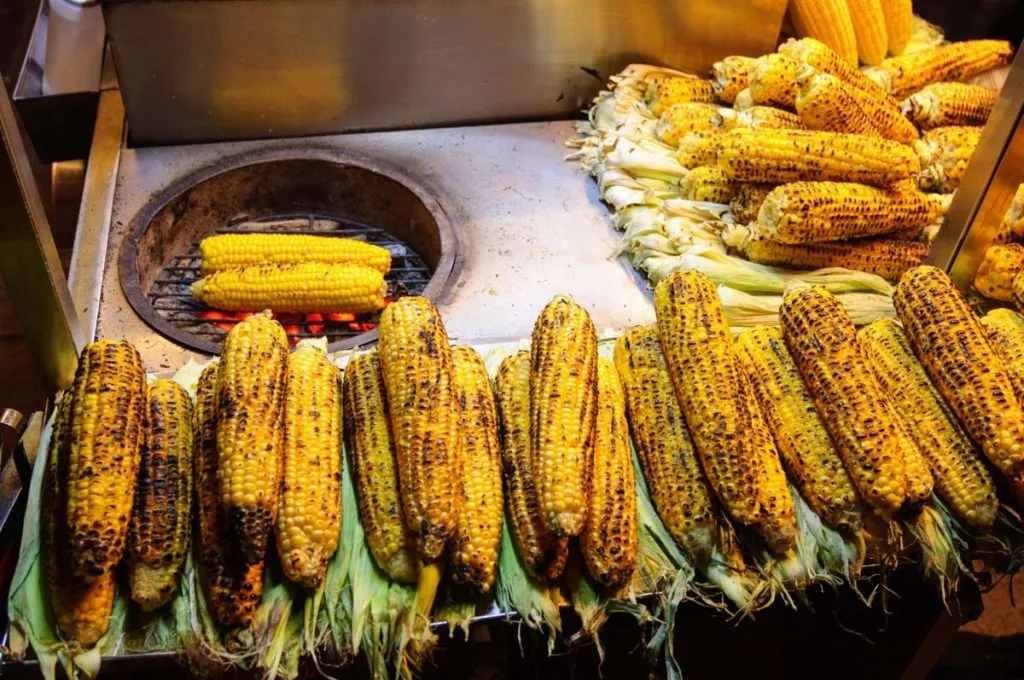
Corn is sold boiled or grilled, usually with little more than salt. Freshness varies with the season, and the two preparations taste distinctly different.
The cob comes straight from the boiling pot or the grill, so give it a minute before you bite.
17. Midye Tava (Fried Mussels)
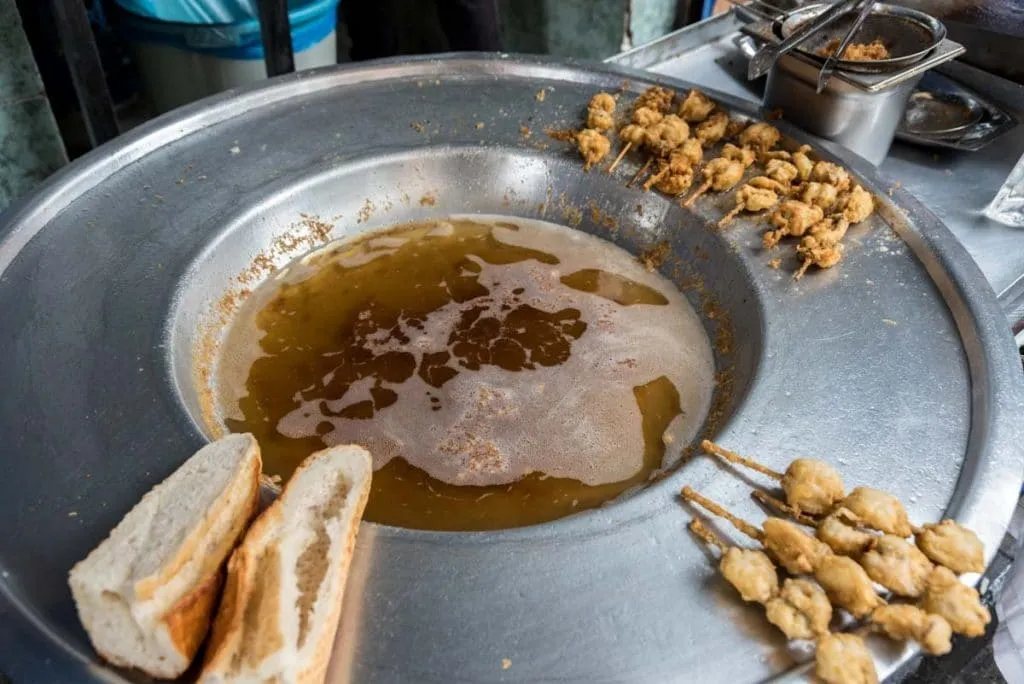
Midye tava are battered mussels fried in a huge metal pan with hot oil pooled at the center, then served on sticks. You will find them at street stands and restaurants across the city, especially in seaside neighborhoods like Beşiktaş, Ortaköy, Kadıköy, and Kumkapı.
The dipping sauce makes the dish. Tarator is made with bread crumbs, walnuts, olive oil, strained yogurt, freshly squeezed lemon juice, grated garlic, and salt. Hungrier? Order your fried mussels stuffed between crusts of Turkish bread as a sandwich.
16. Köfte Ekmek (Meatball Hero)
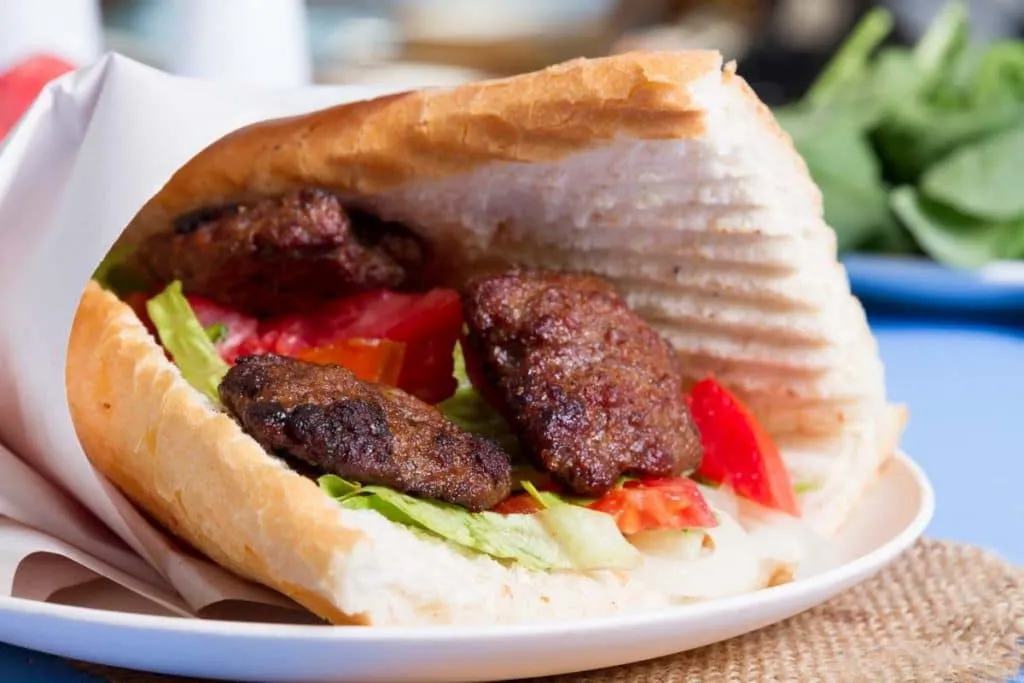
Köfte ekmek is grilled meatballs in bread with accompaniments such as sliced tomatoes, onions, parsley, and grilled green peppers. Recipes and spice mixtures vary by seller, with black pepper and cumin among the common seasonings.
Köfte ekmek is especially visible around stadiums on match days. Seller locations and event-day restrictions vary, so follow current signs and crowd controls.
15. Çiğ köfte (Raw Meatballs)
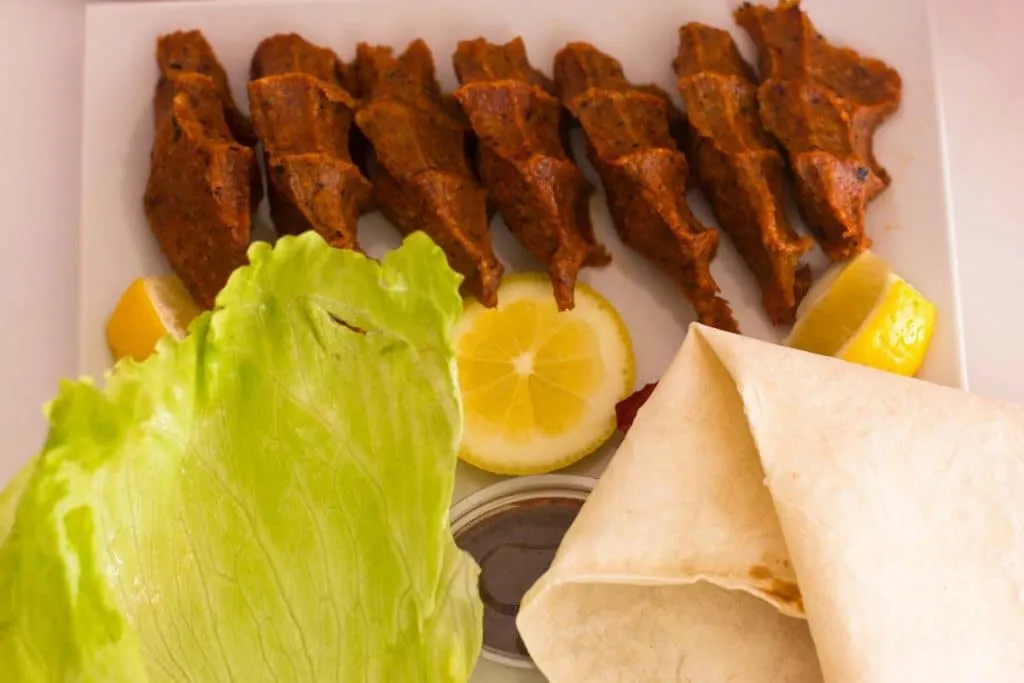
The historical recipe used finely ground lean meat kneaded with bulgur, onion, garlic, tomato, and pepper pastes. That meat version still matters to the dish’s history, but it is not what most specialist chains and shops in Istanbul sell today.
Modern commercial çiğ köfte in Istanbul is generally made without meat. The bulgur mixture itself is often vegan, but sauces, wraps, and cross-contact vary, so ask when that matters. Wrap it in lettuce with a squeeze of lemon, or have it rolled in lavash bread. For a deeper guide, see where to eat çiğ köfte in Istanbul.
14. Balık Ekmek (Grilled Fish Sandwich)
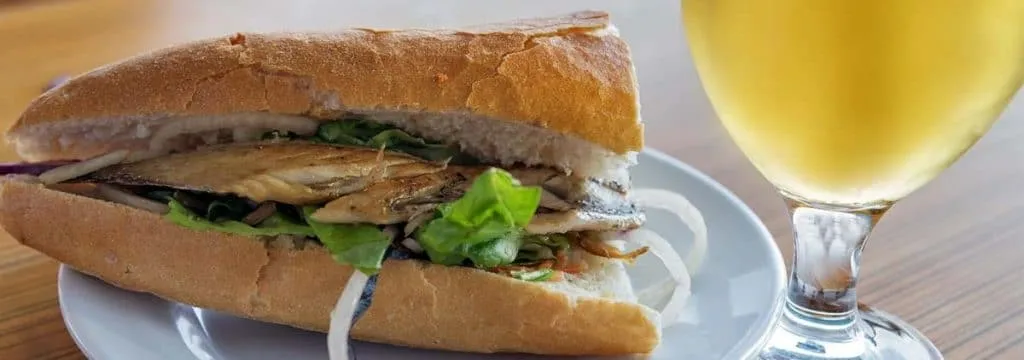
Every visitor should eat one balık ekmek: grilled mackerel, fresh lettuce, and onions in a 6-inch loaf of bread. Squeeze the lemon, and watch for bones.
Skip the restaurants and buy yours from one of the boats moored along the Eminönü shore, where the fish is grilled on board. Go between noon and nightfall; the boats are nearly impossible to find after dark. We dig deeper into the dish, the boats, and the etiquette in our fish sandwich guide.
Locals drink turnip juice or pickle juice with their fish sandwiches, both sold from stands nearby. Sour, salty, and strangely right with grilled mackerel.
13. Islak Burger (Wet Burger)
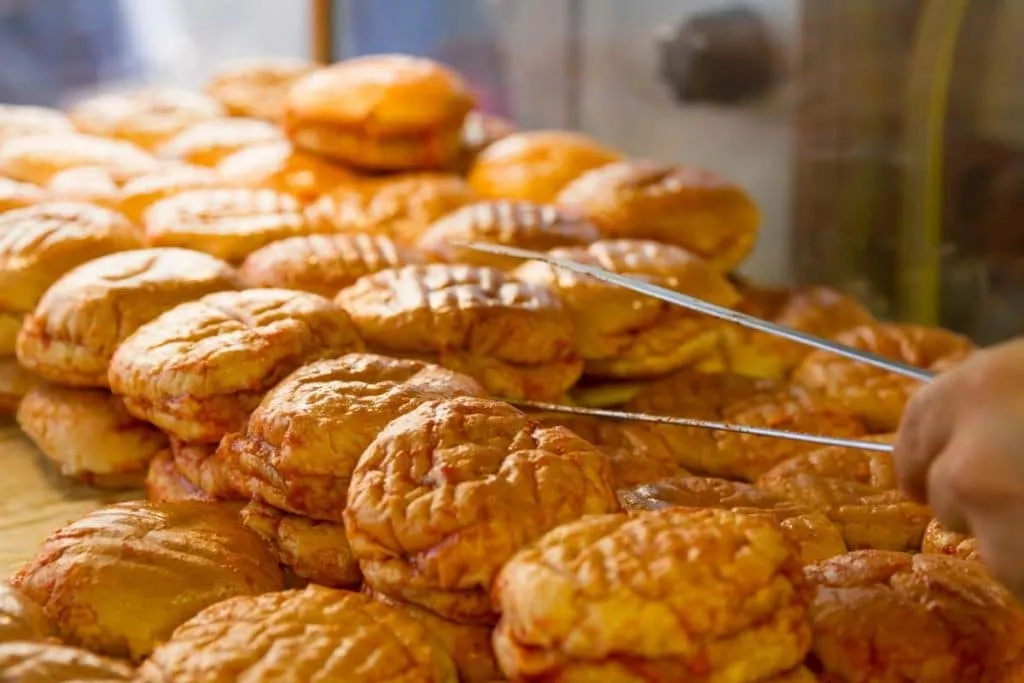
Unlike any burger you have had. A beef patty in a soft white bun gets soaked in garlicky tomato sauce, then left to sweat inside a glass steam box, staying slightly wet until someone orders it. The longer it steams, the better it gets.
These are small; locals put away two or three in a sitting. Wet burgers are the classic end to a long night of drinking, and the corner shops around Taksim Square sell them into the small hours.
12. Simit, Açma and Çatal
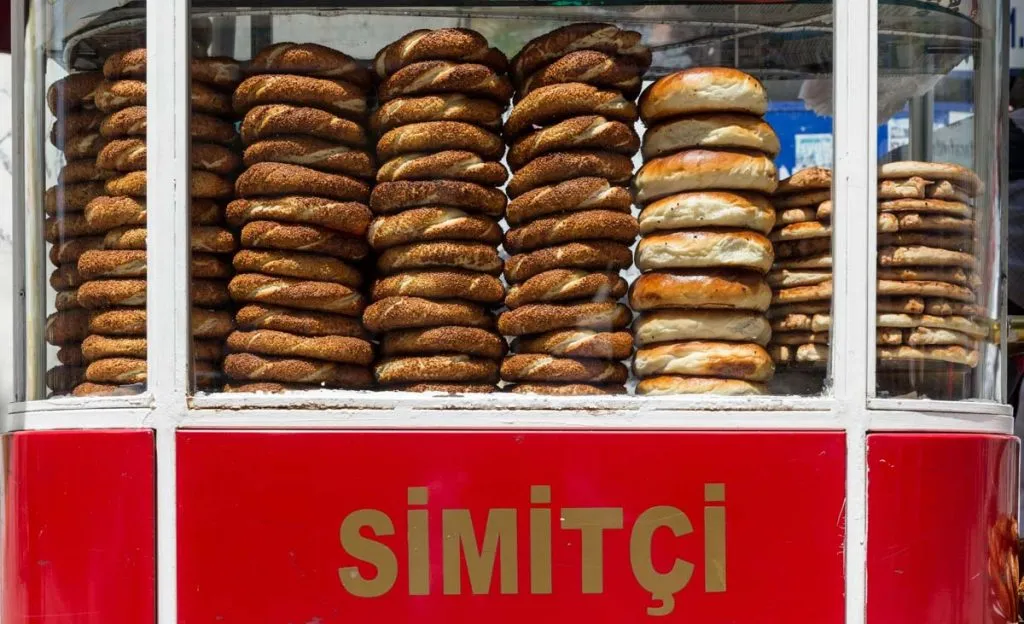
Simit is the sesame-crusted bread ring some call a Turkish bagel. Its cousins ride the same cart: çatal, drier and more crumbly, and açma, soft and close to a croissant.
All three are morning foods. Bakeries sell them fresh, and carts work the crowded squares through the day, but the earlier you buy, the fresher the simit. Eat them plain, or take the time to add Turkish cheese, a glass of Turkish tea, or clotted cream and honey. A light breakfast, and a very Turkish one.
11. İçli Köfte (Stuffed Meatballs)
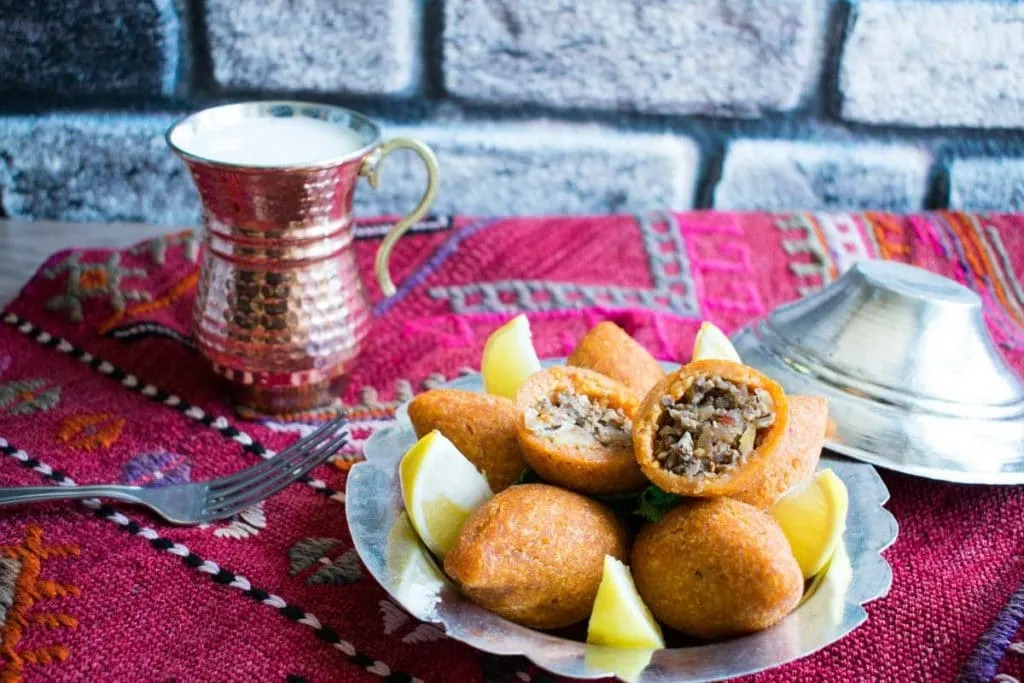
İçli köfte translates as stuffed meatballs. A shell of fine bulgur and other ingredients is packed with seasoned beef or lamb, then boiled or fried. Recipes and serving temperature vary.
The recipe takes time and care, so içli köfte now appears at restaurant counters as well as some street-facing carts. Availability changes, and it is worth asking whether the current batch is boiled or fried.
10. Kokoreç (Grilled Lamb Intestines)
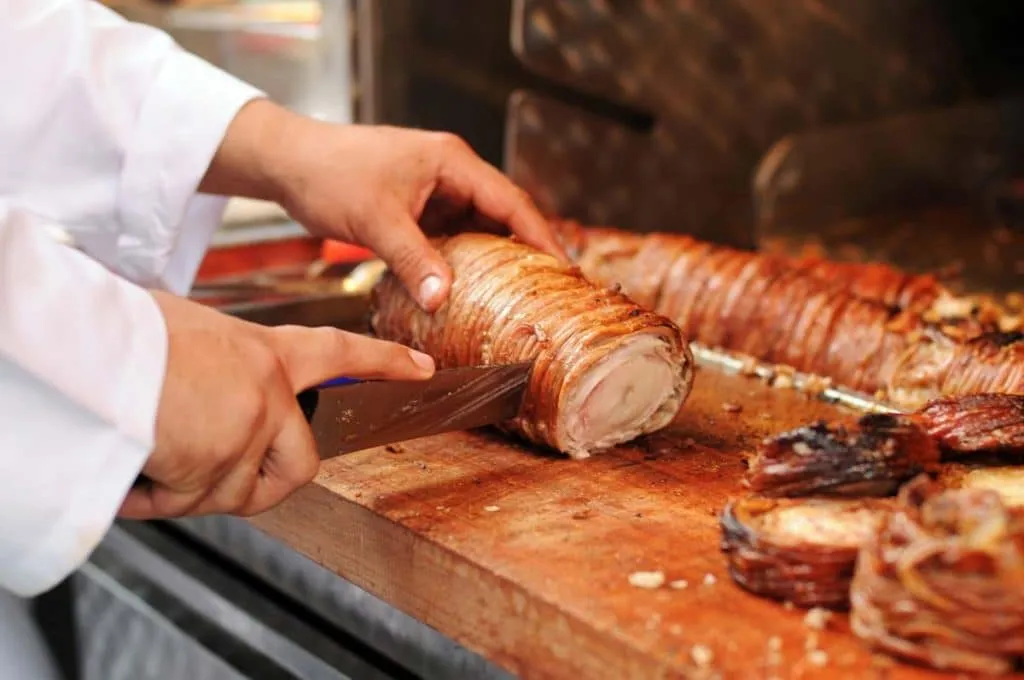
Kokoreç is grilled sheep intestines, chopped fine and mixed on the griddle with oregano, salt, red pepper, and sometimes fresh tomato, then piled into bread.
If you like offal, this may become your favorite thing in Istanbul. Kokoreç often costs more than the simplest street snacks and is commonly ordered from specialist shops. We rank the city’s best stands and shops in our kokoreç guide.
9. Börek (Baked Filled Pastries)
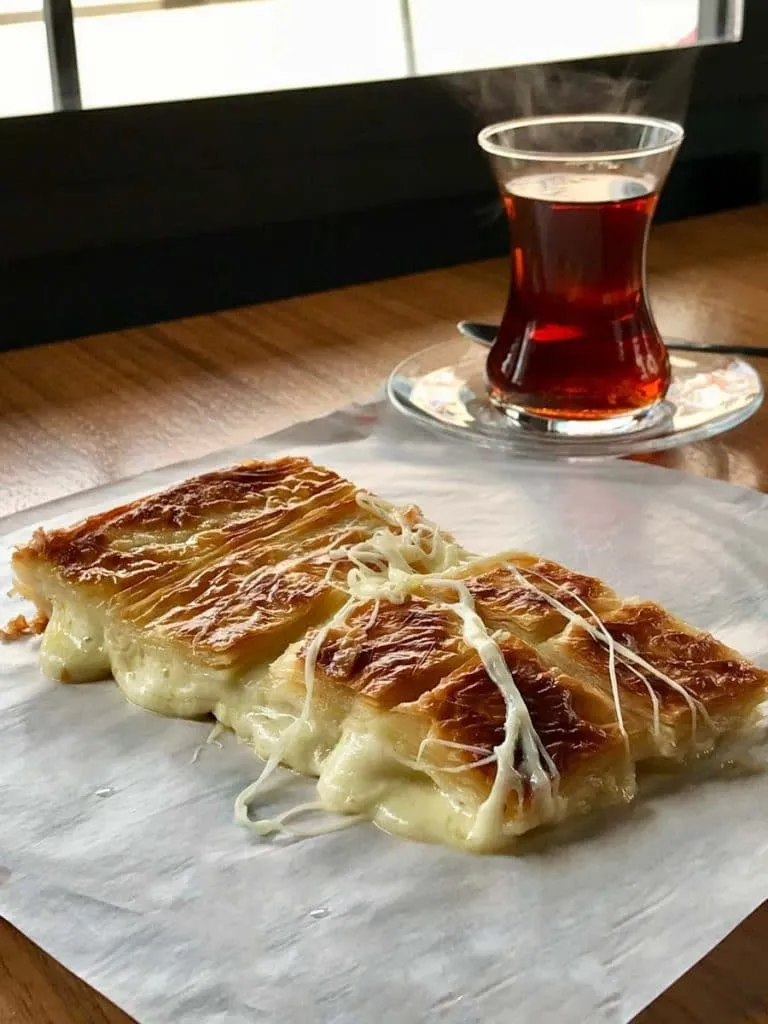
Börek is a baked pastry of puff or shortcrust dough filled with cheese, spinach, ground meat, or vegetables. Istanbul bakes many regional styles, and Karaköy and Sarıyer have specialties of their own.
Locals eat börek for breakfast, so the shops are at their best from morning until noon. Order a slice with a glass of çay and you have the standard quick Turkish breakfast.
8. Tavuk Pilav (Chicken and Rice)
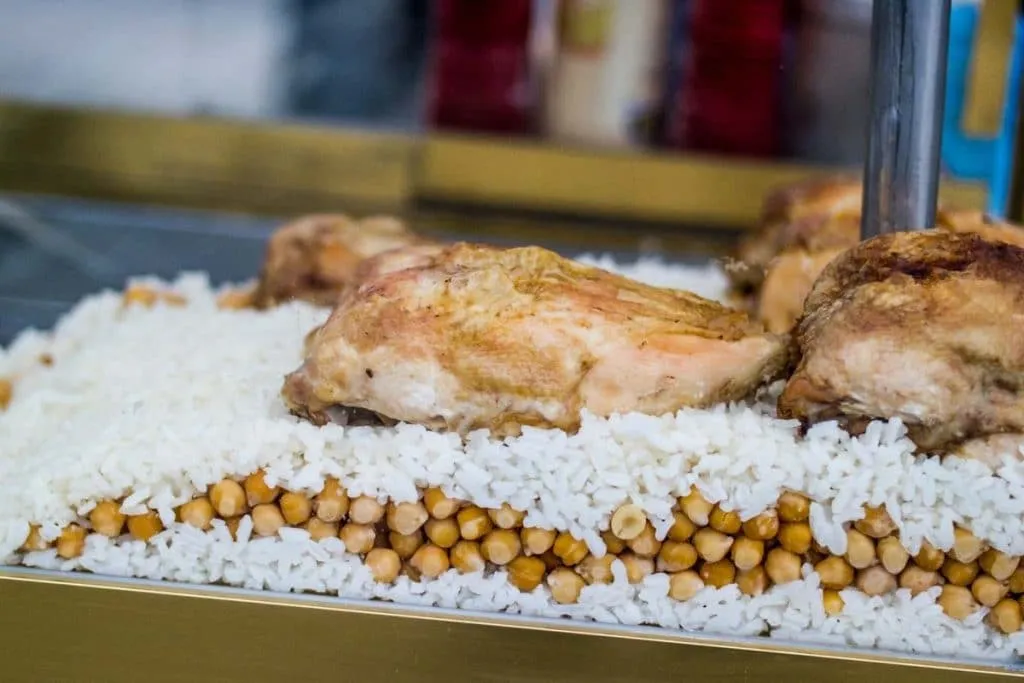
Rice is mostly home food in Turkey, but street carts sell bowls of buttery pilav topped with boiled chicken and chickpeas, and the carts have a devoted following. Turkish rice is cooked in butter and seasoned well enough to enjoy on its own; do not expect plain steamed rice.
Cheap, filling, and warming. Sprinkle black pepper over the top and take a few of the pickled hot mini peppers on the side.
7. Dürüm (Wraps)
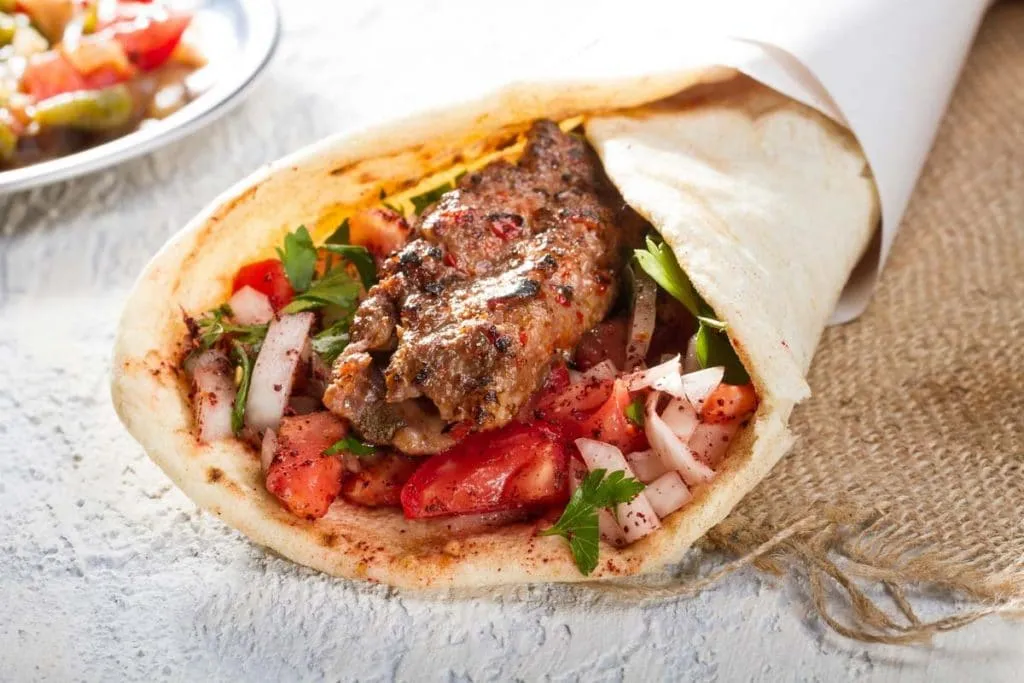
A dürüm is a wrap rolled in lavash or yufka flatbread, filled with Adana kebab, Urfa kebab, döner, çiğ köfte, chicken shish, or çöp şiş. Turks love all of them, but two rule the city: Adana dürüm and Urfa dürüm.
Both are made from ground beef or lamb mixed with lamb tail fat, which keeps the meat juicy through the charcoal grilling. The skewered meat is rolled into lavash with tomatoes, onions, lettuce, and parsley. Same recipe, one difference: Adana is the spicy one. Order ayran, the salty yogurt drink, alongside either.
6. Kumpir (Baked Potato)
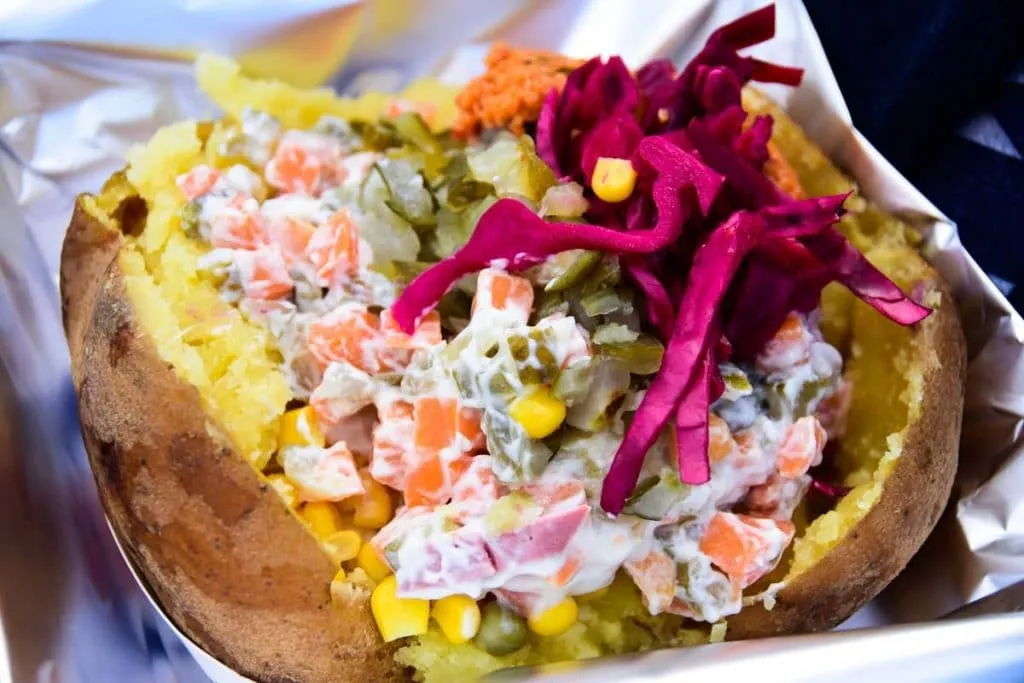
Kumpir is filling and strongly associated with the rows of baked-potato counters in Ortaköy. Prices and toppings vary by seller.
The base is a huge baked potato mashed open with grated yellow cheese and butter. Everything after that is up to you: grated carrot, red cabbage, boiled mushrooms and corn, black and green olives, sausages, pickles, Russian salad, ketchup, mayonnaise. Cheese and butter come standard; the pile on top is yours to design.
5. Döner Kebab
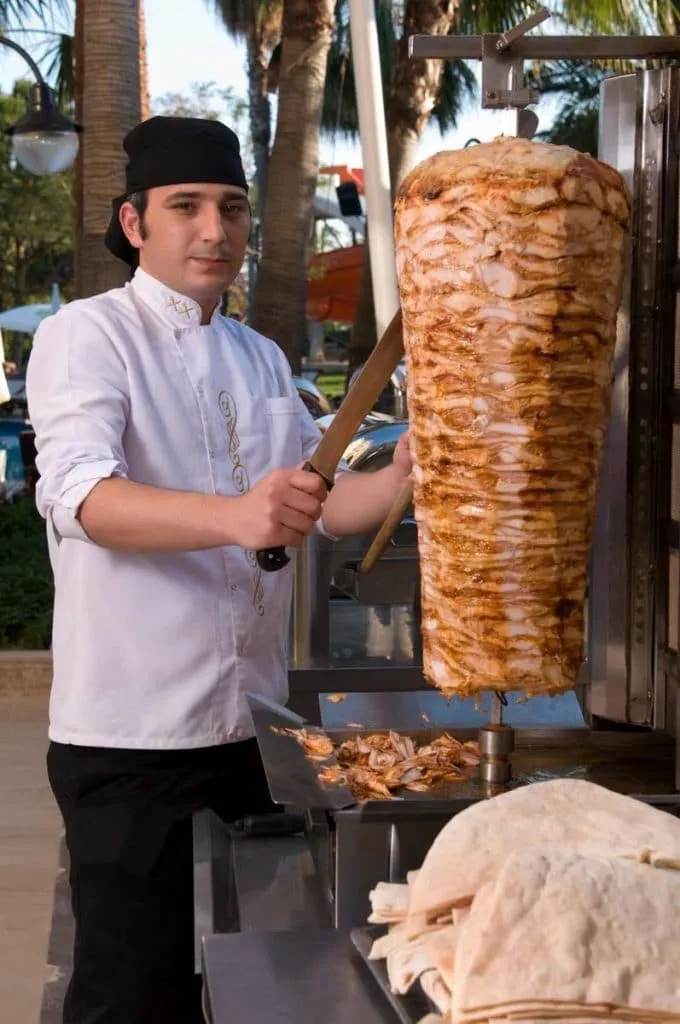
Döner shops are common across Istanbul. Lamb, beef, or chicken roasts slowly on a rotating vertical skewer, gets shaved off, and lands in bread or a wrap with accompaniments that vary by shop.
Döner long ago outgrew fast food here. The same meat anchors a quick lunch from a corner shop or a full sit-down dinner, at any hour of the day.
4. Maraş Dövme Dondurması (Turkish Ice Cream)
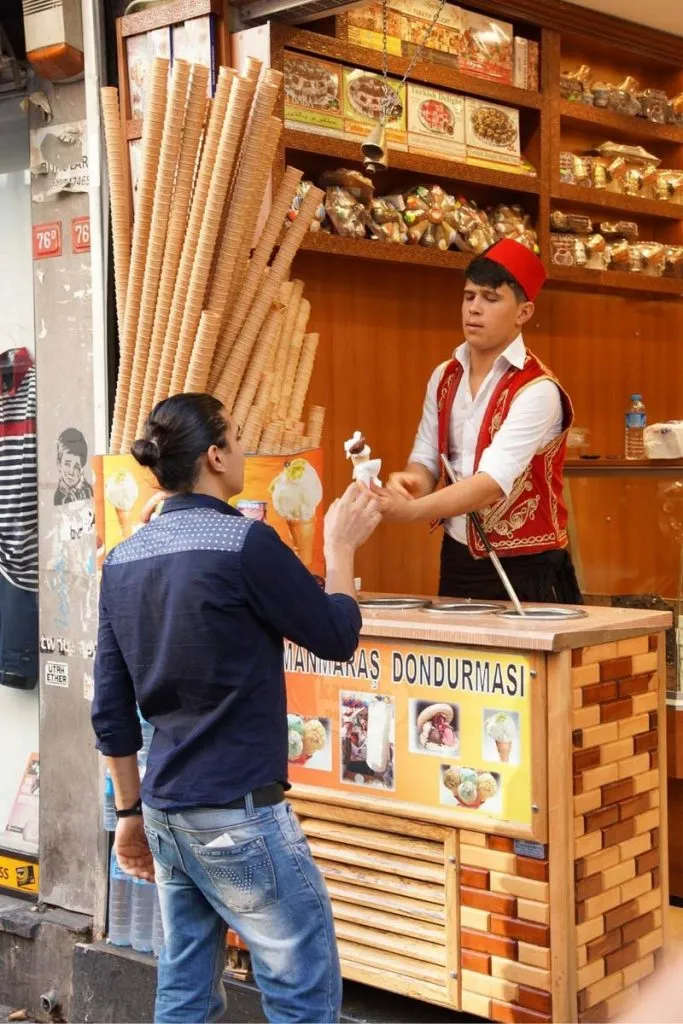
Kahramanmaraş is associated with a dense, elastic style of ice cream unlike a standard scoop. Salep, made from ground orchid tubers, helps create the familiar chew. Milk and flavorings vary by producer, so check ingredients if you have dietary restrictions.
That texture is why some shops serve it with a knife and fork, and why the vendors can taunt you with their cone tricks. It is the right way to cool down in an Istanbul summer or fall. Order a Turkish coffee or tea alongside and you have the full ritual.
3. Midye Dolma (Stuffed Mussels)
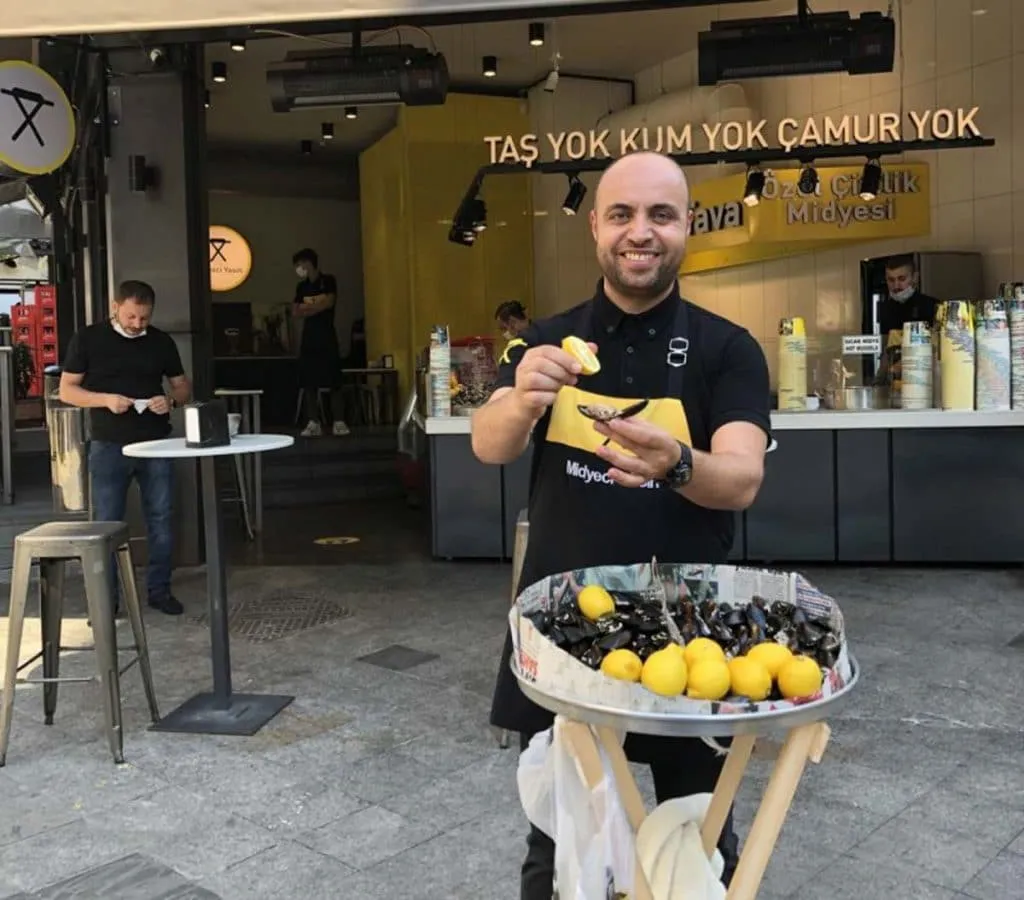
Istanbul sits between the Black Sea and the Marmara Sea, which is part of why stuffed mussels are everywhere, from carts to restaurants, in versions running mild to spicy. A few sellers have built entire restaurants around this single dish.
Each mussel is stuffed with rice, cinnamon, onion, black pepper, allspice, and sautéed pine nuts, then steamed. Squeeze fresh lemon over every one; it keeps the rice from tasting dry and sharpens the spices. Sellers often work from daytime into the evening, but hours vary. For the full rundown of fried and stuffed versions and where each shines, read our guide to the best mussels in Istanbul.
2. Lahmacun
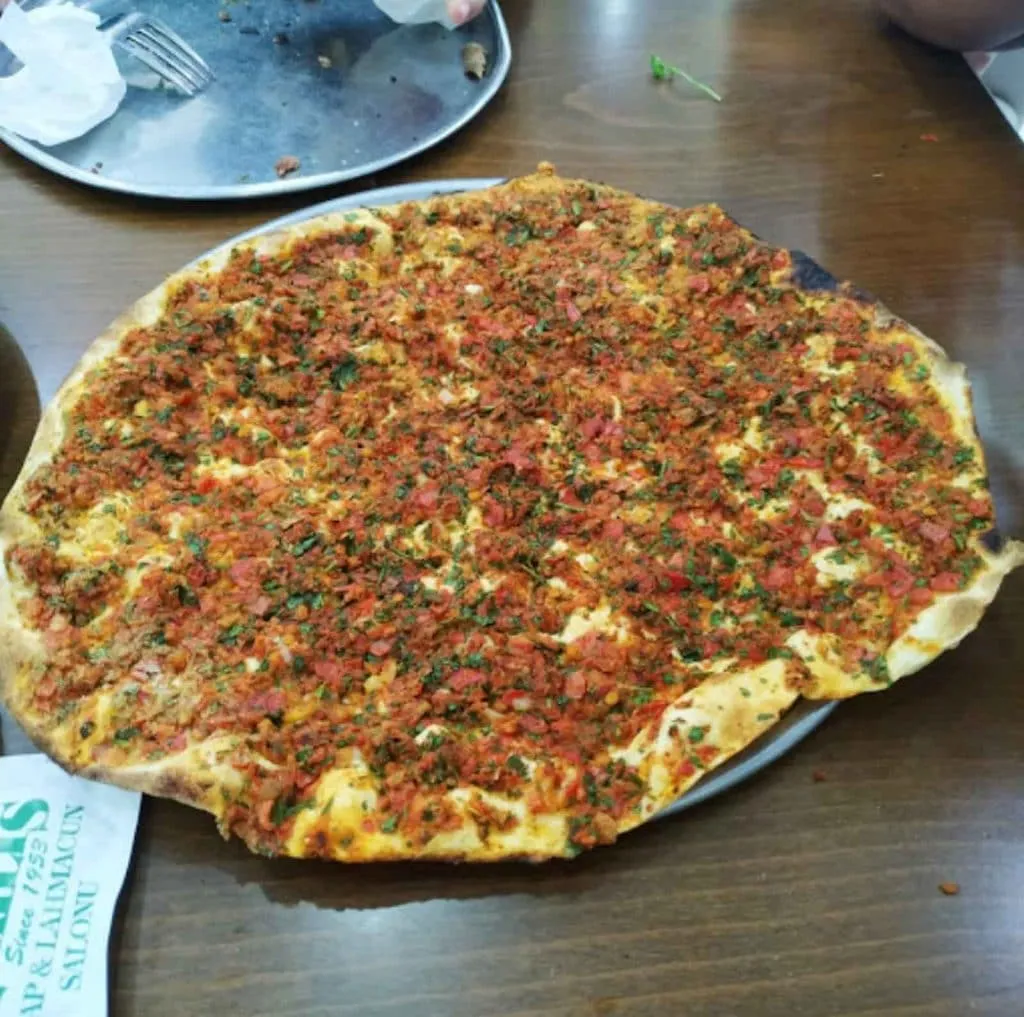
Lahmacun is a round of thin pita dough topped with ground meat, tomatoes, onions, and parsley, then baked. Tourists call it Turkish pizza, which annoys purists and sticks anyway.
It is spicy, garlicky, and meant for lunch or dinner rather than the morning. The proper technique: lay lettuce and parsley on top, squeeze lemon over everything, roll the whole thing into a wrap, and eat. Lahmacun is easy to find across Istanbul, but if you ever get the chance to eat one baked over a wood fire, do not pass it up.
1. Tantuni
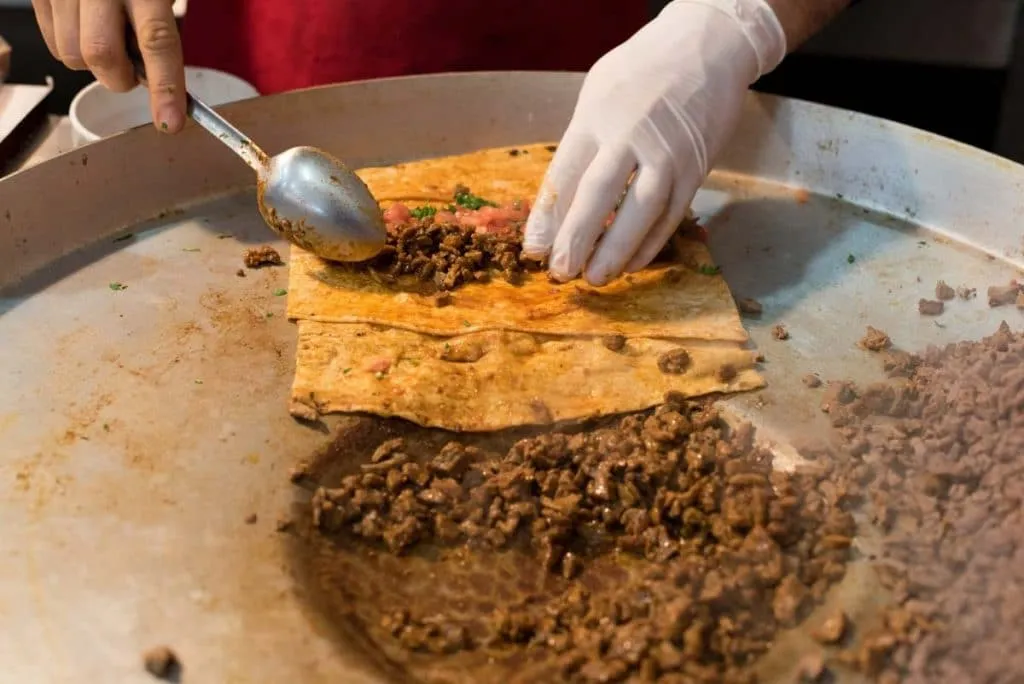
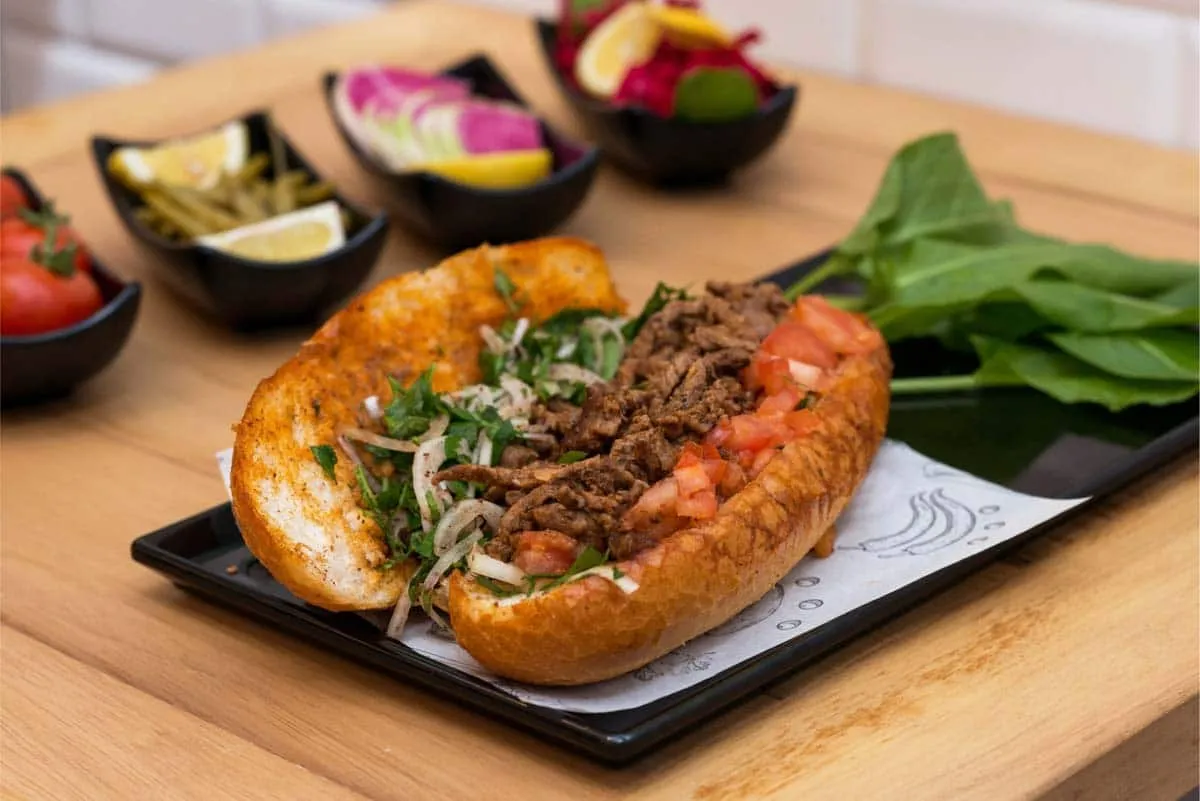
Our number one. Tantuni is julienned beef or lamb stir-fried in sunflower oil on a sac, the thin metal pan Turks use for high-heat cooking, then rolled into lavash with chopped onions, skinless tomatoes, and parsley.
Tantuni is closely associated with the Mediterranean city of Mersin. Beef versions are common, and some sellers also offer chicken. The dish can be oily, so choose the portion that suits you and squeeze a few drops of lemon into the wrap before the first bite. We mapped the city’s best spots in our tantuni guide.
Final words
Twenty dishes, one city. Start with whatever is grilling nearest to your hotel and work outward. If you want to eat through Kadıköy’s street-food shops with a guide, see our Istanbul street food tour for the current schedule and booking details. Either way, eat the simit warm.