Baklava Types: 14 Kinds Explained (and Which to Order First)
Turkish baklava comes in 14 main types, split by nut, soak, and shape: pistachio, walnut, long-keeping kuru, cream-filled şöbiyet, sütlü Nuriye and more.
Baklava is a layered pastry of paper-thin filo dough, chopped tree nuts, and a soak of syrup or milk, and it comes in far more forms than the diamond-cut squares most people picture. This guide covers 14 baklava types, from the pistachio classic to mussel-shaped newcomers, sorted by what actually separates them: the nut, the soak, and the shape.
The pastry itself is ancient and Middle Eastern in origin, yet versions now turn up in cities all over the world. In Istanbul, baklava earns its place on any list of the best food in Istanbul, and the types below are the ones you will actually see in shop windows. In Istanbul, the easiest way to understand the differences is side by side at the counter; our guided food experiences in Istanbul put those tastings into the wider story of the city’s food.
If this is your first time at a baklava counter, start with the table below, then read the pistachio and walnut entries. Travelers buying gifts should head straight to kuru. Şöbiyet and sütlü Nuriye suit anyone who finds the classic too sweet, and bakers will find a full recipe linked in the homemade entry.
Whatever the type, the fundamentals hold. Good baklava starts with homemade filo rolled thin, quality butter, and syrup with the right amount of sugar; a squeeze of lemon juice in the syrup keeps it from crystallizing. The nuts are always roasted tree nuts. Groundnuts such as peanuts are not common in baklava making.
The 14 baklava types at a glance
| Type | What makes it different | Best for |
|---|---|---|
| Pistachio | The original; ground baby pistachios, about 40 filo layers | Your first order |
| Walnut | Earthier and gentler; walnuts grow almost anywhere | Finding it outside Turkey |
| Dry (kuru) | Less but denser syrup; keeps about 30 days | Gifts and travel |
| Homemade | 15 to 20 thicker layers, diamond cut | Baking it yourself |
| Şöbiyet | Clotted cream between pistachio layers | A lighter, less sugary bite |
| Chocolate | A newcomer, sold mostly around touristy areas | Chocolate lovers |
| Havuç dilim | Carrot-slice cut from a big tray, large portion | Pairing with dondurma |
| Bülbül yuvası | Rolled into a nest shape, nuts in the center | Trying a rolled style |
| Sütlü Nuriye | Hazelnuts, soaked in milk | A cheap eat that stays light |
| Fıstık dolama | Almost all pistachio, barely any dough | Maximum pistachio |
| Yaprak şöbiyet | Dolama wrapping with a kaymak center | Cream and pistachio together |
| Saray burması | Walnut dessert from the Ottoman palace | An Ottoman-era order |
| Dilber dudağı | Lip-shaped, cold syrup over warm pastry | Maximum crispness |
| Midye | Mussel-shaped shell, kaymak with nuts | The trendy pick |
1. Pistachio Baklava
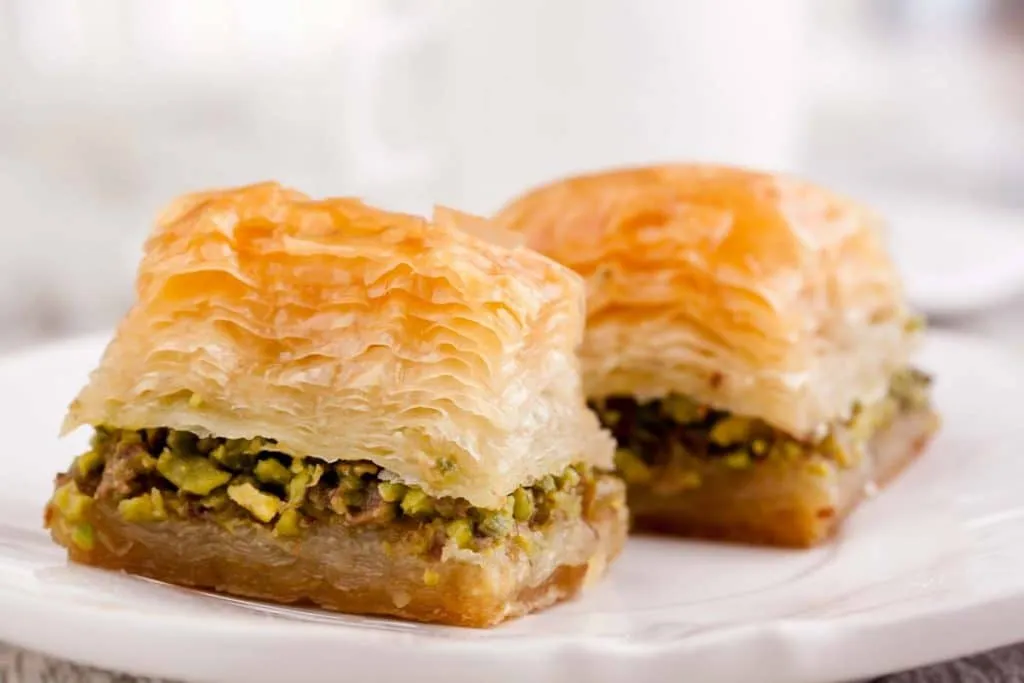
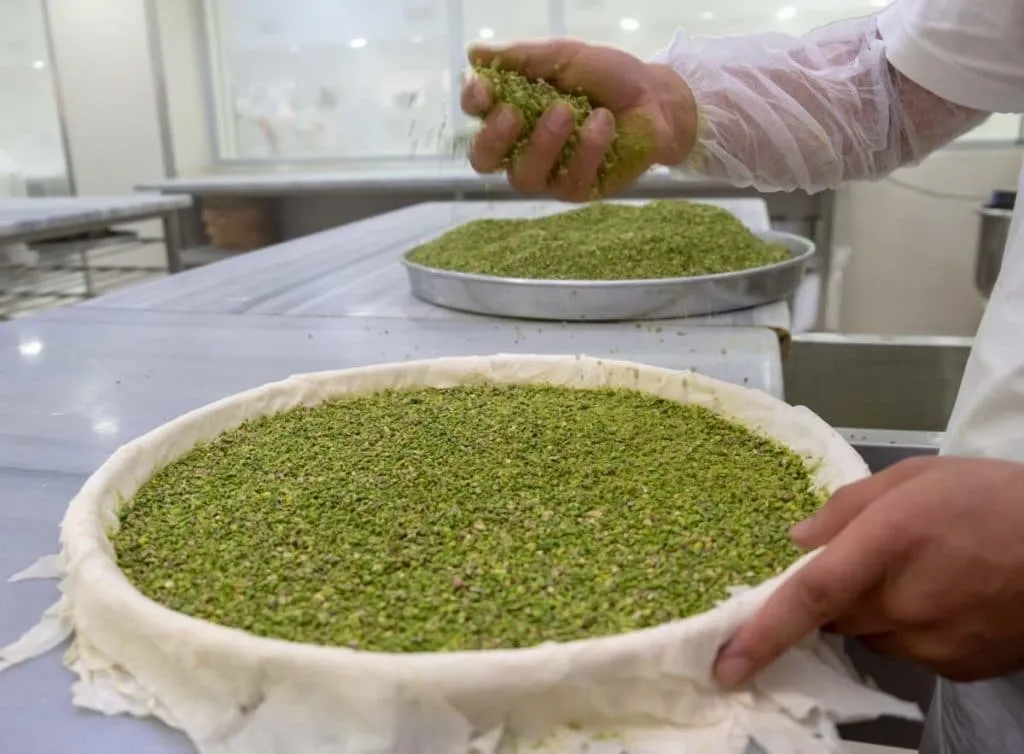
Pistachio baklava is the original, first developed in Turkey and Syria, and it has been the most popular type since medieval times. Traditional versions stack about 40 paper-thin layers of filo around ground pistachios.
The pistachios matter as much as the pastry. Bakers use baby pistachios rather than the full-grown kind you find in a supermarket, because the younger nuts are greener, carry more flavor, and have fewer tannins. The best baklava pistachios grow in Turkey, Syria, and Iran.
If you order one thing at a baklava counter, order this. Everything else on the list gets measured against it.
2. Walnut Baklava
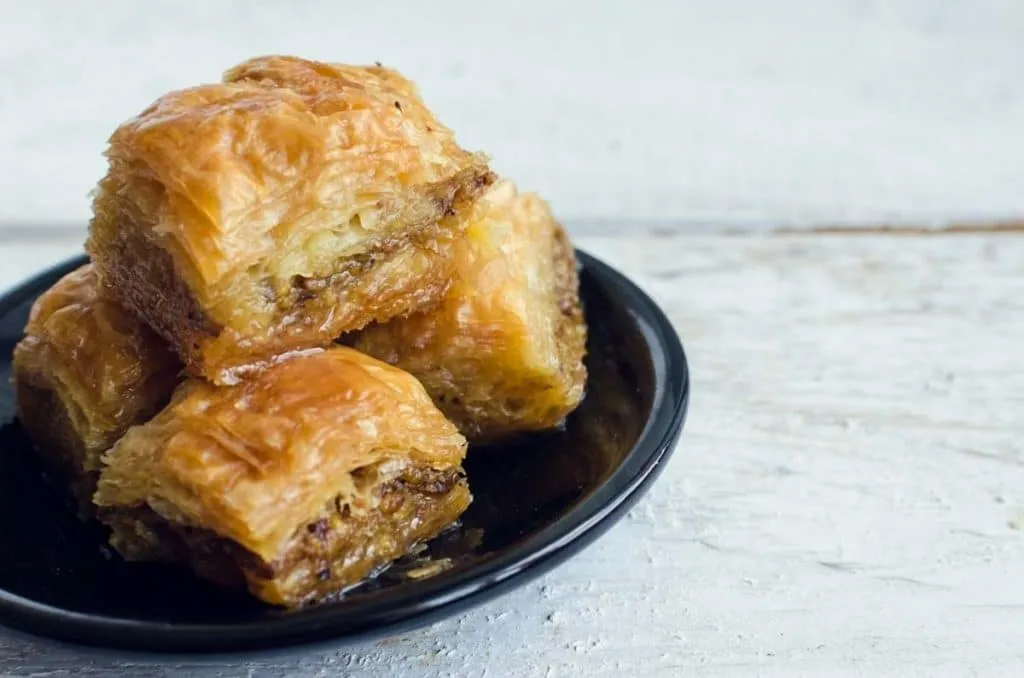
Pistachios grow in a handful of countries. Walnuts grow nearly anywhere, which is why walnut baklava is the version most of the world knows.
The walnuts are finely crushed before they are dusted between the layers. The flavor is earthy, slightly tangy, and gentler on the palate than pistachio. Restaurants around the world serve it alongside the pistachio version, and it holds its own.
3. Dry Baklava (Kuru Baklava)
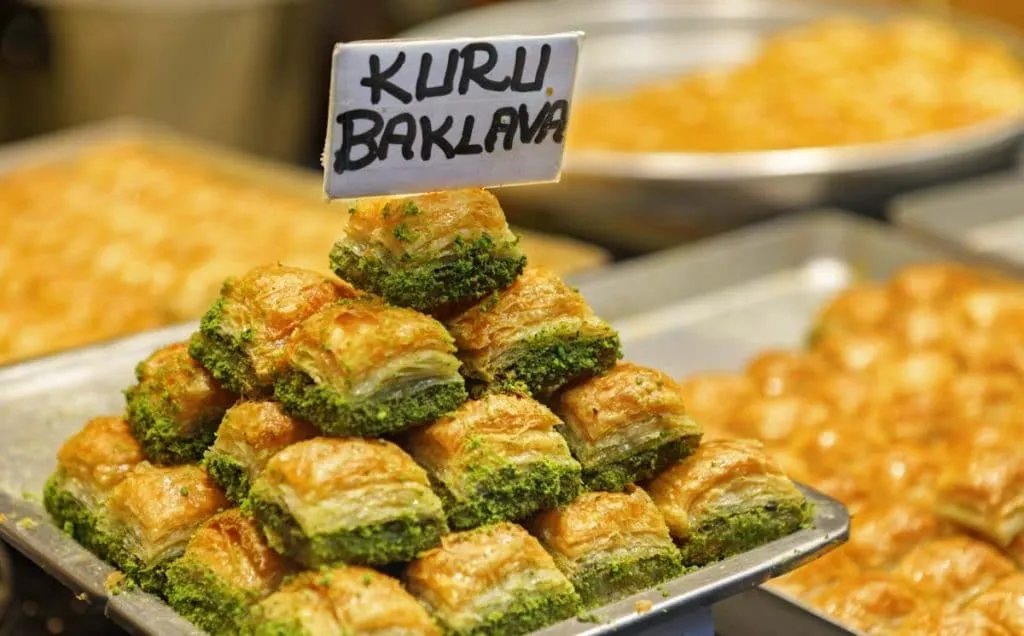
Fresh baklava does not spoil quickly, but the sugar crystallizes after 3 to 5 days and the pastry stops tasting fresh.
Dry baklava solves that. It gets a smaller amount of syrup, and a denser one, so it keeps for about 30 days at room temperature without crystallizing. No refrigerator needed.
4. Homemade Baklava
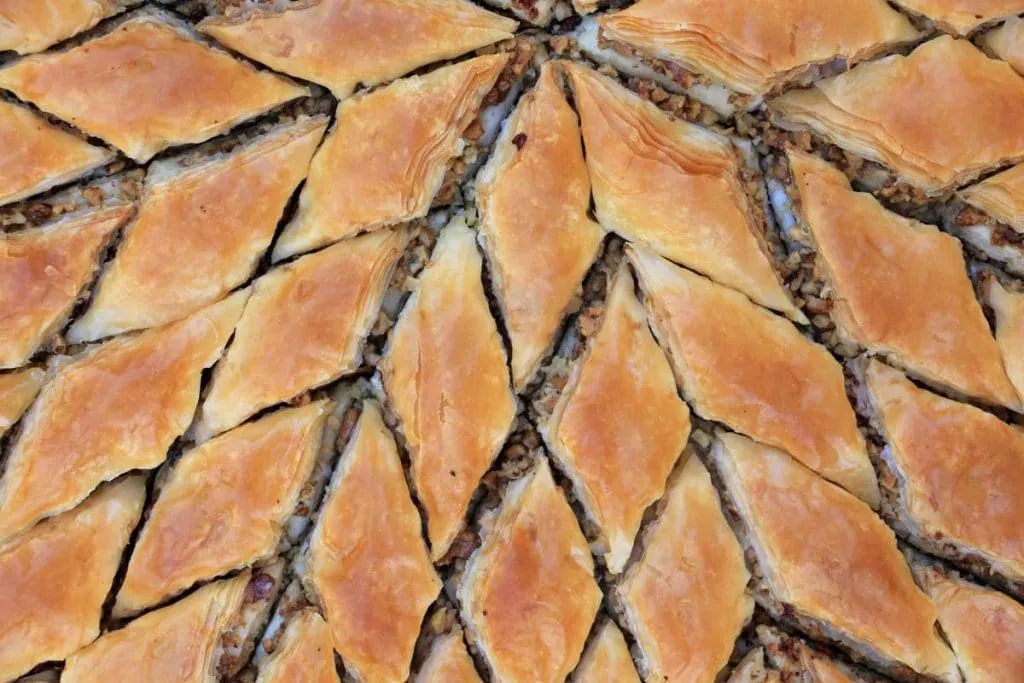
Rolling filo thin enough for 40 layers takes years of practice, which is why the work usually falls to experienced pastry chefs recognized as baklava masters.
Home cooks roll thicker sheets, so homemade baklava (ev baklavası) runs 15 to 20 layers and gets cut into diamonds. When a shop labels something “homemade baklava,” that is what it means: fewer, thicker layers of filo.
Some Turkish home versions add semolina and a splash of rosewater. If you want to try the whole process in your own kitchen, our Turkish baklava recipe walks through it step by step.
5. Şöbiyet (Cream Baklava, Shaabiyat or Warbat)
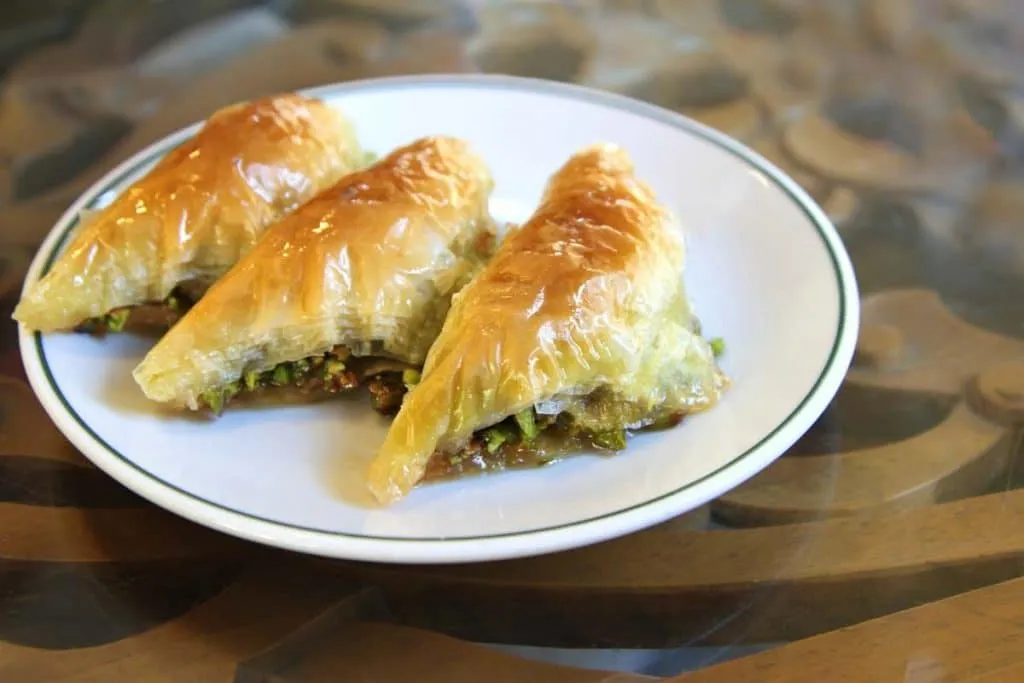
Şöbiyet folds clotted cream (traditionally from water buffalo milk) or fresh cream into classic pistachio baklava. The cream cuts the sugar, so the result tastes lighter than the syrup-soaked classics. Anyone worn out by intense sugary baklava should start here.
The catch is shelf life. The fresh cream gives şöbiyet a single day. Eat it where you bought it.
Warbat, the Arabic version of this baklava, is filled with custard in the middle.
6. Chocolate Baklava
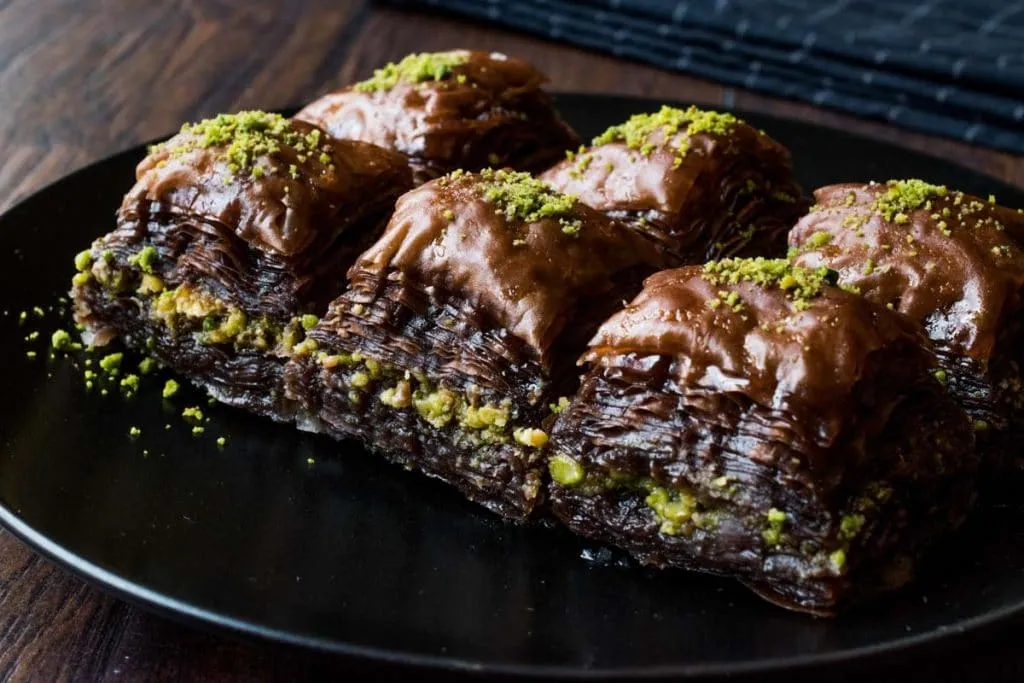
Chocolate baklava is a newcomer in Turkey, and it has been popping up mostly around touristy areas. It is gaining ground with locals, though many Turks have never tried it.
Skip it if you are sensitive to sugar or lukewarm on chocolate. Chocolate layered over syrup is a lot.
7. Havuç Dilim Baklava (Carrot Slice Baklava)
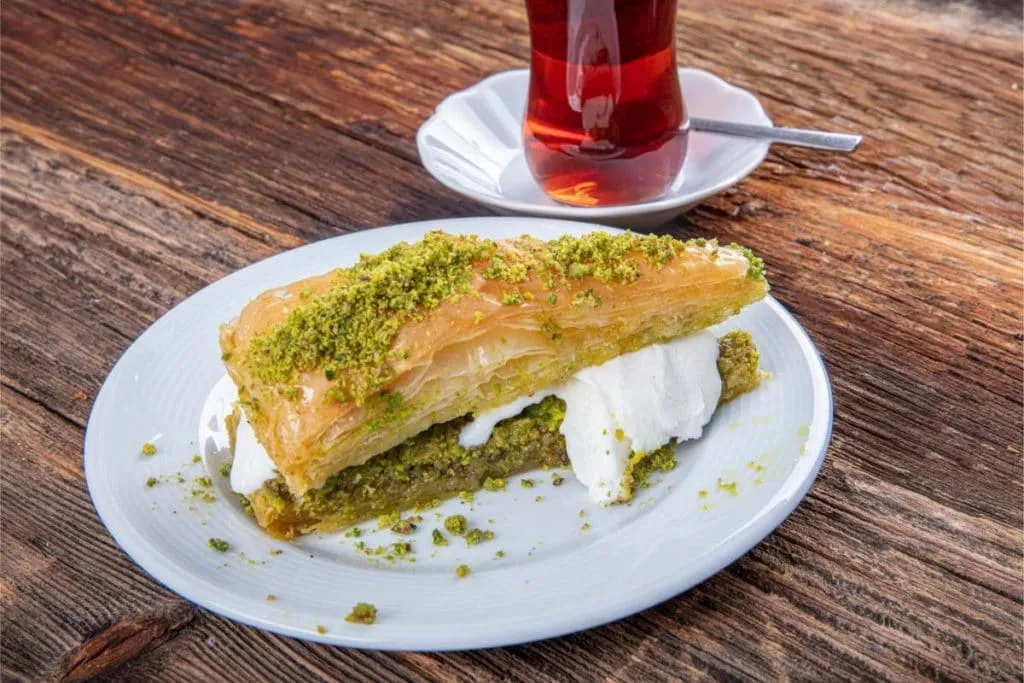
The name means carrot slice, and it refers to the shape of the cut. The baklava is baked in a large tray and sliced into long wedges that look like carrots, so the portion on your plate runs big.
The filling is walnut or pistachio, and you can find it in every baklava store in Turkey.
8. Bülbül Yuvası (Nightingale Nest)
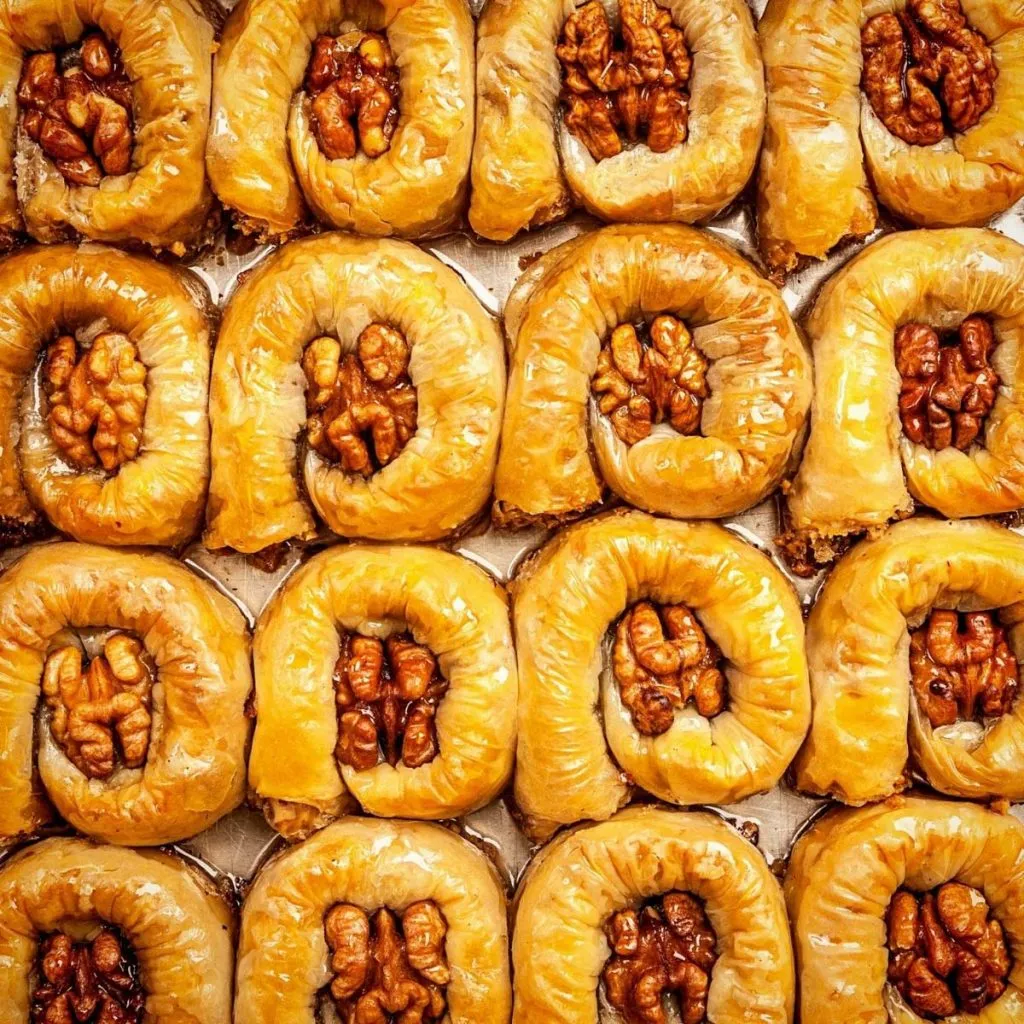
An Anatolian style made with paper-thin sheets of dough. Rather than stacking the filo, bakers roll the sheets around a slim rolling pin to form a ring, then fill the hole in the middle with walnuts or pistachios.
The name translates as “nightingale’s nest,” and one look at the plate tells you why.
9. Sütlü Nuriye
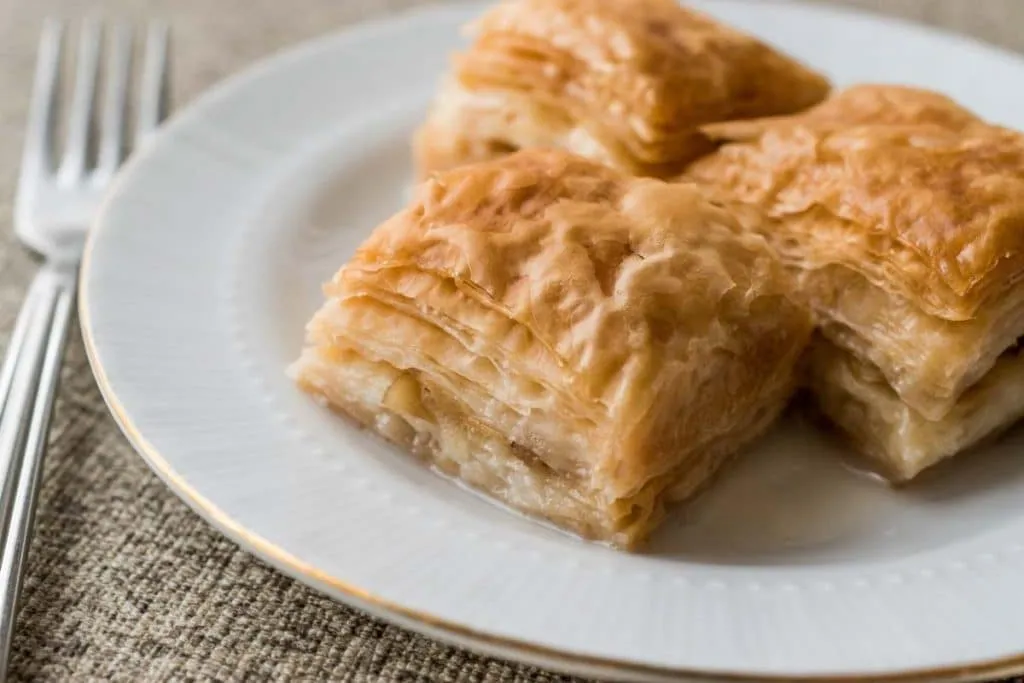
This one was born from a price cap. In 1980, the mayor of Istanbul responded to complaints about expensive baklava by regulating prices across town.
The Güllüoğlu family, one of the best baklava producers in the world, couldn’t sell their top-quality baklava at the capped price. Their answer was a new, cheaper type: Sütlü Nuriye, made with hazelnuts instead of pistachios and soaked in milk so it weighs more.
The result is sweet but still light, and it remains the cheap eat of the baklava counter. Maybe it was the type Turkey needed all along.
10. Fıstık Dolama (Pistachio Wrap)
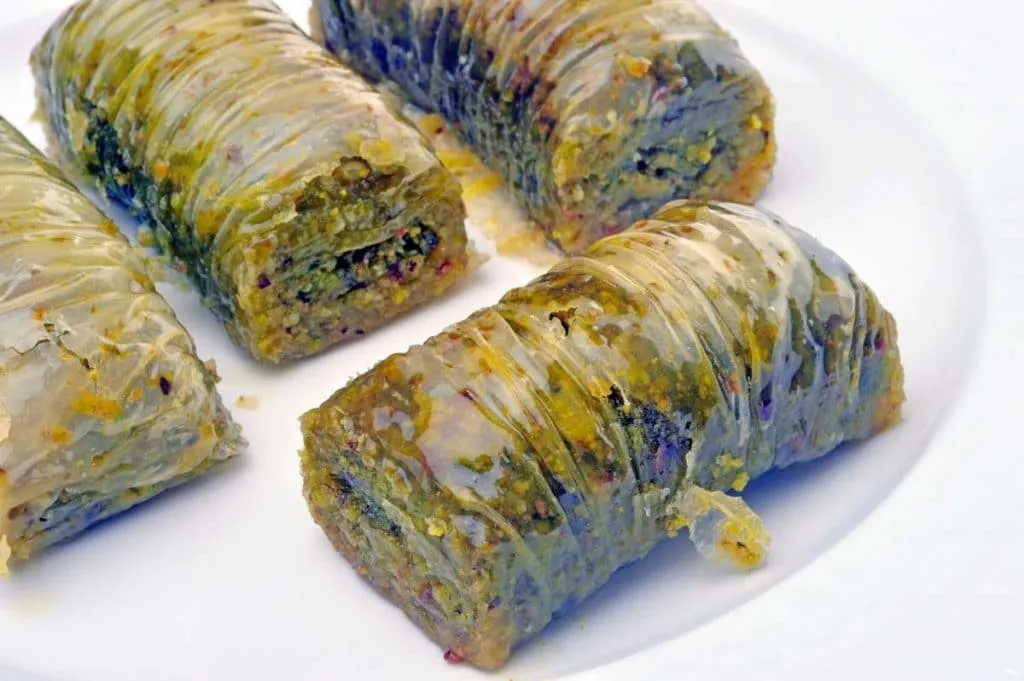
Finely chopped pistachios wrapped in an extremely thin, nearly transparent filo and soaked in sugar syrup. There is barely any pastry here. It eats closer to a dense pistachio bar than to traditional baklava.
The shiny green color makes it one of the prettiest things in the case, and the taste lives up to the look.
11. Yaprak Şöbiyet (Leaf Şöbiyet)
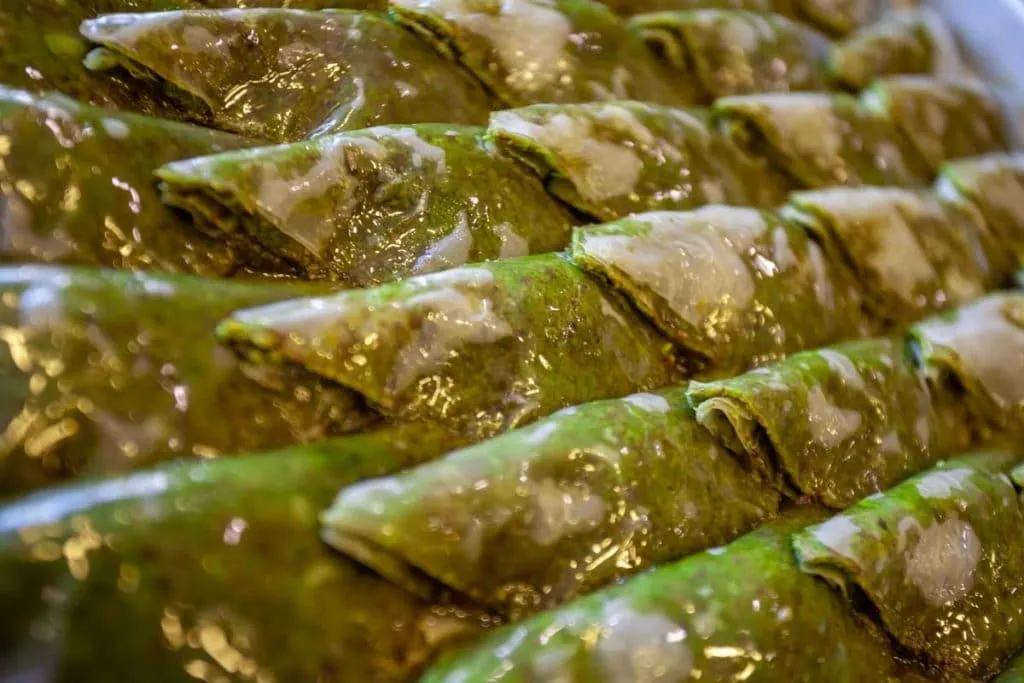
Take fıstık dolama, add a center of thick clotted cream (kaymak), and you get yaprak şöbiyet. Plenty of fillings work between layers of filo. Pistachio with clotted cream might be the best of them.
12. Saray Burması (Palace Baklava)
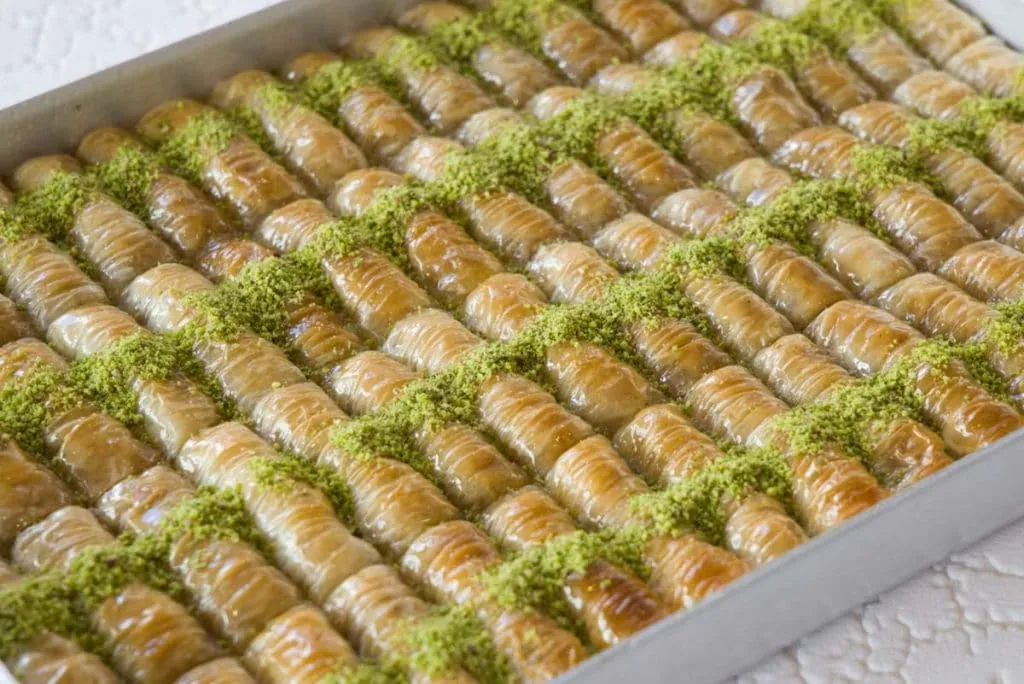
Saray burması was one of the favorite desserts served to sultans in the Ottoman palace. It is prepared with filo dough, melted butter, crushed walnuts, and sugar sherbet.
13. Dilber Dudağı (Lady Lips)
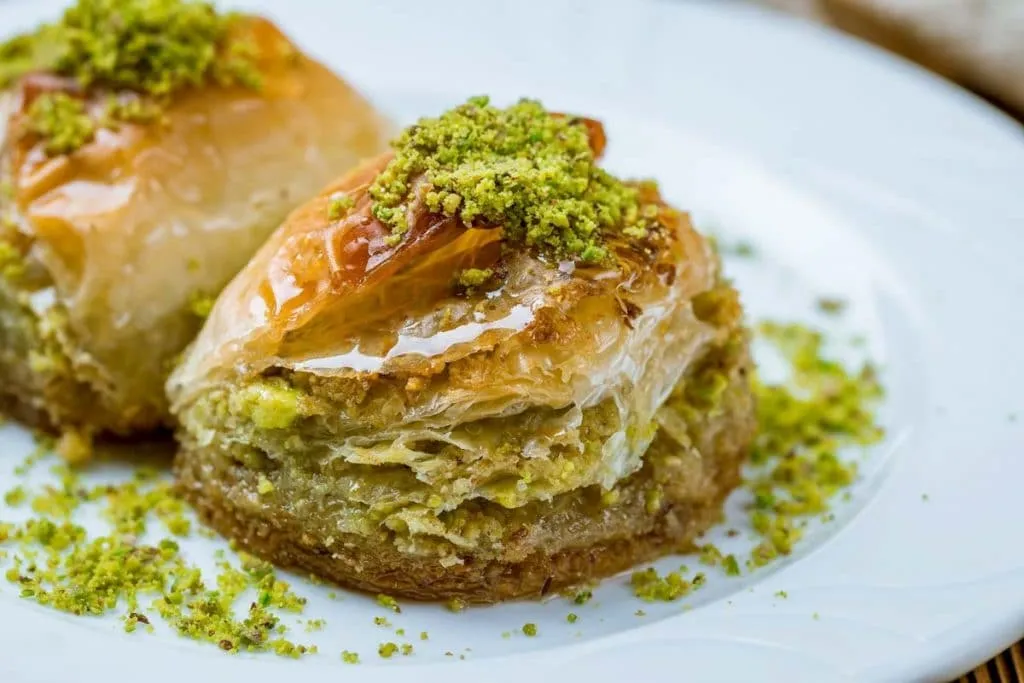
The name is a nod to the folded, lip-like shape. The texture tells a different story; this is one of the crispiest desserts in the case.
The dough is prepared with yogurt, milk, egg, lemon, sugar, flour, butter, and water, and the pastry is sweetened by pouring cold sugar syrup (sherbet) over it while it is still fresh and warm.
14. Midye Baklava (Mussel Baklava)
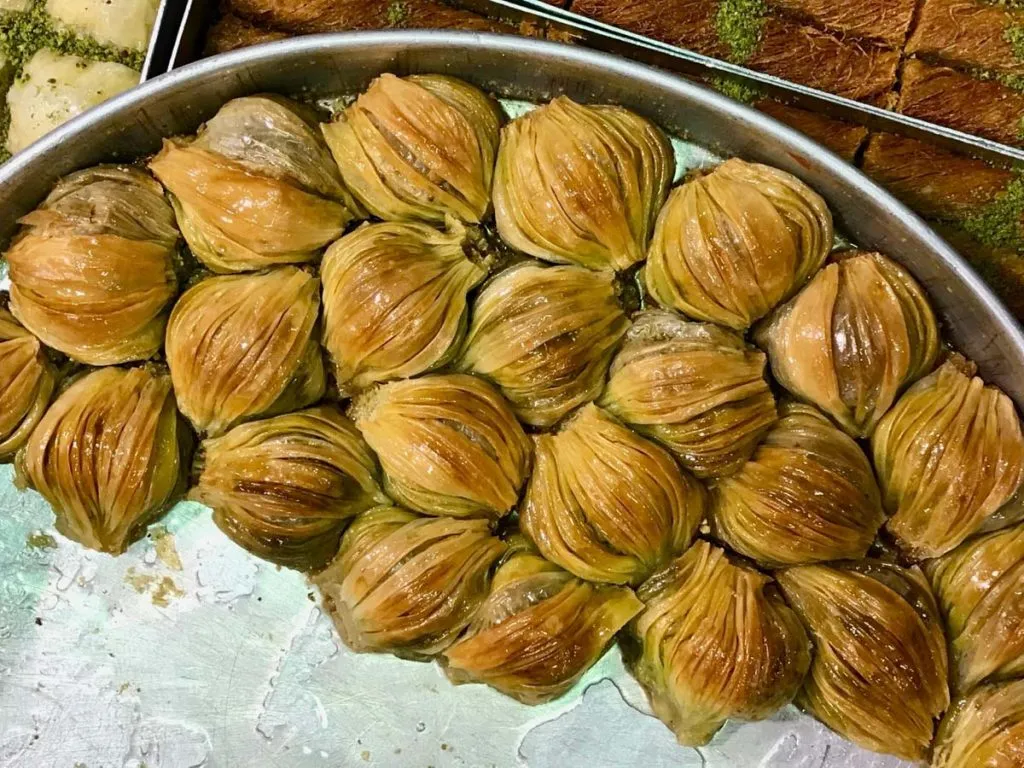
Midye means mussel, and the shells in the display case are filo shaped like the real thing, filled with kaymak and walnuts or pistachios. It is a recent design and very trendy in baklava shops right now.
The look gets it onto restaurant menus. The crisp shell and cream filling keep it there, and overeating is a real risk.
Final words
Baklava predates every modern border it now crosses. The Ottoman Empire was a multicultural place, and Turks, Greeks, Arabs, Bulgarians, Russians, Armenians, Kurds, Persians, Lebanese, Albanians, and Hungarians all had a hand in shaping the dessert.
So don’t settle on one type and repeat it forever. Mix up the order. The next tray over might hold your new favorite.
If you make it to Istanbul, our list of the best baklava shops in Istanbul covers where to buy.