Doner vs Shawarma vs Gyro: What's the Difference?
Doner, shawarma, and gyro are all spit-roasted meat, split by cuisine. What sets them apart, and why in Istanbul you should just order doner.
Why this matters in Istanbul food culture
The three dishes look almost identical on the spit because they share one idea: meat stacked on a vertical skewer, grilled at the edge, and shaved off as it cooks. The Turkish name “doner” comes from “dönmek,” the verb meaning “to turn.” Shawarma and gyro are the Arab and Greek versions of the same idea. Where they part ways is in meat blend, spicing, bread, sauce, and the cut itself. Doner comes off the spit in extremely thin, soft shavings that barely need chewing. Shawarma and gyro usually go into a wrap or a sandwich with noticeably thicker pieces of meat, the kind that take real chewing.
Knowing the difference saves you from ordering the wrong thing, or assuming a “gyro” stand on a tourist street in Sultanahmet is the local version. It is not. In Istanbul, the everyday meal eaten by office workers, students, and families is doner, and it shows up everywhere from tiny counter shops to sit-down restaurants. The vertical-spit doner is often traced to 19th-century Ottoman Bursa, which is also the home of iskender. Either way, in Türkiye the dish you want by name is doner.
Practical local guidance
The fastest way to keep them straight is by origin, meat, bread, and sauce. Here is the short version.
| Dish | Origin | Common meats | How it is served | Signature sauce |
|---|---|---|---|---|
| Doner | Türkiye | Beef, lamb, chicken | Plate, sandwich, durum wrap, or iskender | Traditionally none at all |
| Shawarma | Arab world (Levant) | Lamb, chicken, beef | Wrapped in flatbread with fries and pickles | Garlic (toum) or tahini |
| Gyro | Greece | Pork, chicken | Thick pita with tomato, onion, fries | Tzatziki (yogurt, cucumber, garlic) |
In Istanbul you will almost always be choosing between forms of doner, not between the three dishes. The three forms to know:
- Doner sandwich (ekmek arası): carved meat in a half-loaf of bread, often with tomato, a little lettuce, and sumac onions. The everyday lunch.
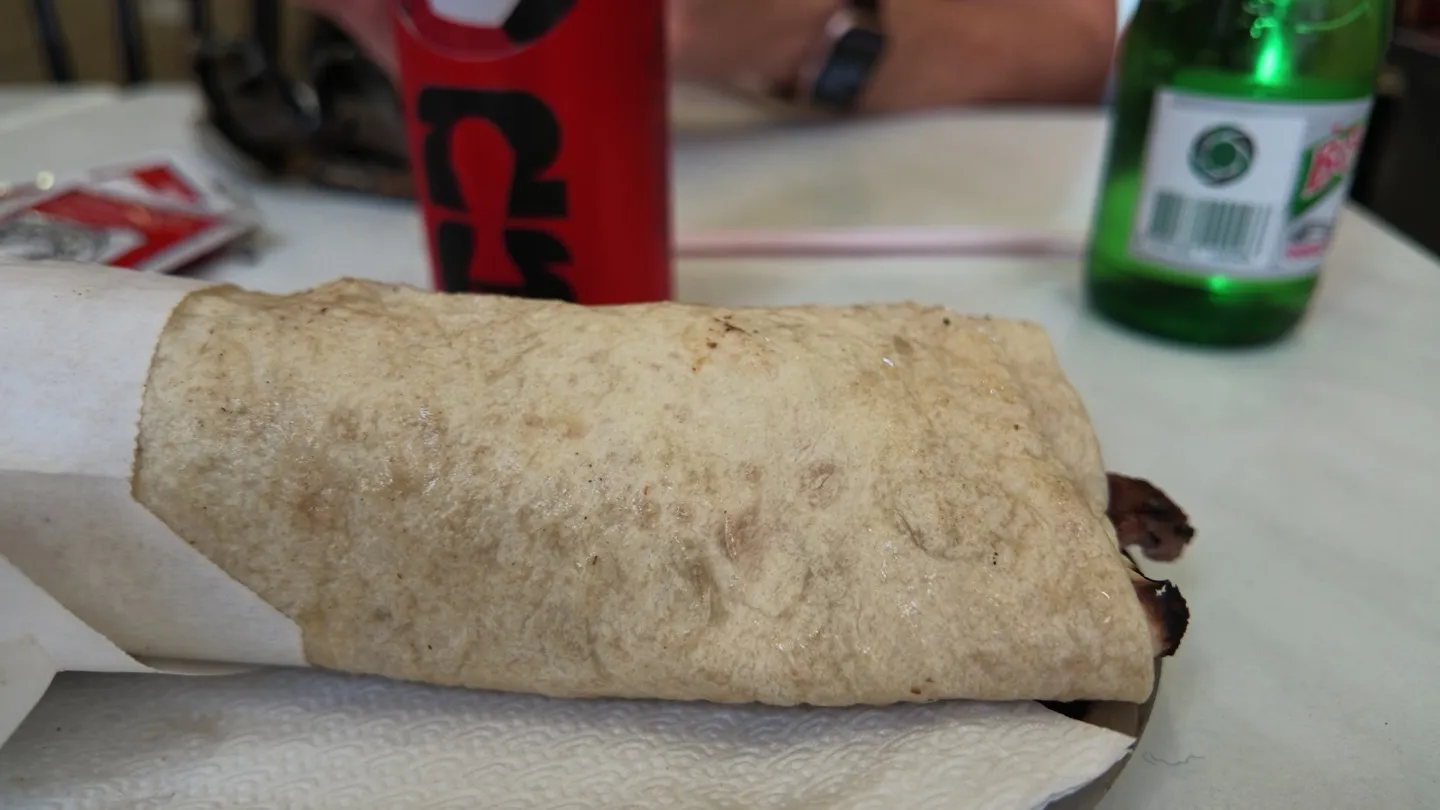
- Durum: the same meat rolled tight in thin lavash flatbread, sometimes with a smear of tomato or pepper paste. Easy to eat walking.
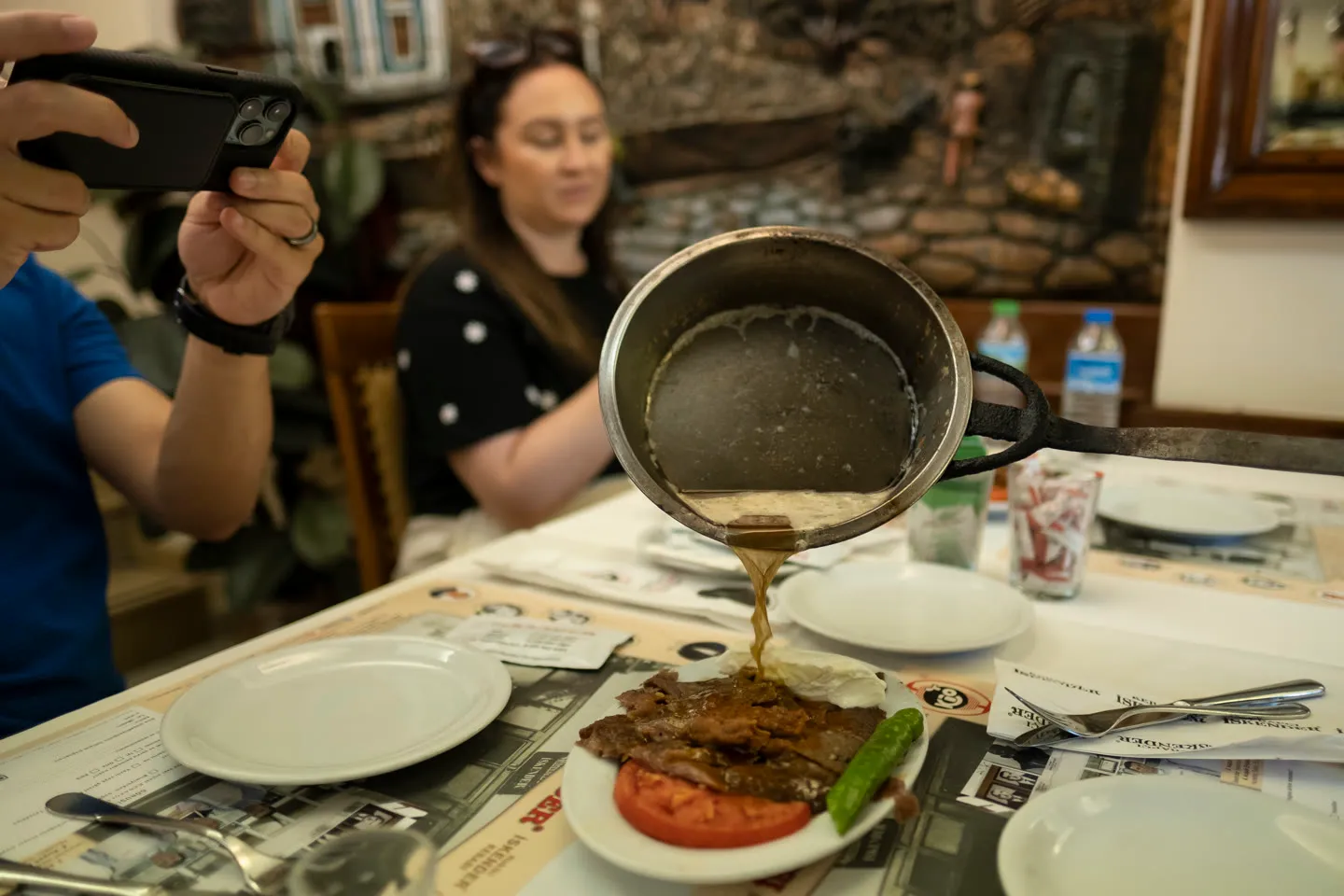
- Iskender: a sit-down plate. Sliced doner laid over cubes of bread, topped with tomato sauce and melted butter, with a side of strained yogurt. A meal, not a snack.
The traditional dressing is simple: good bread or lavash, some lettuce, tomato, and onion, and no sauce. No ketchup, no mayonnaise. Plenty of Istanbul shops now add fries, ketchup, and mayo to the wrap, and that version has its fans, but it is the modern street take rather than the classic.
Chicken doner (tavuk doner) is everywhere and cheaper; beef and lamb cost more and tend to taste richer. A shop that does one meat well is a better bet than one juggling five.
What locals know
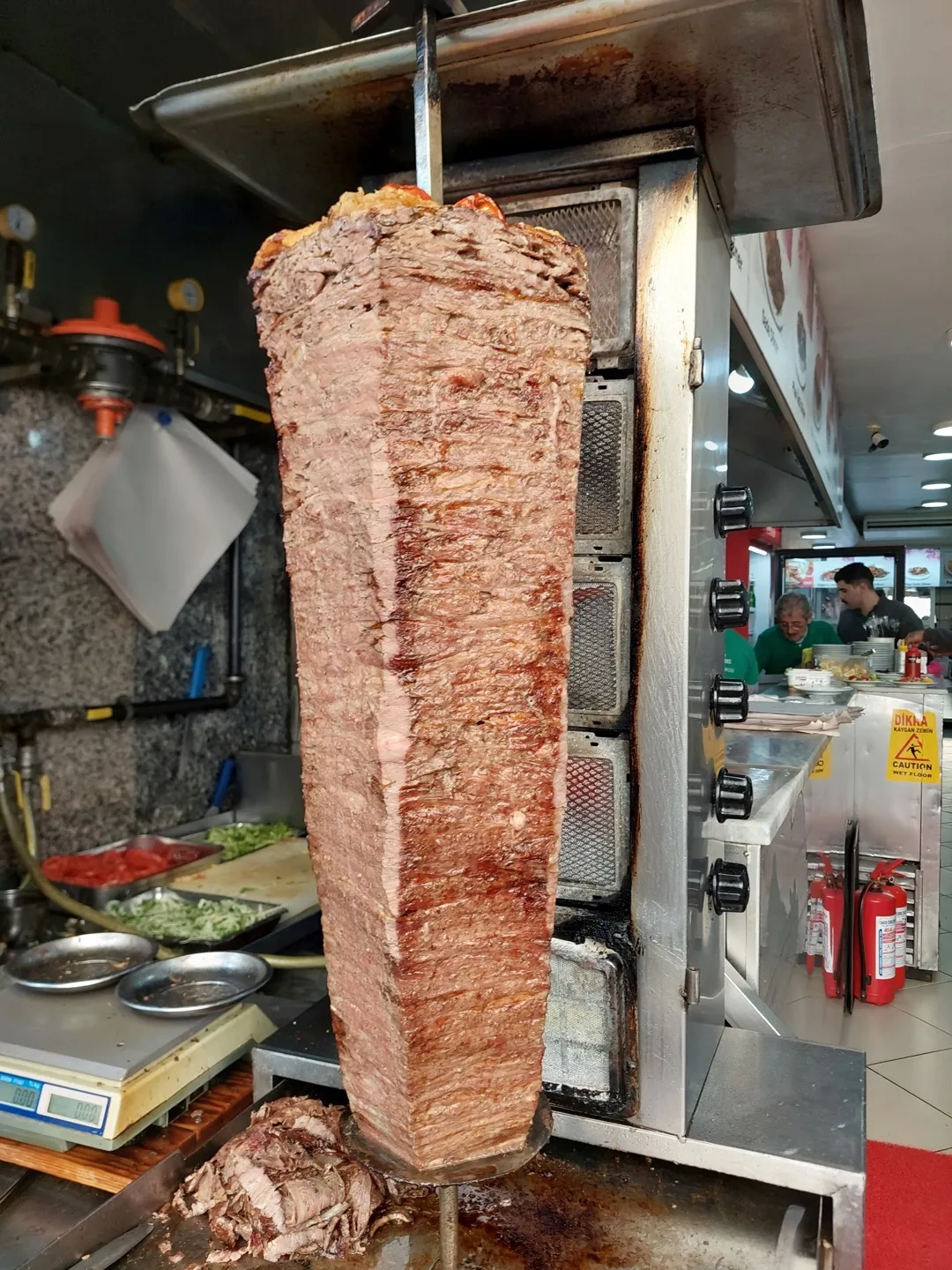
Locals judge a doner shop by the cone, not the menu. The meat should be turning, browned on the outside, and carved to order in thin shavings that fall as the cook runs a long knife down the stack. The portion is built fresh in front of you. Locals also treat doner as a quick, honest meal rather than a delicacy, so the best ones are often plain counter shops near markets, transit stops, and busy streets, not places with big photo menus. Sumac onions and a few pickled peppers are the classic add-ons, and a glass of ayran, the salted yogurt drink, is the standard pairing.
That picture has been shifting over the last ten years or so. A small wave of upscale doner shops has opened around the city, charging real money for seriously good meat, and locals increasingly treat those as destinations in their own right.
How to recognize quality
A few honest signals, in rough order of importance:
- A charcoal fire, above everything else: doner cooked over charcoal is extremely rare in Istanbul now. Nearly every shop runs on gas, and the masters who can manage a cone over live coals are a dying breed. A shop that still does it over charcoal is almost automatically a good one.
- A real, turning cone with a browned exterior, not a stack sitting cold or pre-cut meat in a steam tray.
- Carved to order: the cook shaves your portion when you order, so the edges are crisp and hot.
- Turnover: a busy shop sells through its cone, which means fresher meat and a stack that never sits long.
- Simple setup: counters focused on doner, ayran, and a few sides usually beat places with sprawling tourist menus.
- Fresh bread: soft, recently baked sandwich loaves or pliable lavash for durum, not dry or stale.
Neighborhood and timing context
In Britain, doner kebab lives after midnight, with a reputation as cheap, greasy hangover food. Türkiye treats it the opposite way. Here doner is a proper daytime meal, busiest around lunch when workers and students fill the counters, and rarely eaten late at night. You will find solid versions across the city, with especially good concentrations in working neighborhoods and around transit hubs and markets on both the European and Asian sides. The Kadıköy market area on the Asian side is a reliable place to eat well at a counter, with plenty of options beyond doner if you want to graze (see Kadıköy restaurants). For the full landscape of Istanbul’s grab-and-go classics, the street food guide is a good map.
FAQ
Is doner the same as shawarma?
No, though they are close relatives. Both are stacked meat cooked on a vertical spit and shaved off, but doner is the Turkish version and shawarma is the Arab one. Shawarma is usually wrapped in flatbread with garlic or tahini sauce, pickles, and fries, while a classic Turkish doner leans on the meat, bread, and sumac onions with no creamy sauce.
What is the difference between gyro and doner?
Gyro is the Greek version of the same spit-roasted method. The biggest practical differences are meat and sauce: gyro is commonly pork or chicken served in a thick pita with tomato, onion, fries, and tzatziki, while doner in Türkiye is beef, lamb, or chicken and is rarely topped with a yogurt sauce. Pork doner does not exist in Türkiye.
Should I order doner, gyro, or shawarma in Istanbul?
Order doner. It is the local dish and what shops here actually make well. Menus advertising “gyro” or “shawarma,” especially in English on tourist streets, are usually catering to visitors rather than serving the everyday Istanbul version.
Is doner usually beef, lamb, or chicken?
All three are common. Chicken doner (tavuk doner) is the cheapest and most widespread. Beef and lamb (or a blend) are richer and usually cost more. A shop that focuses on one meat and sells a lot of it is generally a safer choice than one offering everything at once.
What is iskender?
Iskender is a sit-down doner dish: thin slices of doner laid over cubes of bread, covered with tomato sauce and melted butter, and served with a side of strained yogurt. It is a full plated meal rather than a sandwich, and it is one of the most popular ways to eat doner in Türkiye, sitting alongside the wider family of Turkish kebabs.
For more on where to eat the best version and how shops differ across the city, see our guide to the best doner kebab in Istanbul.