Free Self-Guided Istanbul Food Tour: 3 Routes, 16 Stops
A free self-guided Istanbul food tour in three walking routes: Sultanahmet and Sirkeci, Karaköy to Taksim, and Kadıköy. Every stop, what to order, and the walking order.
A free, self-guided Istanbul food tour removes the two hardest parts of eating in this city for a first-time visitor. You set the pace. You choose what to order. No booking required. This guide is built around three neighborhoods, each with its own walking route and its own character. You can follow one route per day, or spread them across a trip. The food in Istanbul is overwhelming on a first encounter. The idea here is to simplify it, stop by stop, with restaurant names, the right things to order at each one, and a walking order that actually makes sense.
Jump to a route: Before you begin · Route 1: Sultanahmet and Sirkeci · Route 2: Karaköy, İstiklal and Taksim · Route 3: Kadıköy
Self-guided or guided tour?
Go self-guided if you want to set your own pace, don’t mind planning, and a free route sounds right for you. Every stop and every order is below.
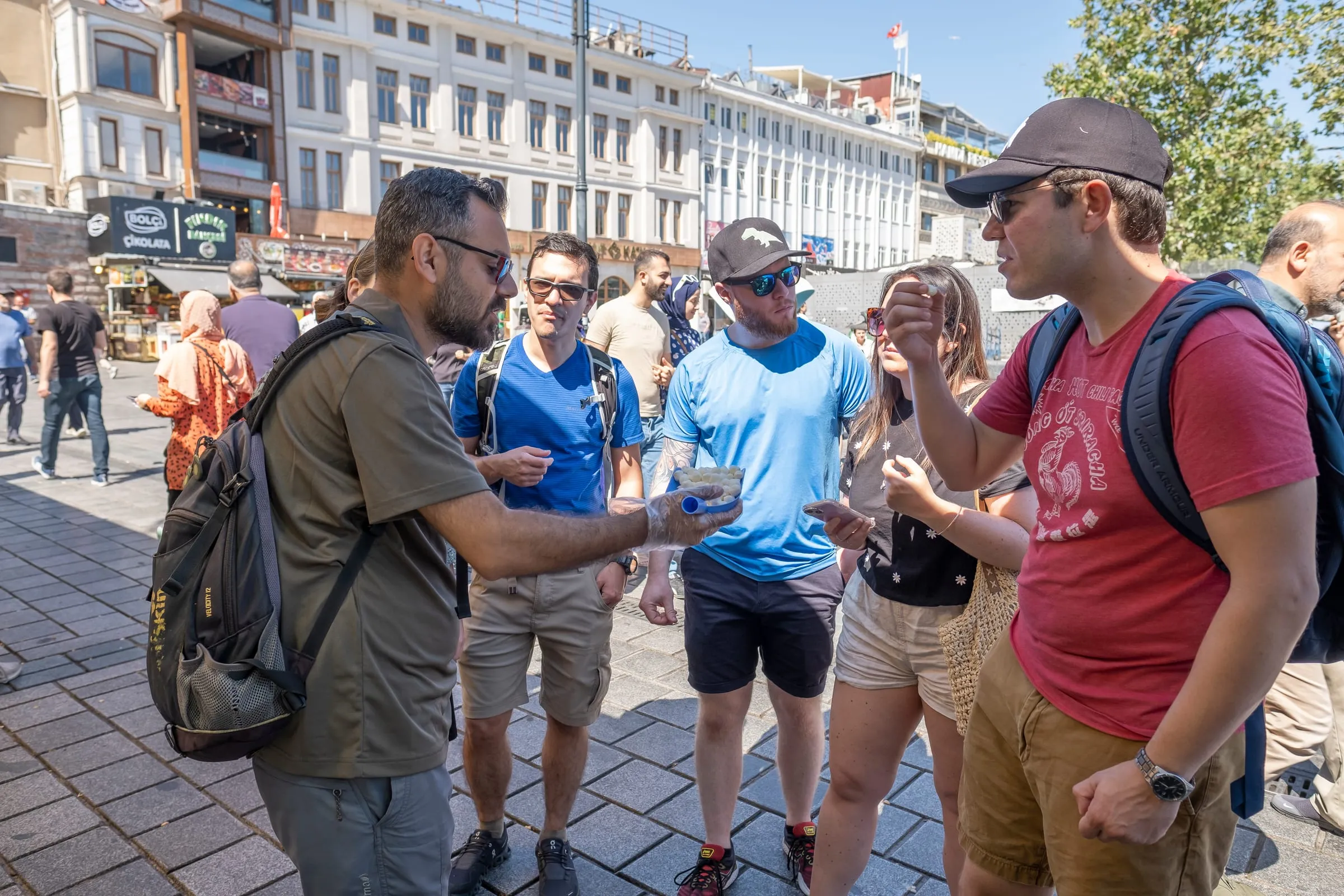
Go guided if you want the same kind of day with zero planning: a local guide who knows where the good food is leads in fluent English, orders for the table, and explains every dish as you taste it, along with the street life happening around you. Groups stay capped at 10, and the timing, the lines, and the hard-to-find doorways are all someone else’s problem. See our food tours
Before you begin
A few practical points that will make any of the three routes below work better.
Share, do not solo
Every stop on these routes is built around sharing. Turkish restaurant portions are generous, and even at the smaller stalls, ordering one plate per person will leave you full by the second stop. Two people is the ideal unit. Three works. Four gets trickier at some tables. If you are solo, order half portions where possible, and accept that you will eat less at each place. That is not a loss. It is how these routes work.
Arrive hungry, not ravenous
If you start a food tour already starving, you will overeat at the first stop and regret it by the third. A light breakfast (a simit and a glass of tea from any ferry terminal is ideal) keeps your appetite open without rushing it. The first stop on each route is meant to be an opener, not a feast.
Treat each stop differently
One stop is a proper sit-down meal. Another is a single shared pide and a glass of ayran. Another is two bites of baklava and a coffee. The notes for each stop tell you which is which. Do not treat every restaurant like a full meal. That is the most common mistake.
Give yourself time
A route that looks short on the map takes longer than you expect once food is involved. Allow four to five hours for each. Do not try to combine two routes in a single day. The walking is easy but cumulative, and by stop five a ten-minute walk feels longer than it is.
Wear real walking shoes
Istanbul’s streets are cobbled, uneven, and often steep, especially in Karaköy and Sultanahmet. Sandals or thin-soled fashion shoes will hurt you by lunch. Closed shoes with grip are the right call.
Use Google Maps freely
Every restaurant listed below is well-pinned on Google Maps, and each route has a map of its own further down. Names are spelled the way they appear on the storefronts, so drop them into search and the right place comes up. Ferries, trams, and the Tünel funicular all show up on transit directions. You will not get lost.
Cash and card
The larger restaurants (Pandeli, Zübeyir Ocakbaşı, Baylan) take cards without trouble. The smaller lokantas, pide shops, and köfte places often prefer cash and sometimes require it. Keep small bills on hand. ATMs are common and work reliably on foreign cards.
Menus change
Lokantas cook daily based on what arrived from the market. Fish restaurants serve whatever the boat brought in. Seasonal dishes (artichokes in spring, hamsi in winter, chestnuts in autumn) come and go. A specific dish that a blog praised three months ago may not be on the menu tonight. Read what is actually there, not what you expected.
Do not over-order
The single most common mistake. Turkish waiters are generous and will happily load your table. If you are unsure, order half of what feels right. You can always add more. Ordering less keeps you moving through the route in good shape.
Lean on what each place is known for
Every restaurant in this guide has one or two things it does better than anyone else. The notes at each stop tell you what those are. Order around the specialty, not against it. Pandeli is not the place for a grilled kebab. Zübeyir is not the place for seafood meze. Match the kitchen to the dish.
Route 1: Sultanahmet and Sirkeci
The area
Sultanahmet and Sirkeci sit on the historic peninsula, the part of Istanbul visible on every postcard. Hagia Sophia, the Blue Mosque, Topkapı Palace, and the Grand Bazaar are all within a ten-minute walk of each other. This is also the part of the city with the thickest concentration of tourist restaurants, and quality drops fast near the main sights. The places below have either survived the tourist trade by being too good to fail (Selim Usta) or are tucked into working streets that tourists walk past without noticing (Hocapaşa alley).
Route logic
Start in Sultanahmet at the Sultanahmet tram stop, opposite Selim Usta, easy to reach by T1 tram. You eat the classic köfte plate first, walk downhill to Hocapaşa alley near Sirkeci for a light pide and the Erzurum-style cağ kebap next door, then continue toward Eminönü for a slow moment at Pandeli in the Spice Bazaar, and close with baklava at Hafız Mustafa. Total walking is about two kilometers, all of it gently downhill from Sultanahmet to the waterfront.
Route 1: all five stops on one map
Sultanahmet down to the waterfront, about two kilometers, gently downhill the whole way.
Stop 1: Tarihi Sultanahmet Köftecisi Selim Usta
This is the köfte restaurant. A small, stubbornly simple place on Divanyolu, opposite the trams, that has served the same thing since 1920. The menu fits on a postcard. Köfte (grilled beef meatballs). Piyaz (white bean salad with onion and parsley). Bread. Pickled peppers. That is most of it.
The köfte is hand-shaped, slightly loose in texture, charred on the edges, and served with a pile of pickled green peppers so hot that one bite can derail the tour. A plate of six to eight small köfte comes with slices of bread and the piyaz alongside.
What to order for two people:
One portion of köfte (grilled meatballs), one portion of piyaz (white bean and onion salad), and a small dish of acı biber turşusu (pickled hot peppers) if you like heat. Bread comes automatically. Drink ayran or water. Skip dessert. There is better sweet food to come.
Share everything. If both of you are properly hungry, add a half portion of köfte, but one plate comfortably serves two.
Walk down Divanyolu toward Sirkeci. Pass the tram stop, continue a few minutes past the station, and turn into Hocapaşa alley. About ten minutes on foot, mostly downhill.
Stop 2: Hocapaşa Pidecisi
Hocapaşa is a narrow pedestrian alley five minutes from Sirkeci station, lined with small shops and restaurants. Hocapaşa Pidecisi has been baking pide here for decades in a wood-fired oven visible from the street. The dough is stretched, topped, and paddled into the oven in front of you. It comes out in under four minutes.
Pide is the Turkish flatbread dish most often mistranslated as “Turkish pizza,” which undersells it. The crust is thicker, the toppings pool in the boat-shaped shell, and the whole thing is eaten hot with a squeeze of lemon.
What to order for two people:
Kıymalı yumurtalı pide (pide with minced meat and a cracked egg) to share. The egg sets while baking and gives the whole thing richness. If you are still hungry after, add a half peynirli pide (cheese pide) as a second taste. Drink ayran (salted yogurt drink) with it.
This is the opener. Share the pide. Do not order one each, and do not add a salad. The next stop is thirty seconds away.
Stop 3: Şehzade Cağ Kebap
Next door, tucked into the same alley, is a small shop that serves one dish: cağ kebap. This is the Erzurum-style kebab, cooked on a horizontal spit over a wood fire rather than the vertical gas spit of döner. The lamb, marinated and layered onto the spit, cooks slowly, and the cook pulls a single skewer off the spit, slicing strips onto a thin flatbread served on a wooden plank with lavash, raw onion, and parsley.
Cağ kebap is less globally famous than döner and more careful in every detail.
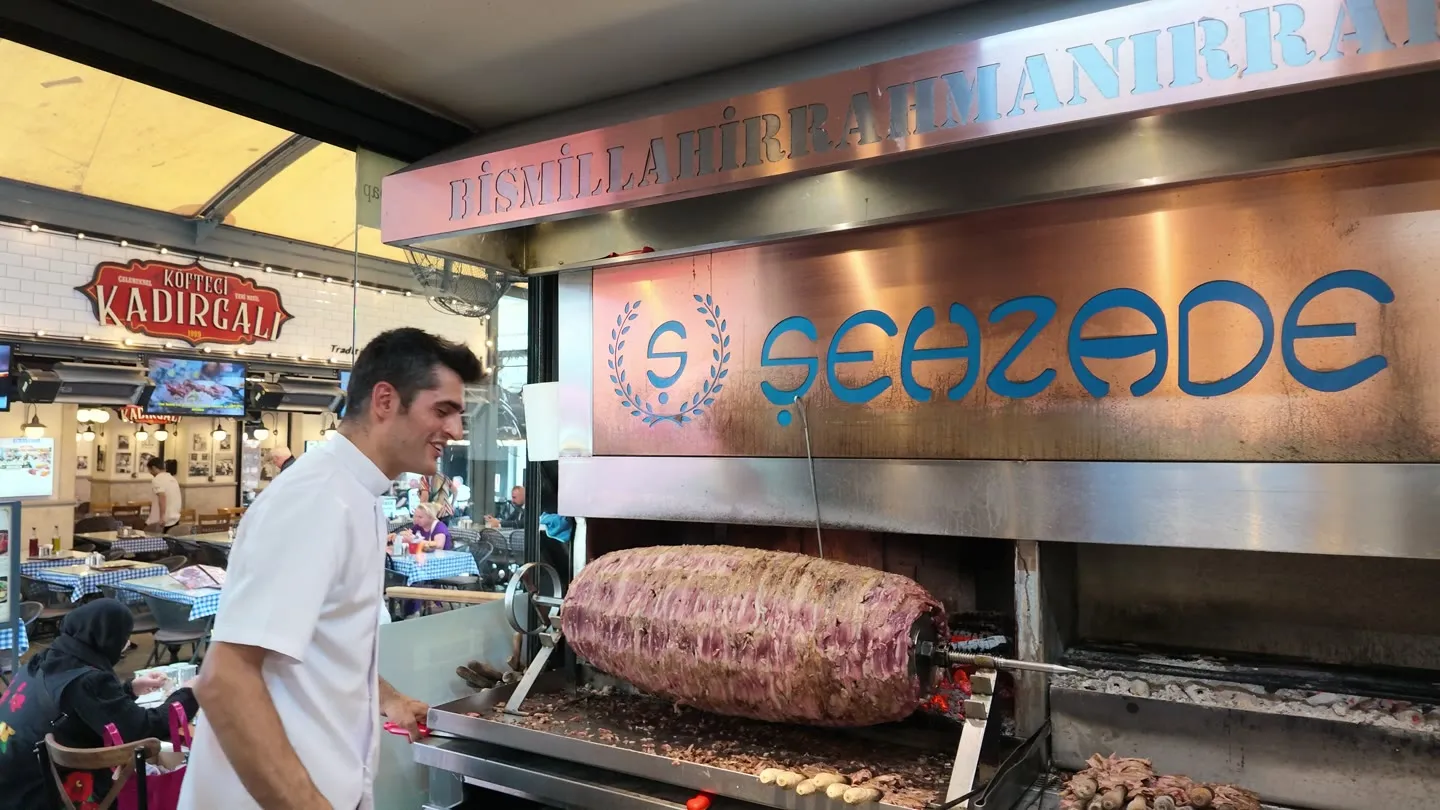
The wood fire gives the meat a smokiness that gas-spit döner cannot match.
What to order for two people:
Two skewers of cağ kebabı (Erzurum-style horizontal-spit lamb kebab). One per person is the right amount. Pair with a small mercimek çorbası (red lentil soup) if you still have room, and ayran to drink. Skip the dürüm wrap version. The cağ on lavash is the point here.
Walk to the Spice Bazaar next. About ten minutes on foot along Hamidiye Caddesi toward Eminönü. The bazaar itself is a navigation puzzle on a first visit, so give yourself a few extra minutes inside it.
Stop 4: Pandeli
Upstairs inside the Spice Bazaar (Mısır Çarşısı), reached by a narrow flight of steps just inside the main gate, is a restaurant with blue İznik tiles on every surface. Pandeli has been open since 1901, and the room has not changed much. The cooking is not always the best in Istanbul for a room this formal, but that is not why you come here. What it offers is a particular experience. A quiet, tiled room with tall windows, Ottoman cooking treated as heritage, and the hum of the bazaar below.
Treat this stop according to your appetite.
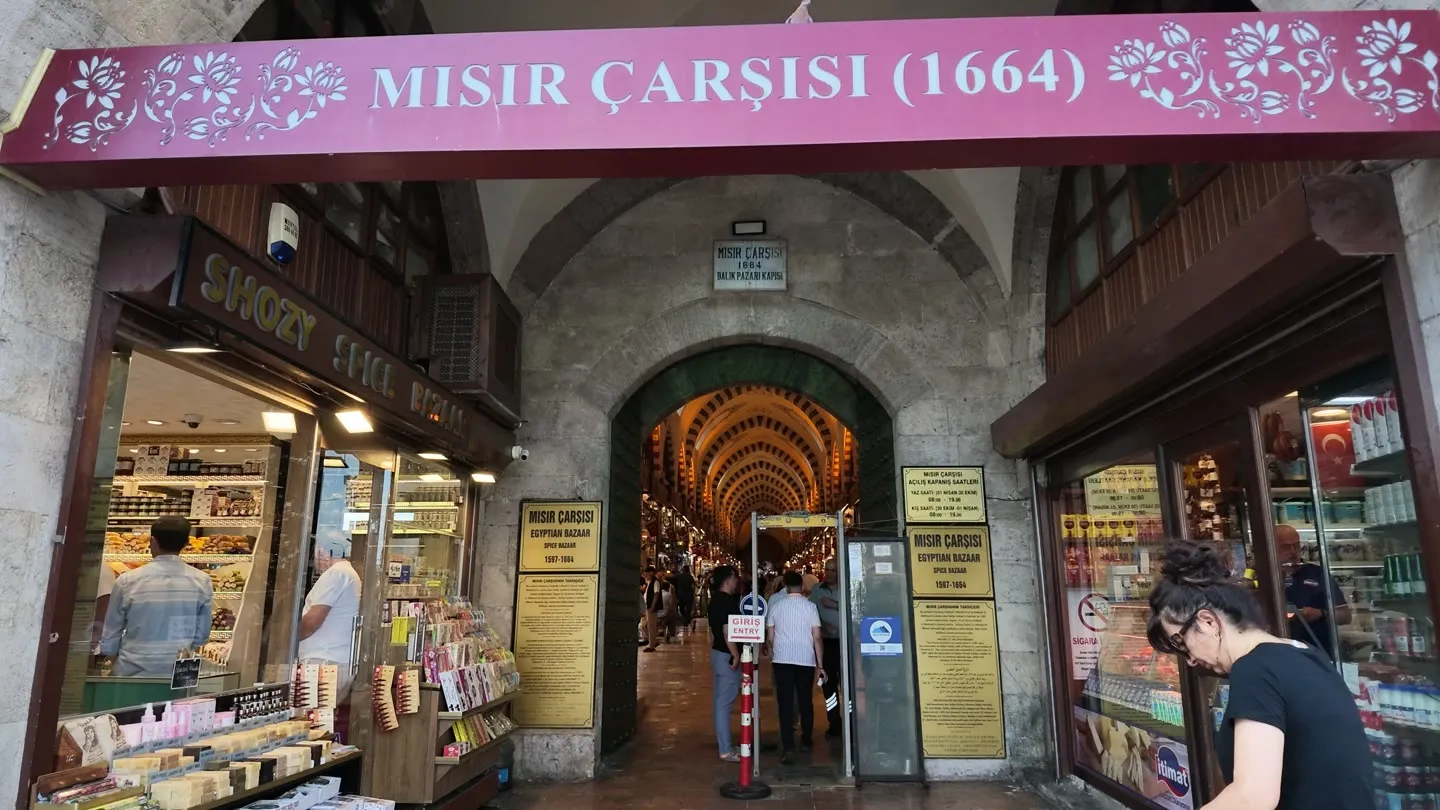
If you are already full from Selim Usta, do not order a meal. Sit down, order a Turkish coffee, and spend twenty minutes in the room. If you have capacity, order one classic dish for two to share.
Light version for two people:
Two Türk kahvesi (Turkish coffees), and optionally a plate of patlıcan salatası (smoky eggplant dip) with bread to share.
Fuller version for two people:
One hamsili pilav (rice baked with anchovies, a Black Sea classic, usually available in winter) or one hünkar beğendi (lamb stew over smoked eggplant purée, an Ottoman palace dish). Share it between you. The portions are generous.
Do not try to do both versions. Pick one and leave room for the final stop.
Leave Pandeli, walk down through the bazaar (resist the vendors selling “authentic” Turkish delight), and head onto Hamidiye Caddesi toward Sirkeci for the last stop.
Stop 5: Hafız Mustafa 1864
Hafız Mustafa has been in business since 1864 and now runs several branches around Istanbul. The historic one is near Eminönü. The windows are packed with trays of baklava, Turkish delight (lokum), candied fruits, and the other classic sweets. Upstairs, almost every branch has a small café where you can sit with tea or coffee.
This is the close of the tour. Baklava and a hot drink, eaten slowly, within thirty minutes.
What to order for two people:
A small plate of fıstıklı baklava (pistachio baklava), two or three pieces, shared. Optional: a piece of kadayıf (shredded-pastry dessert) or çikolatalı baklava (chocolate baklava) for variety. One Türk kahvesi or a glass of çay each. Optional: two pieces of classic lokum (Turkish delight) in rose or pistachio.
The baklava should be crisp, lightly syruped,
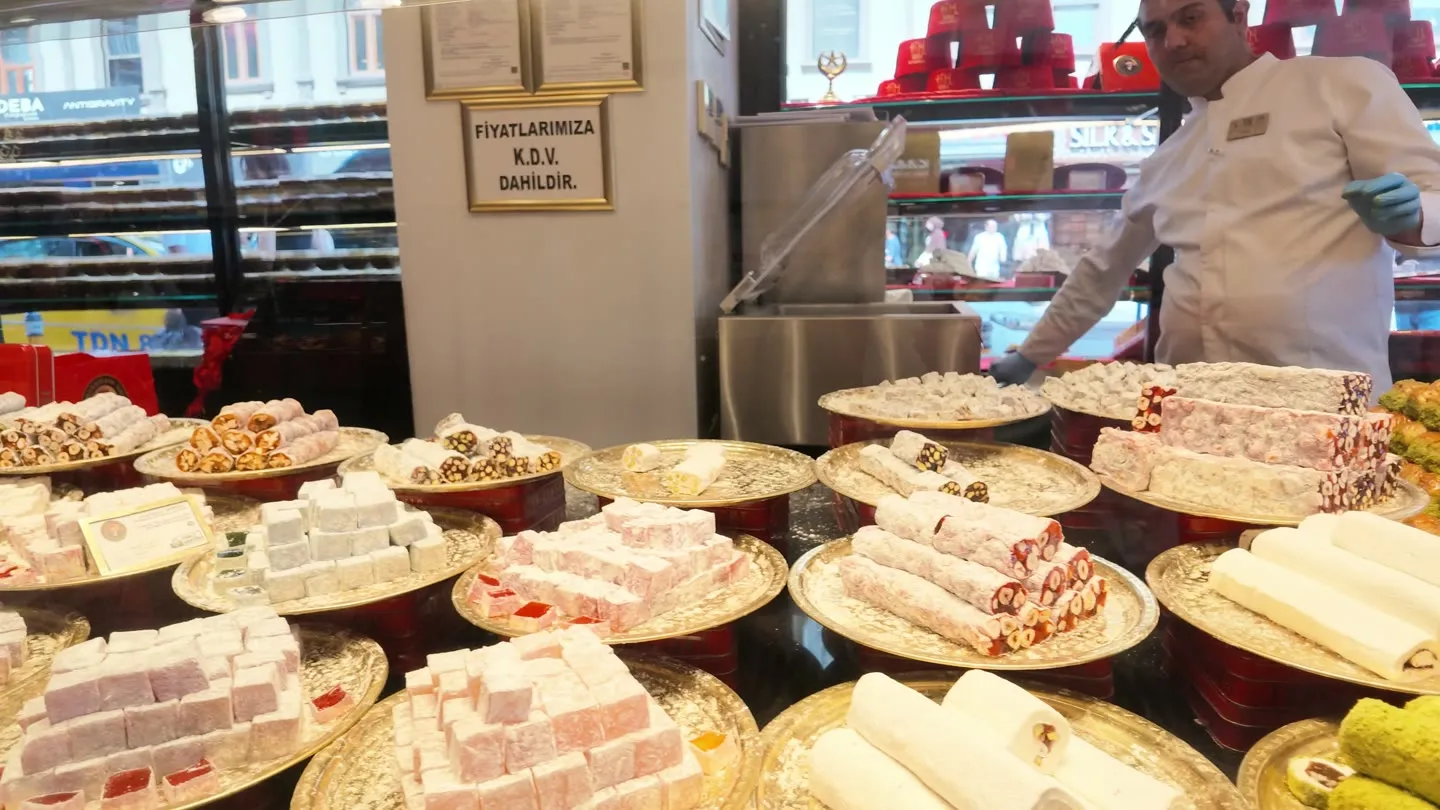
and visibly green with pistachio at the break. If it feels soggy or overly sweet, the tray is not at its best, but Hafız Mustafa is generally reliable.
Who this route is for
Route 1 works best as a late-morning start, around 11am, finishing with dessert around 3 or 4pm. It suits first-time visitors who want to cover classic Istanbul foods and the historic core in a single day. The three meat-leaning stops (pide, cağ kebap, köfte) make this the most protein-heavy of the three routes, so arrive hungry and share as suggested. Half-day format. Easy walking. No reservations needed.
Route 2: Karaköy, İstiklal and Taksim
The area
This route covers three adjacent neighborhoods on the European side, north of the Golden Horn. Karaköy sits on the water, at the foot of Galata Tower. İstiklal Caddesi is the long pedestrian street that runs from Galata up to Taksim Square. Taksim is the square at the top, the modern entertainment district. The whole area feels different from Sultanahmet: busier, more mixed, broader in its food.
Route logic
This is the longest route, six stops, built to cover a full day. Lunch happens in Karaköy. Afternoon sweets and a mid-afternoon Black Sea meal take you up through Galata. Early dinner or a snack hits İstiklal. A proper late dinner at Zübeyir Ocakbaşı is the dinner anchor. Dessert closes the evening near Taksim.
If six stops is too many, choose four: Nato Lokantası, Köşkeroğlu Karaköy, Zübeyir Ocakbaşı, and Saray Muhallebicisi. That covers a lokanta, a Gaziantep baklava, a great ocakbaşı dinner, and a classic milk-pudding close.
Route 2: all six stops on one map
Karaköy on the water, up through Galata to Taksim. The climb is real, so use the Tünel funicular or the İstiklal tram when you need it.
Stop 1: Nato Lokantası
Nato Lokantası is an old-school working-class lunch spot. A steam-table counter fills the front window. At noon, a line forms: office workers, shopkeepers, locals on lunch breaks. Behind the counter, trays of slow-cooked stews, braised vegetables, rice, and döner are replenished through the morning and served by portion.
This is where you learn to eat at a lokanta. You point. They plate. You pay at the end. No menu, no decisions, no language barrier. Look at what has been freshly topped up. A tray still steaming is a better bet than one that has been sitting since 11am.
What to order for two people:
One portion of döner (shared). One portion of kuru fasulye (slow-cooked white beans in tomato, the most loved of all Turkish bean dishes). One portion of kapuska (cabbage stew) or a zeytinyağlı sebze (vegetables in olive oil) for a lighter side. Small portions of pilav (rice) or bulgur. Two glasses of ayran.
Ask “bugün ne güzel?” (what is good today?) if you are unsure. The servers will point.
Stop 2: Köşkeroğlu Karaköy
Köşkeroğlu is a Gaziantep family baklava operation with a Karaköy branch in the pastry-shop stretch near the waterfront. Gaziantep is the baklava capital of Türkiye, and Köşkeroğlu is one of its legacy names. The Karaköy branch has a small café where you can sit with your baklava and a coffee.
This is a light, precise stop. Two pieces of baklava and a Turkish coffee, eaten slowly.
What to order for two people:
A small mixed plate (about four pieces) including fıstıklı baklava (pistachio) and cevizli baklava (walnut) for contrast. Optional: a katmer (flaky pastry with clotted cream and pistachio, eaten warm) if the shop has it that day. Two Türk kahvesi (Turkish coffees).
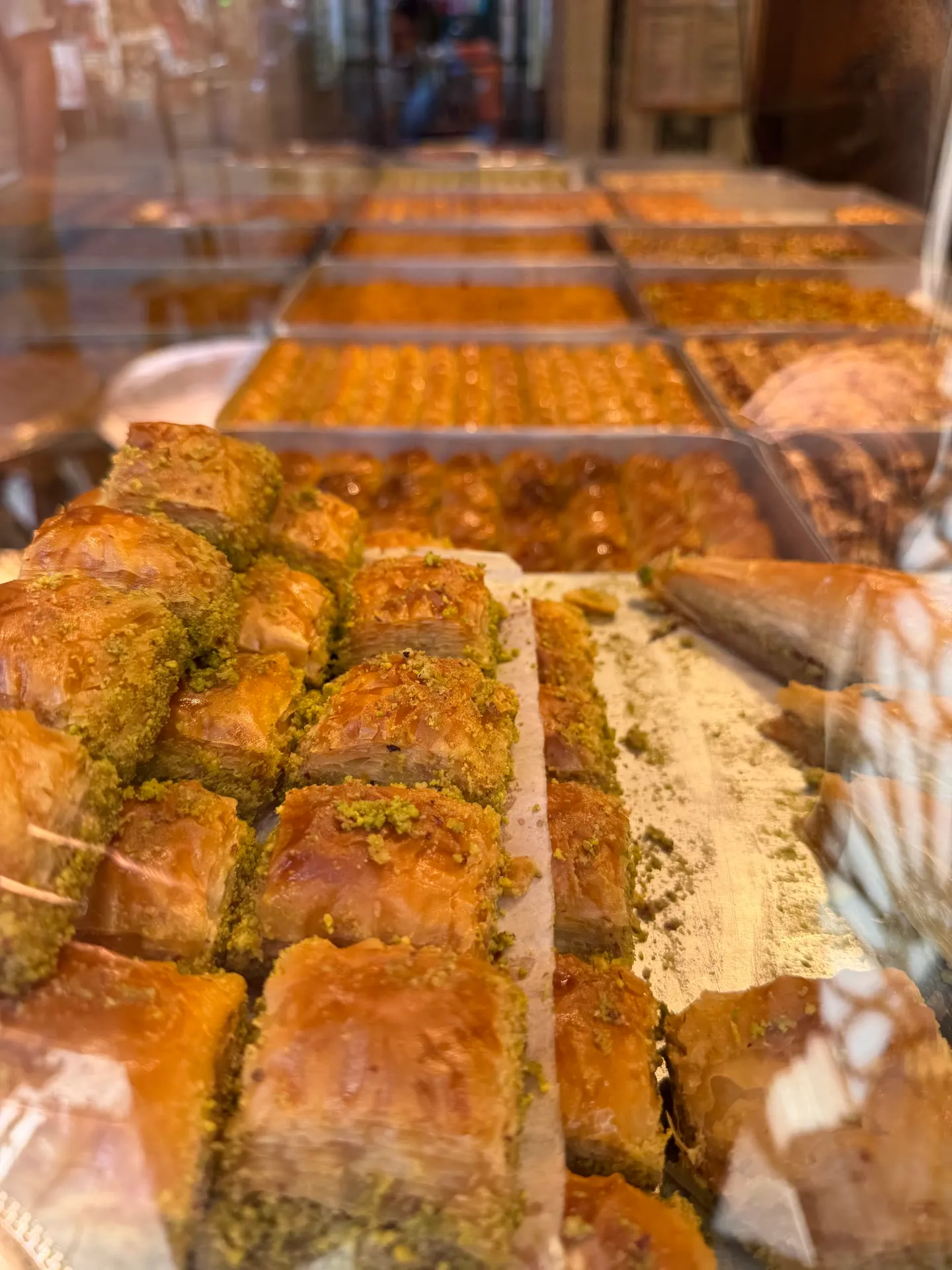
Köşkeroğlu’s baklava style is slightly drier and less syrup-heavy than some others. That is intentional. You should taste the butter and pistachio more than the sugar.
Walk uphill from the waterfront toward Galata Tower. Ten minutes up a gentle climb, with good Bosphorus views on the way. The Kamondo Stairs make the walk more interesting.
Stop 3: Hayvore
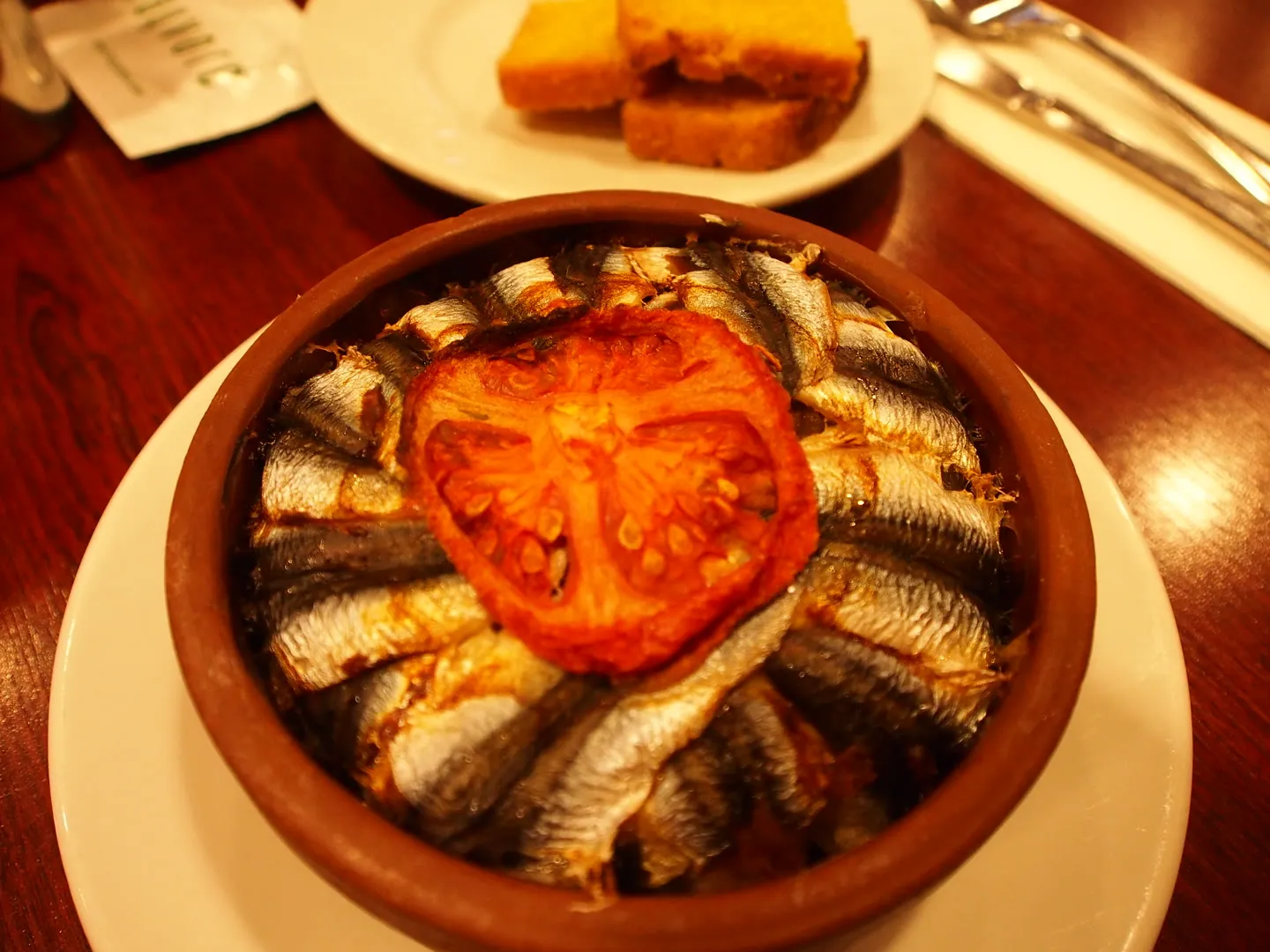
Hayvore is a Black Sea restaurant near the top of Galata, just off İstiklal. It specializes in the cooking of Türkiye’s Black Sea coast, the Karadeniz region. The food is different from anything else on this route. Rice dishes with anchovies. Cornmeal and cheese fondues. Wild greens sautéed in butter. The flavors are small, assertive, and very regional.
This is a mid-afternoon stop, mostly for tasting. If you are full from lunch, share one or two small plates and move on. If you have more room, stay longer.
What to order for two people:
Hamsi kaygana (an omelet-style pancake with fresh anchovies, Black Sea style), shared. Turşu (pickled vegetables) on the side. Optional: mıhlama (cornmeal cooked with butter and a stringy Black Sea cheese, rich and heavy), only if you have capacity. A small sütlaç (rice pudding) to close the stop, if you want.
Keep this light. One or two items is the right amount.
There is more to eat on the route.
Walk along İstiklal Caddesi toward Taksim. This is the busiest pedestrian street in Istanbul and worth the walk. Ten to fifteen minutes depending on crowds. The old red İstiklal tram runs the length of the street if you need a break.
Stop 4: Nizam Pide
Nizam Pide is a classic pide shop near Taksim, one of the older ones in the city, with a wood-fired oven in the back. A lighter, quicker stop than the dinner that follows.
What to order for two people:
One Dr. Nizam pide (the signature, topped with minced meat and cheese) to share. Or swap in a Trabzon peynirli yumurtalı pide (cheese pide with a cracked egg) for a different style. Optional: one lahmacun (thin flatbread with spiced minced meat) for contrast.
Share one pide and, at most, one lahmacun. If you are planning dinner at Zübeyir next, keep this stop very light or skip it. Pide plus a full ocakbaşı dinner is more food than most people can handle in an evening.
Stop 5: Zübeyir Ocakbaşı
Zübeyir is one of the legendary ocakbaşı grill restaurants in Istanbul. The room is built around an open charcoal pit where a row of cooks grill kebabs, chops, and vegetables in front of diners. The smell hits you walking in. The atmosphere is noisy, friendly, smoky, and the meat is excellent. Reserve ahead on weekend evenings.
This is a proper dinner. Plan two hours.
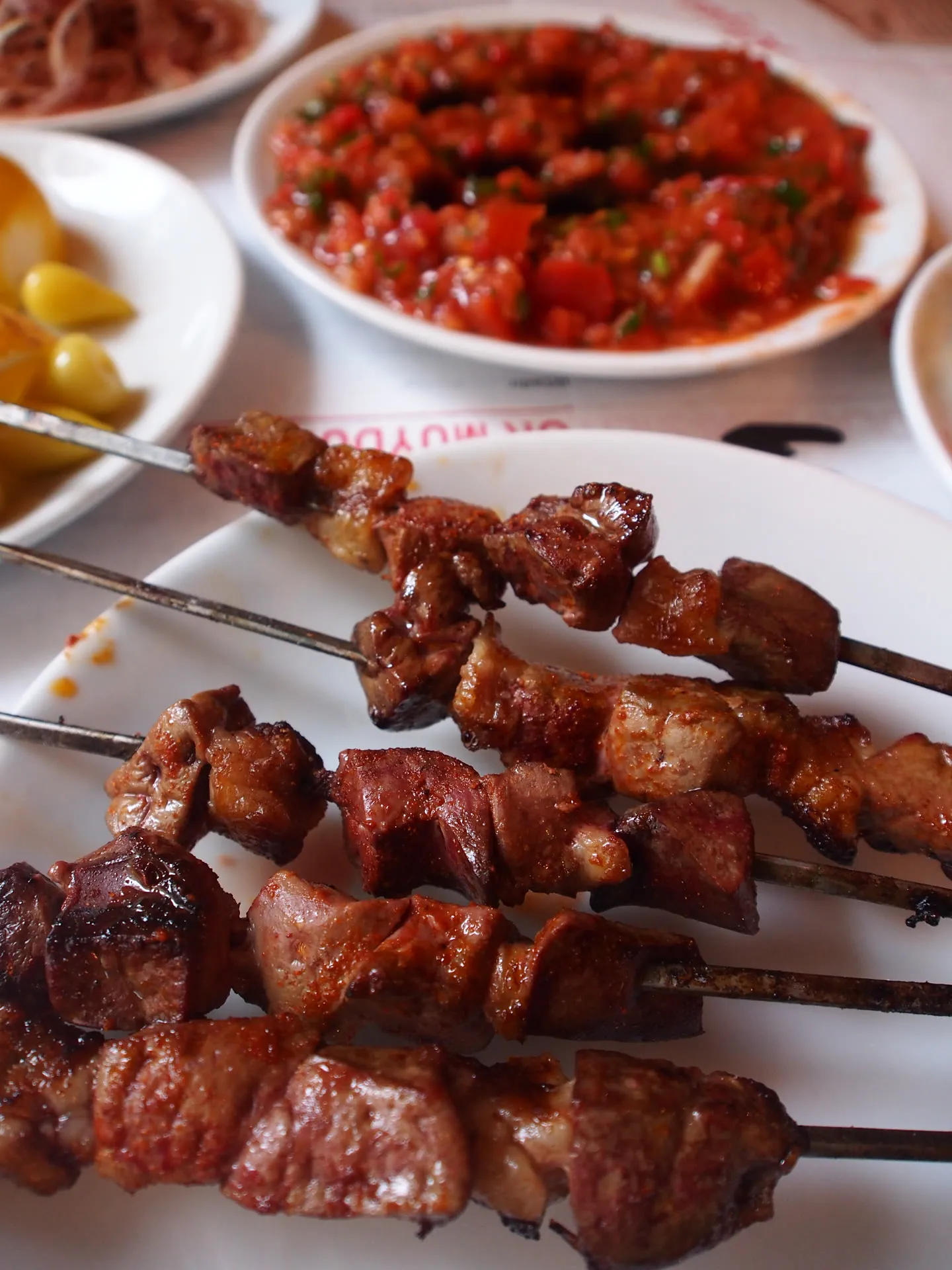
What to order for two people:
A mixed-grill approach. One kuzu şiş (lamb skewer), one beyti kebab (minced lamb wrapped in lavash, sliced, topped with tomato and yogurt), and one or two kuzu pirzola (lamb chops). Közlenmiş patlıcan (grilled eggplant with yogurt) as a shared vegetable. A small çoban salatası (chopped cucumber-tomato salad). Bread comes automatically. Drink rakı with water and ice, or ayran if you do not drink.
Do not order a full kebab per person. The meat is rich and you want to taste a few cuts. Three shared items between two people is the right amount. Close the meal with a Turkish coffee, pay, and walk five minutes to the last stop.
Stop 6: Saray Muhallebicisi
Saray is a classic muhallebici, a dessert shop specializing in milk-based puddings. Several branches across Istanbul, but the İstiklal one is the best known. Bright lights, a glass counter full of puddings, a busy room, a quick turnover of tables.
This is the calm, sweet end of the route.
What to order for two people:
One tavukgöğsü (chicken-breast pudding, milk-based, silky, subtly flavored, not tasting remotely of chicken) to share. One sakızlı muhallebi (mastic-scented milk pudding) for contrast. Turkish tea or coffee on the side.
If you are unsure about the chicken-breast pudding, order it anyway.
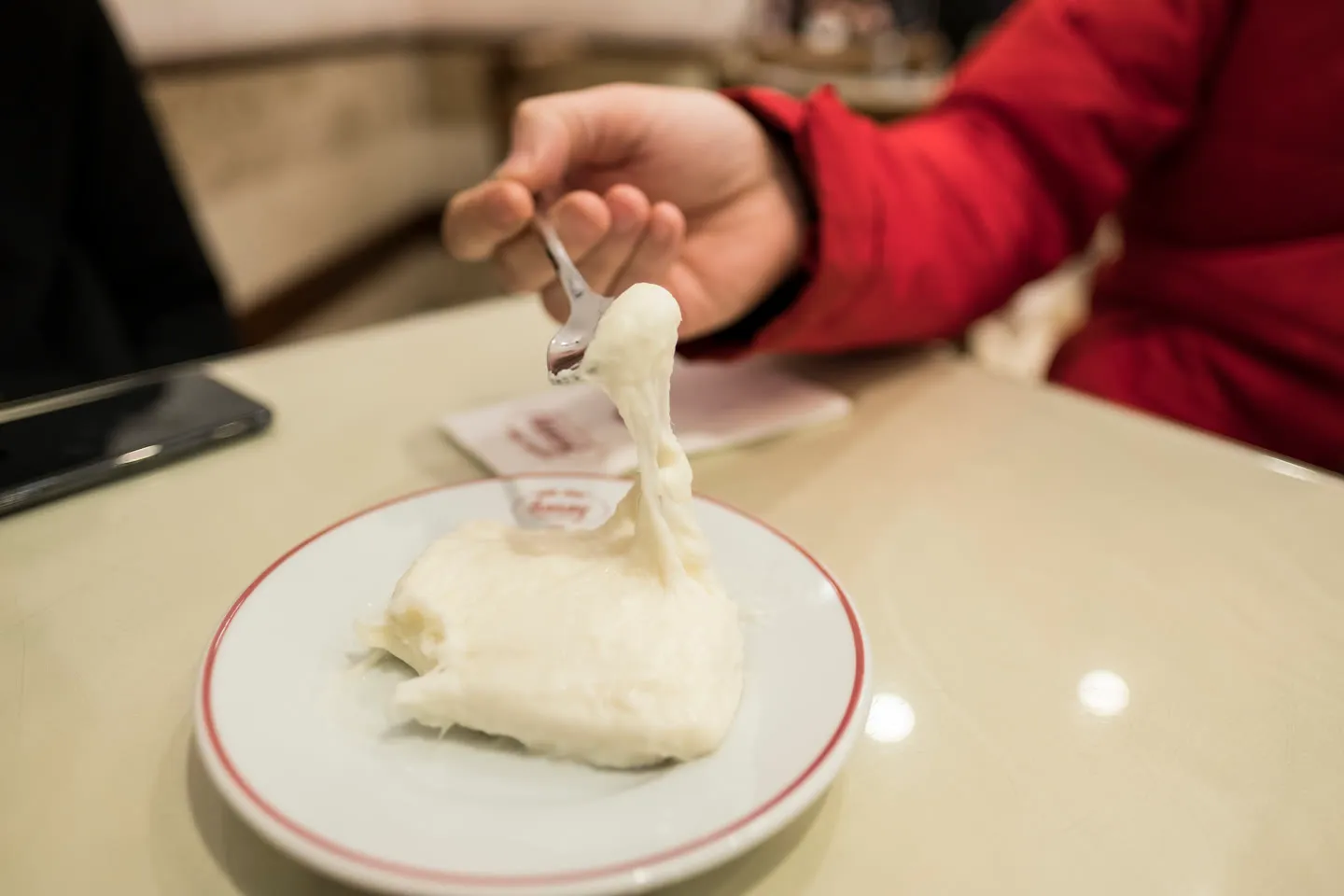
It is one of the most famous desserts in Turkish cuisine, and this is the place to try it. The texture is the point.
Who this route is for
Route 2 works best spread across a day: lunch at Nato, a walk up to Galata, afternoon tastings, dinner at Zübeyir, a late dessert. It can also be compressed into an afternoon-to-late-evening run (start at Köşkeroğlu at 3pm, dinner at Zübeyir at 8pm, dessert at Saray by 10:30pm). This is the most varied of the three routes and covers the broadest food range: a working-class lokanta, Gaziantep baklava, Black Sea cooking, a classic ocakbaşı, a pide shop, and a muhallebici. Reservations matter at Zübeyir. Full-day format. Real uphill walking, so pace yourself or use the Tünel funicular and the İstiklal tram to cut some of it.
Route 3: Kadıköy
The area
Kadıköy is on the Asian side of Istanbul, reached by a twenty-minute ferry from Eminönü or Beşiktaş. This is the food neighborhood Istanbullus actually eat in. Less touristed than Sultanahmet or Beyoğlu. More local. Denser in good food per square meter than anywhere else in the city. The Kadıköy market is a web of narrow streets packed with fish stalls, produce carts, spice shops, nut sellers, specialty bakeries, and restaurants spilling tables onto the pavement.
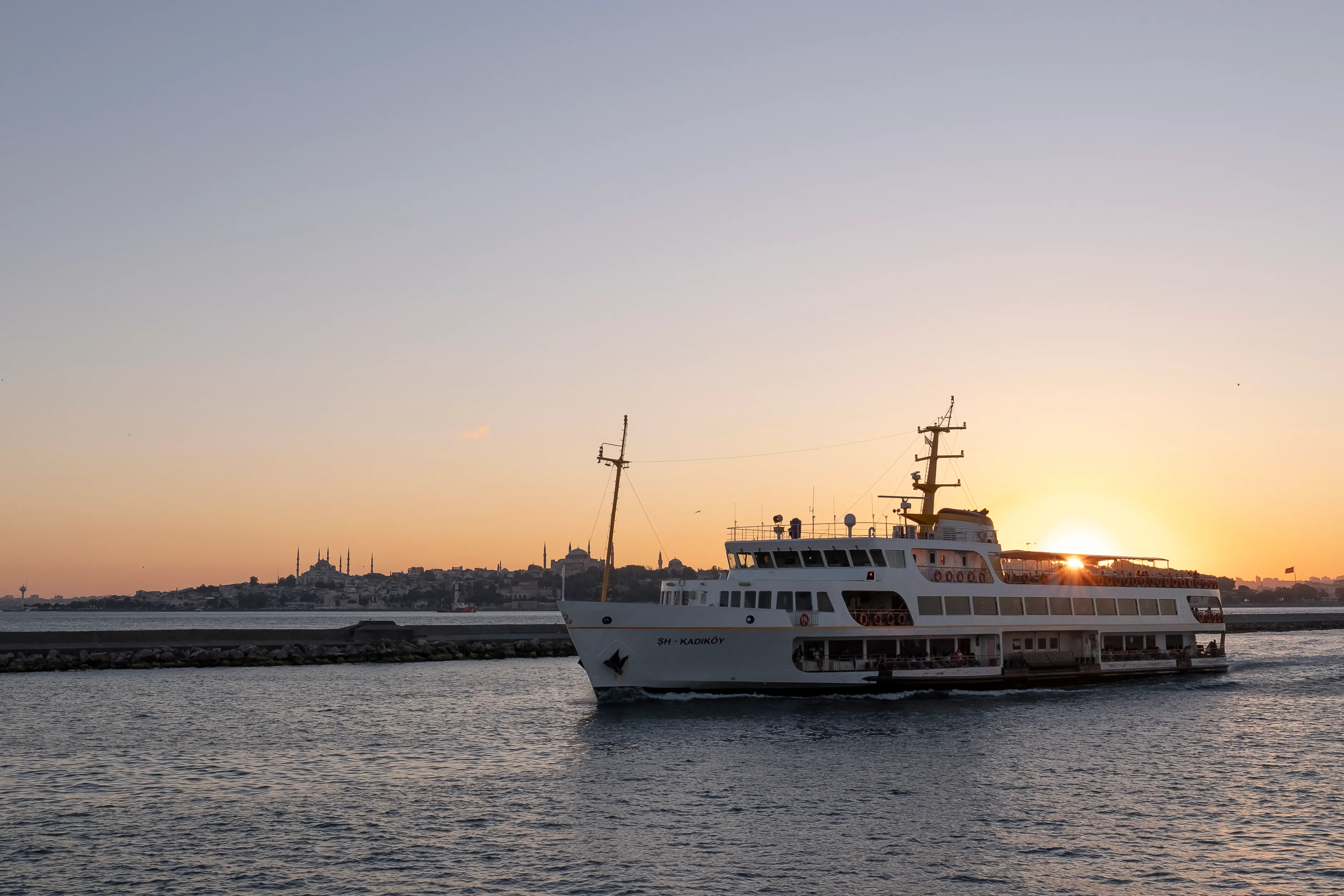
The ferry crossing is part of the experience. Go on deck and watch the European skyline recede.
Route logic
All five restaurants are within the Kadıköy market, walkable in ten minutes corner to corner. The route starts at the ferry terminal, works through the market in a loose clockwise loop, and returns to the ferry at the end of the day.
Lunch at a lokanta. A pide snack mid-afternoon. A long meze-and-fish dinner. A fast köfte bite on the way back. Dessert close.
Route 3: all five stops on one map
Everything sits inside the Kadıköy market, ten minutes corner to corner, starting and ending at the ferry.
Stop 1: Yanyalı Fehmi Lokantası
Yanyalı Fehmi has been a lokanta since 1919. Greek-Anatolian influences run through the menu, which changes daily based on what arrived from the market. A glass-fronted counter shows what is ready. Meat stews with eggplant. Vegetables braised in olive oil. Layered baked pastas. Boiled chickpeas with rice.
You learn what to order by looking. Walk slowly down the counter. Point at one or two things that catch your eye. The servers are patient and used to indecision.
What to order for two people:
One meat main: a kuzu güveç (lamb stew) or etli patlıcan (meat with eggplant) if available. One zeytinyağlı vegetable dish (cooked in olive oil): zeytinyağlı enginar (artichokes in olive oil) in spring, zeytinyağlı taze fasulye (green beans in olive oil) in summer, or whatever is in season. A small portion of pilav (rice) or bulgur. If bamya (sweet okra) is on the counter, take a small plate. Ayran to drink.
The olive-oil vegetable dishes (zeytinyağlılar) are what Yanyalı does exceptionally well. Do not skip them. Ask “bugün taze olan hangisi?” (what came in fresh today?) if you want a pointed recommendation.
Walk five minutes through the market to the next stop.
Stop 2: Pidesun
Pidesun is a modern pide shop in Kadıköy, younger than the classics but taken seriously. A small, busy room with an open oven. They specialize in pide with unusual toppings, with a well-known pastrami pide as the signature.
This is an afternoon snack, shared, not a full meal.
What to order for two people:
One pastırmalı pide (pide topped with cured beef pastırma and cheese) to share. The pastırma melts into the cheese and the crust crisps underneath. Optional: a sebzeli pide (vegetable pide) or a single lahmacun for contrast.
One pide between two is enough. The route has more eating ahead.
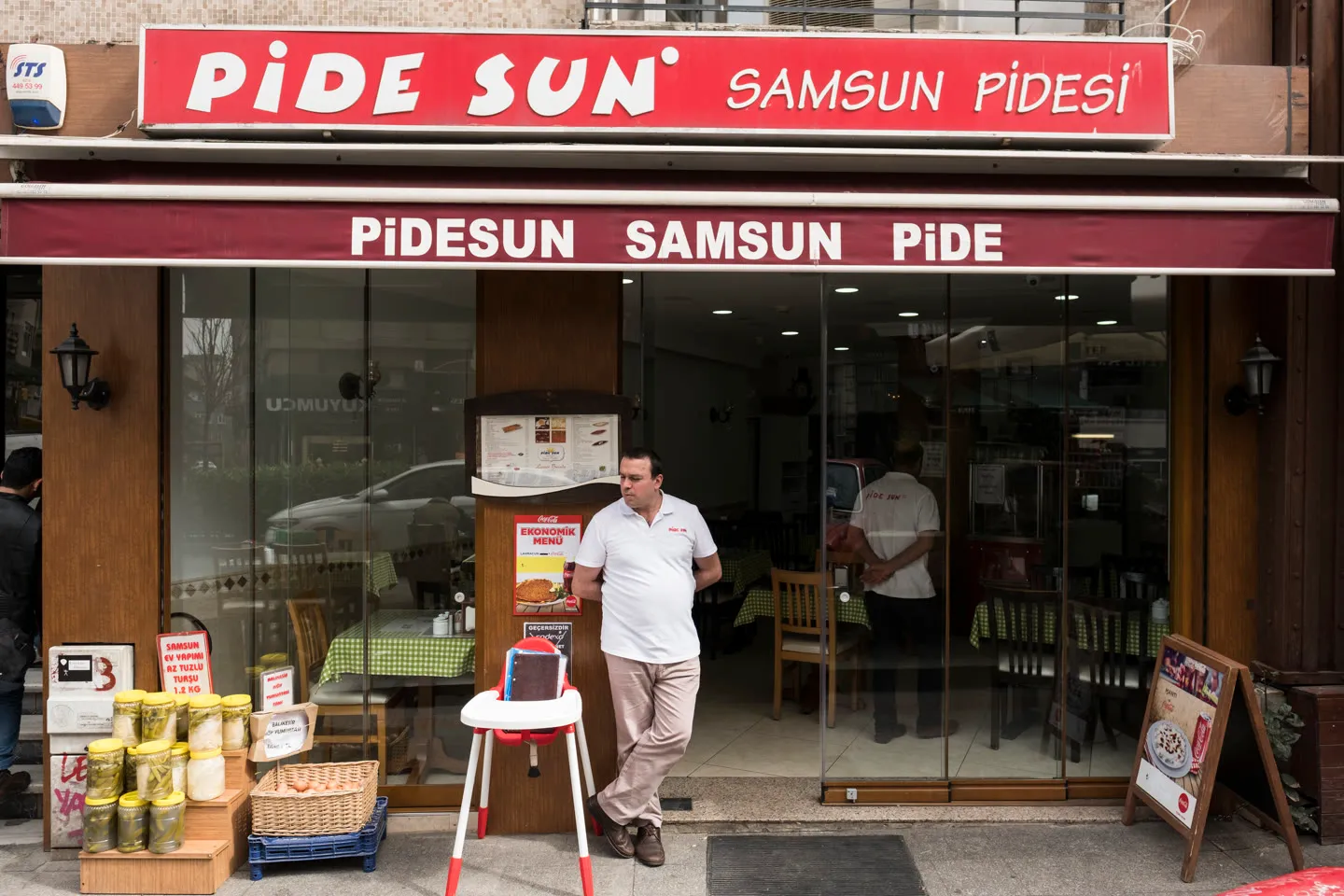
Walk through the market to the fish-and-meyhane area on Güneşlibahçe Sokak for the dinner stop.
Stop 3: Kadı Nimet
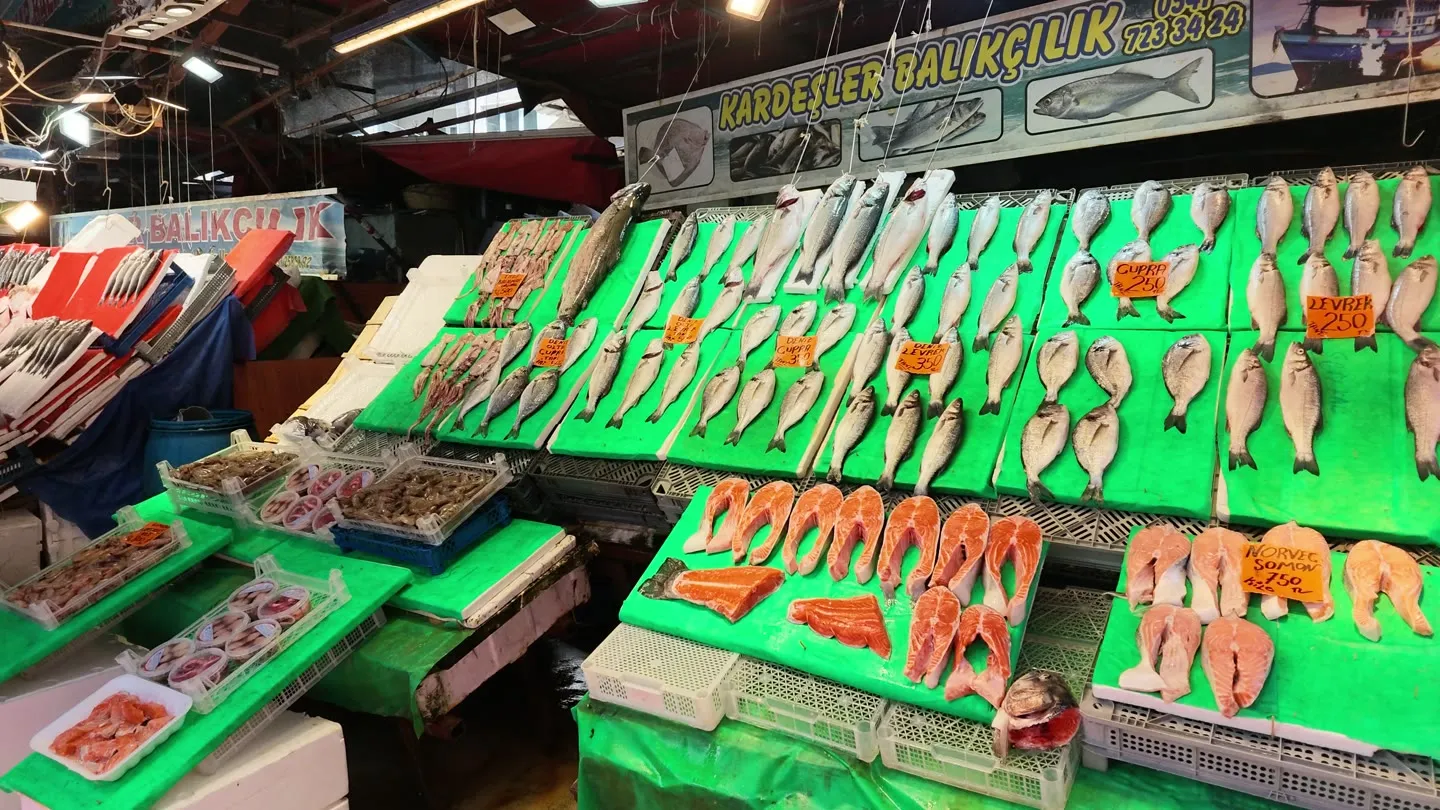
Kadı Nimet is one of the most loved meyhane-fish restaurants in Kadıköy. Tables spill into the alley. The front window shows what came in from the boat that morning. Inside, a refrigerated case near the door holds the meze tray.
This is the day’s long meal. Plan two hours. Do not rush.
What to order for two people:
Meze first. Point at three or four cold plates. Haydari (strained yogurt with garlic and dill). Patlıcan salatası (smoky eggplant dip). Deniz börülcesi (sea beans, salty and crunchy, in season spring through summer). Lakerda (salt-cured bonito, almost impossible to find outside Istanbul) if it is on the tray.
One shared hot meze: kalamar tava (fried calamari).
Fish. Look at the counter before you order. In winter, a plate of hamsi tava (fried fresh anchovies) is the move and shared between two feeds both of you well. In warmer months, ask for istavrit (horse mackerel), lüfer (bluefish, in autumn), or levrek (sea bass). The waiter will tell you what is fresh.
To drink: rakı with water and ice. This is the proper match for fish and meze.
Do not order a large fish per person. A plate of hamsi is a meal for two. A single sea bass feeds two moderately. Meze fills the table before the fish arrives, so resist loading up. If you are going to skip anything, skip the second hot meze, not the fish.
Stop 4: Ekspres İnegöl Köftecisi
Ekspres İnegöl is a small, quick köfte shop on a Kadıköy side street. It specializes in İnegöl köfte, a style from the town of İnegöl north of Bursa, which is smoother and denser than the Sultanahmet-style köfte at Selim Usta. The shop is functional rather than atmospheric. A fast sit-down or standing bite.
Treat this as a short, sharp stop, not a meal.
What to order for two people:
One portion of İnegöl köfte (six or so small grilled meatballs) to share. A small piyaz (white bean and onion salad). A few biber turşusu (pickled hot peppers) on the side. A small dish of the house kırmızı biber sosu (red pepper sauce) if they offer it. Ayran to drink.
Skip the fries. Do not order a second portion. The dessert stop is minutes away.
Stop 5: Baylan
Baylan has been making pâtisserie and ice cream in Istanbul since 1923. The Kadıköy branch has operated in this location since 1961, and it is the one to visit. The interior is wood-paneled, unhurried, old. The menu has the usual Turkish desserts, several cakes and pastries, and a handful of house specialties. But there is really only one order here.
What to order for two people:
One Kup Griye each. This is the signature and has been made the same way since the 1950s. Coffee ice cream, hot caramel syrup, crushed almonds, a thin layer of cream. The balance of hot caramel on cold ice cream is the entire point. Order a Turkish coffee or a glass of tea alongside.
Do not order other desserts here, at least not on the first visit.
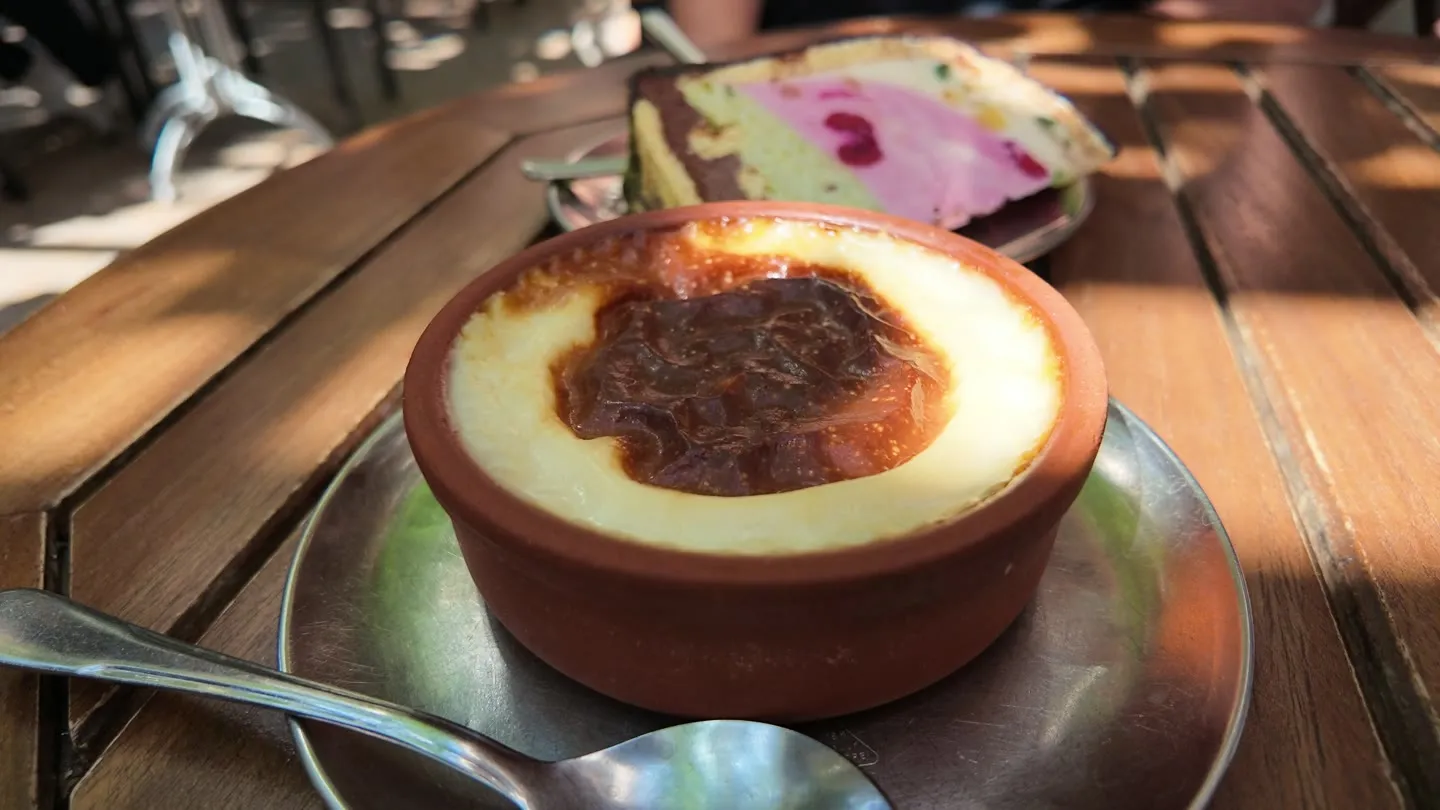
Kup Griye is what Baylan does. Get that right first.
Walk ten minutes back to the ferry terminal. Take the ferry back to the European side at sunset if you can. The last light on the Bosphorus is one of the great free experiences in Istanbul.
Who this route is for
Route 3 works best as a full-day commitment, starting with lunch at Yanyalı around 1pm and ending with dessert at Baylan around 9 or 10pm. It suits visitors who have already done a classic Istanbul day in Sultanahmet and are ready for the city’s everyday food life. Kadıköy feels less like a destination and more like a neighborhood shopping for itself, and the food reflects that. Reservations help at Kadı Nimet on weekend evenings. The other stops work on walk-in. The ferry adds twenty minutes each way, so build that into the timing.
Final thoughts
Three routes, sixteen stops, three neighborhoods that feel nothing alike. The idea is simple. You do not need a guide to eat well in Istanbul. You need a bit of structure, a willingness to share plates, and the patience to walk between meals. The city takes care of the rest.
If you are unsure which route to start with, Route 1 (Sultanahmet and Sirkeci) is the natural first day. It covers the classic dishes and the historic core. Route 3 (Kadıköy) is the second day, once you have orientation and want to see how the city actually eats. Route 2 (Karaköy, İstiklal, Taksim) is best as a dedicated afternoon-into-evening, since the ocakbaşı dinner at Zübeyir is the anchor.
Use the Istanbul food guide for context on individual dishes, the street food ranking for stalls not on these routes, and the Istanbul shopping guide if you want to carry spices, copper or lokum home.
Enjoy the walk.