Vegetarian and Vegan in Istanbul: What to Order and Ask
Eat vegetarian or vegan in ordinary Istanbul restaurants: vegetable dishes, meze, hidden stock and butter, cheese checks, and useful Turkish phrases.
There is much more to meat-free eating in Istanbul than finding a vegetarian burger. Look for beans cooked with olive oil, eggplant filled with onions and tomato, lentil patties, and the vegetable dishes behind a lokanta counter. You can build a satisfying meal from this side of Turkish cooking.
The questions come before the plate: what is in the stock, which fat was used, and what gets added when the dish is served?
Famous and easy-to-find vegetarian foods in Istanbul
These are some of the best-known meat-free choices you will see in Istanbul restaurants, bakeries, lokantas, and meze counters. Recipes vary, so the question in the last column matters more than a blanket vegetarian or vegan label.
| Dish | What it is | What to check |
|---|---|---|
| Mücver | Zucchini fritters, often served with yogurt | Usually contains egg and flour; ask about cheese and the yogurt |
| Şakşuka | Fried vegetables, usually eggplant, in tomato sauce | Any yogurt, butter, or animal fat? |
| Börek | Layered pastry with cheese, potato, or spinach fillings | Confirm the filling is meat-free; the pastry may contain butter, egg, or dairy |
| Kuru fasulye | White beans in a tomato-based stew | Is it cooked without meat, sucuk, pastırma, meat stock, or butter? |
| Nohut yemeği | Chickpeas cooked as a warm stew | Ask specifically about meat pieces, meat stock, and butter |
| Pilav | Rice served as a side dish or paired with beans | Ask about meat or chicken stock and butter |
| Bulgur pilavı | Bulgur cooked with tomato, peppers, or other vegetables | Ask about meat or chicken stock, butter, and any meat in the pot; bulgur is wheat |
| Perde pilavı | Rice baked inside a pastry shell, traditionally with chicken | The classic version is not vegetarian; confirm the filling rather than treating it as plain rice |
| Menemen | Eggs cooked with tomato and peppers | Any sucuk, pastırma, butter, or cheese? This is vegetarian, not vegan |
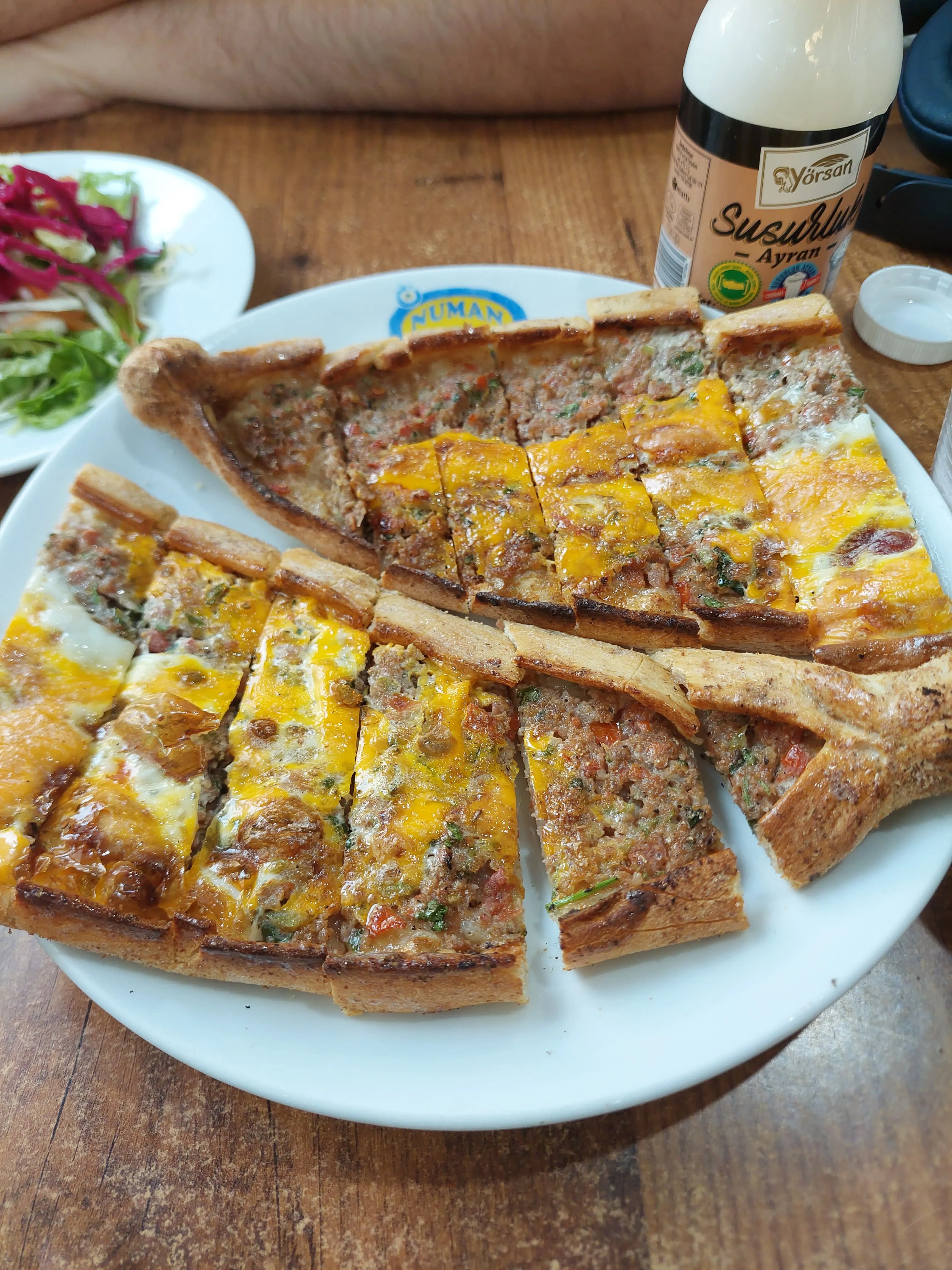
| Pide | Boat-shaped flatbread with several possible fillings | Choose cheese, spinach, egg, or vegetable fillings; ask about butter and meat |
| Taze fasulye yemeği | Green beans cooked with tomato and onion | The zeytinyağlı version is often meat-free, but ask about meat stock and butter |
| Ispanak yemeği | Cooked spinach, sometimes with rice | Most versions are meat-free, but ask “Etsiz mi?” and check for stock |
| Falafel | Fried chickpea patties, widely available around Istanbul | Check whether the sauce contains yogurt or other dairy |
| Etsiz biber dolması | Peppers stuffed with a meat-free rice mixture | Confirm the filling and cooking liquid are meat-free; ask about yogurt |
| Domates çorbası | Tomato soup, sometimes finished with cheese | Meat or chicken stock, butter, cream, and cheese |
| İmam bayıldı | Eggplant with an onion-and-tomato filling | Is the filling meat-free, and what oil or fat is used? |
| Zeytinyağlı enginar | Artichokes cooked with olive oil | Stock, butter, and any sauce added at service |
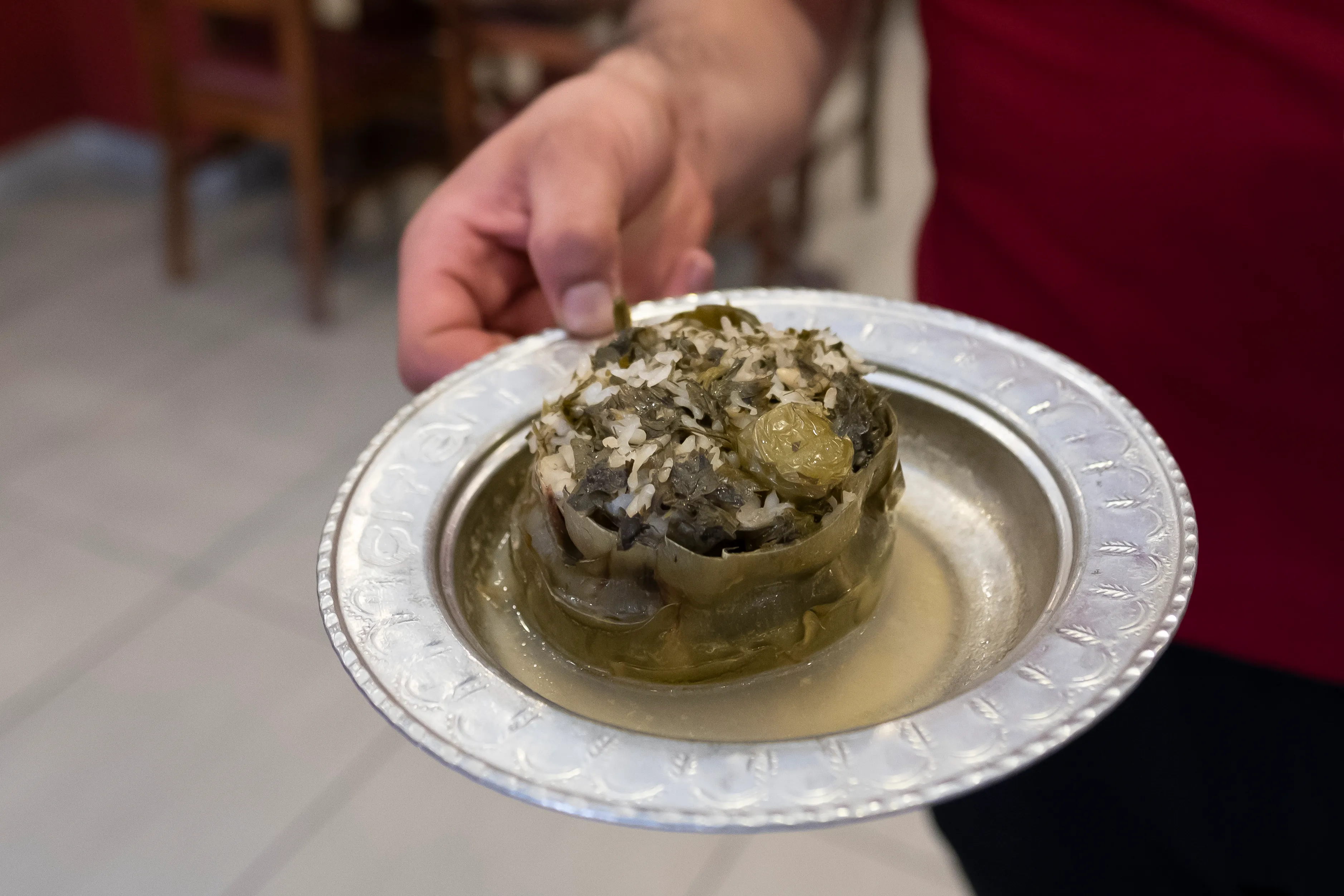
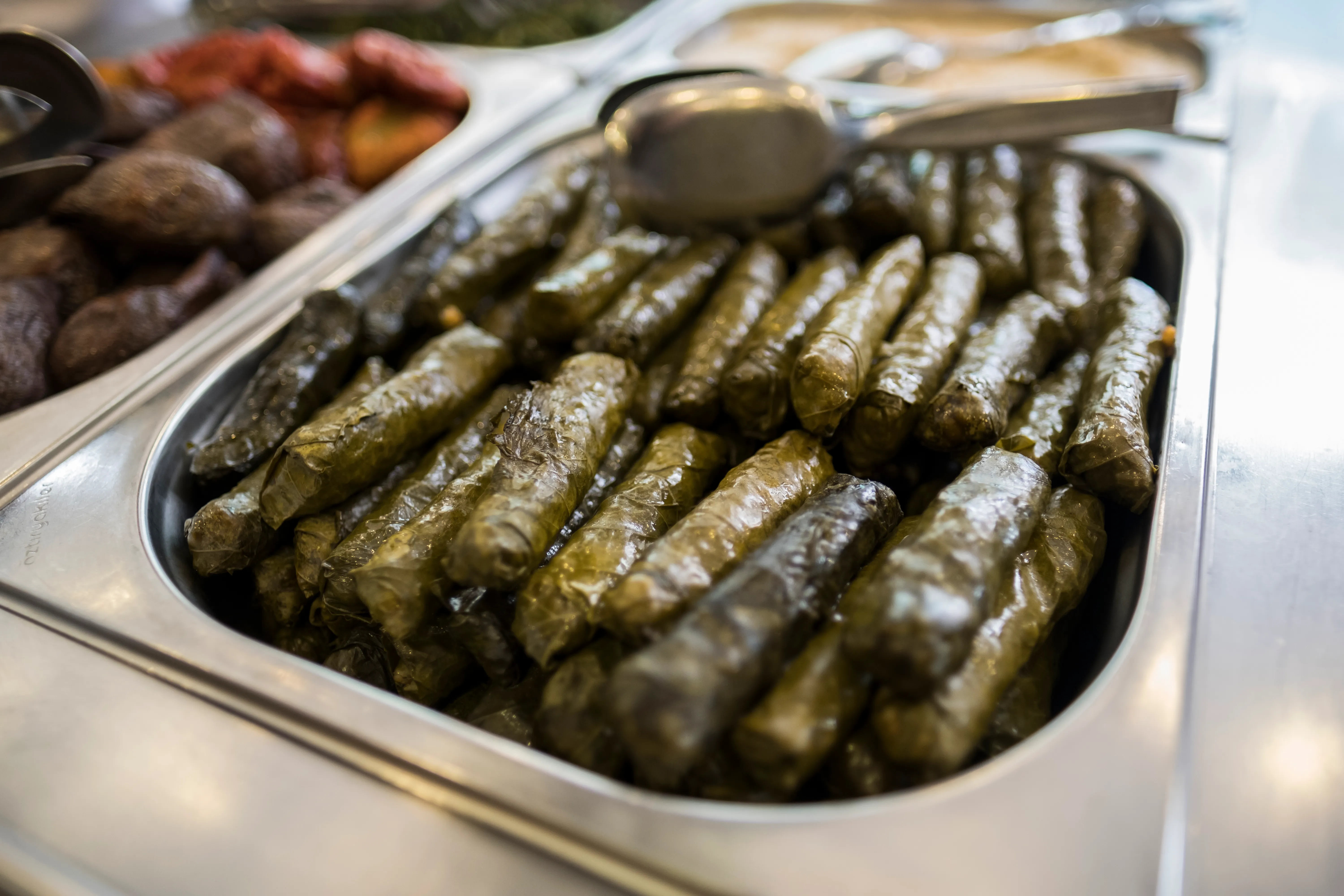
| Zeytinyağlı yaprak sarma | Grape leaves wrapped around a rice filling | Is there meat in the filling or cooking liquid? Is yogurt served on top? |
| Mercimek köftesi | Lentil-and-bulgur patties with herbs and seasoning | Added animal ingredients and the heat level; bulgur is wheat |
| Fava | A smooth bean purée, often made from dried fava beans | Cooking fat and toppings |
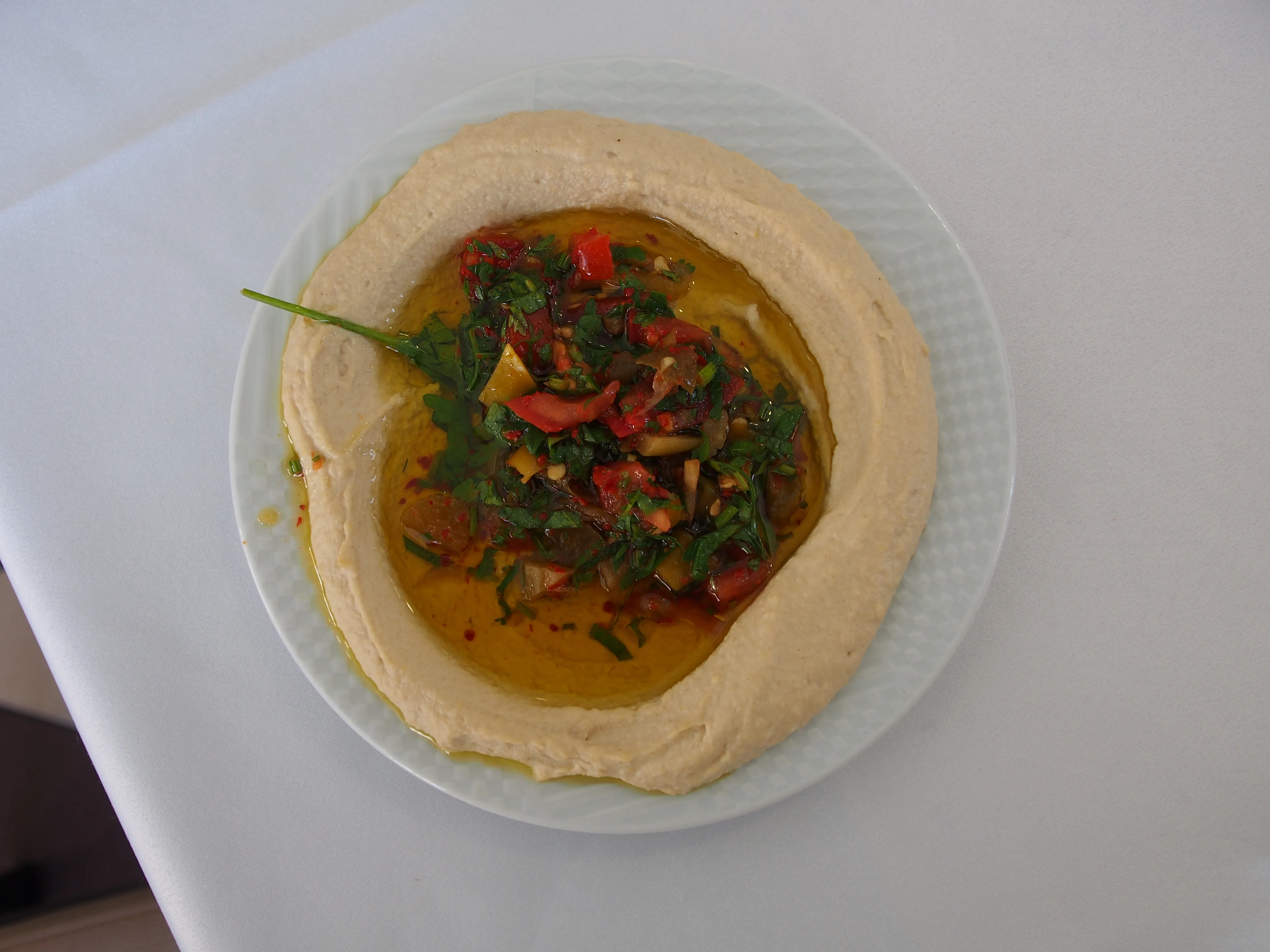
| Humus | Chickpea-and-tahini purée | Butter or meat toppings; tahini is sesame |
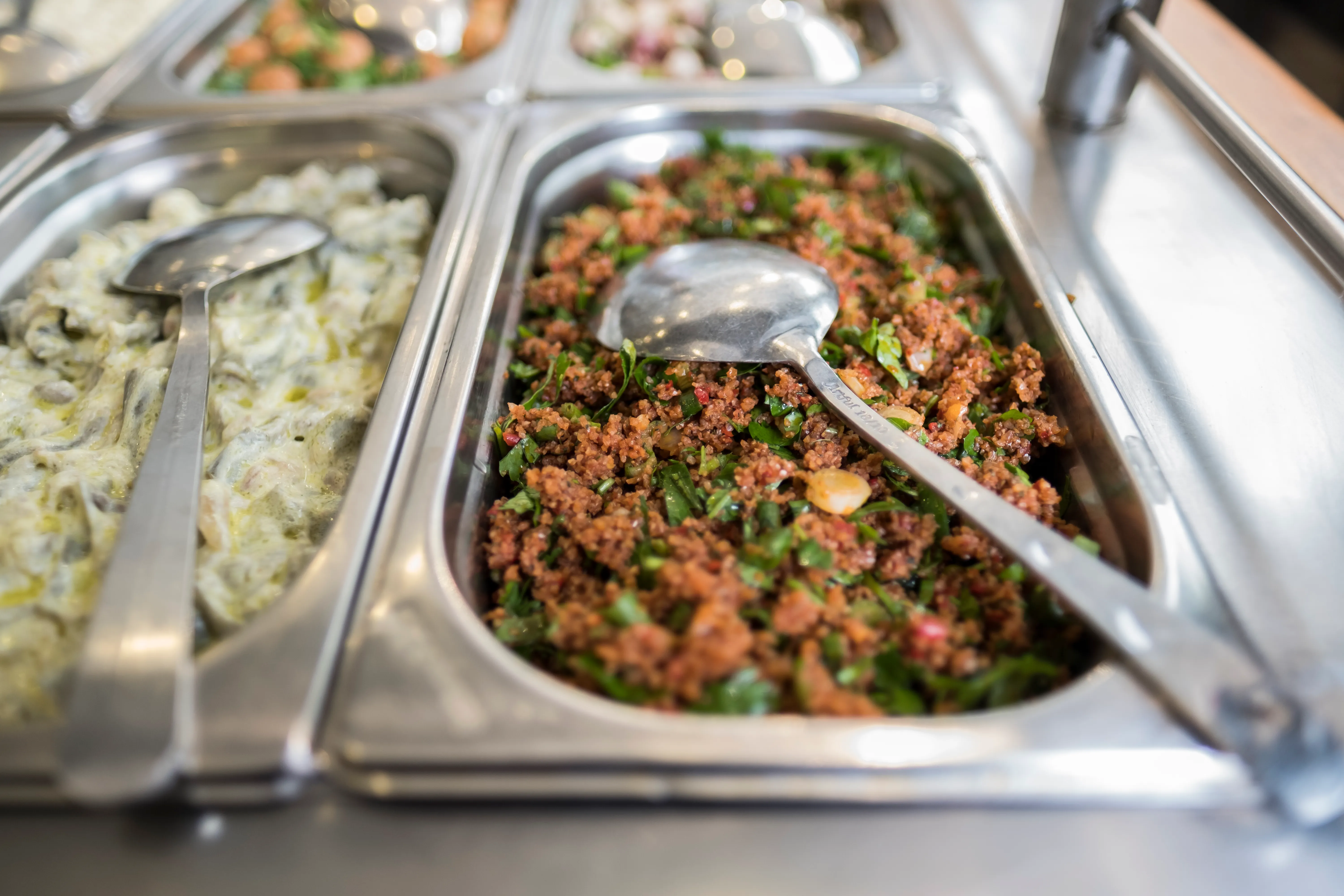
| Kısır | Bulgur with herbs, vegetables, and a tangy dressing | The dressing and any additions; it contains wheat |
The word zeytinyağlı means “with olive oil.” It is particularly useful for finding vegetable dishes. A traditional artichoke recipe from İzmir, for example, uses olive oil, vegetables, lemon, water, and a little flour. That flour is a useful reminder that plant-based does not also mean gluten-free.
You do not have to eat everything cold. A kitchen may have suitable bean dishes, vegetable stews, or freshly cooked vegetables too. Ask what has been prepared that day.
The ingredients you cannot see
Stock in soup, rice, and vegetables
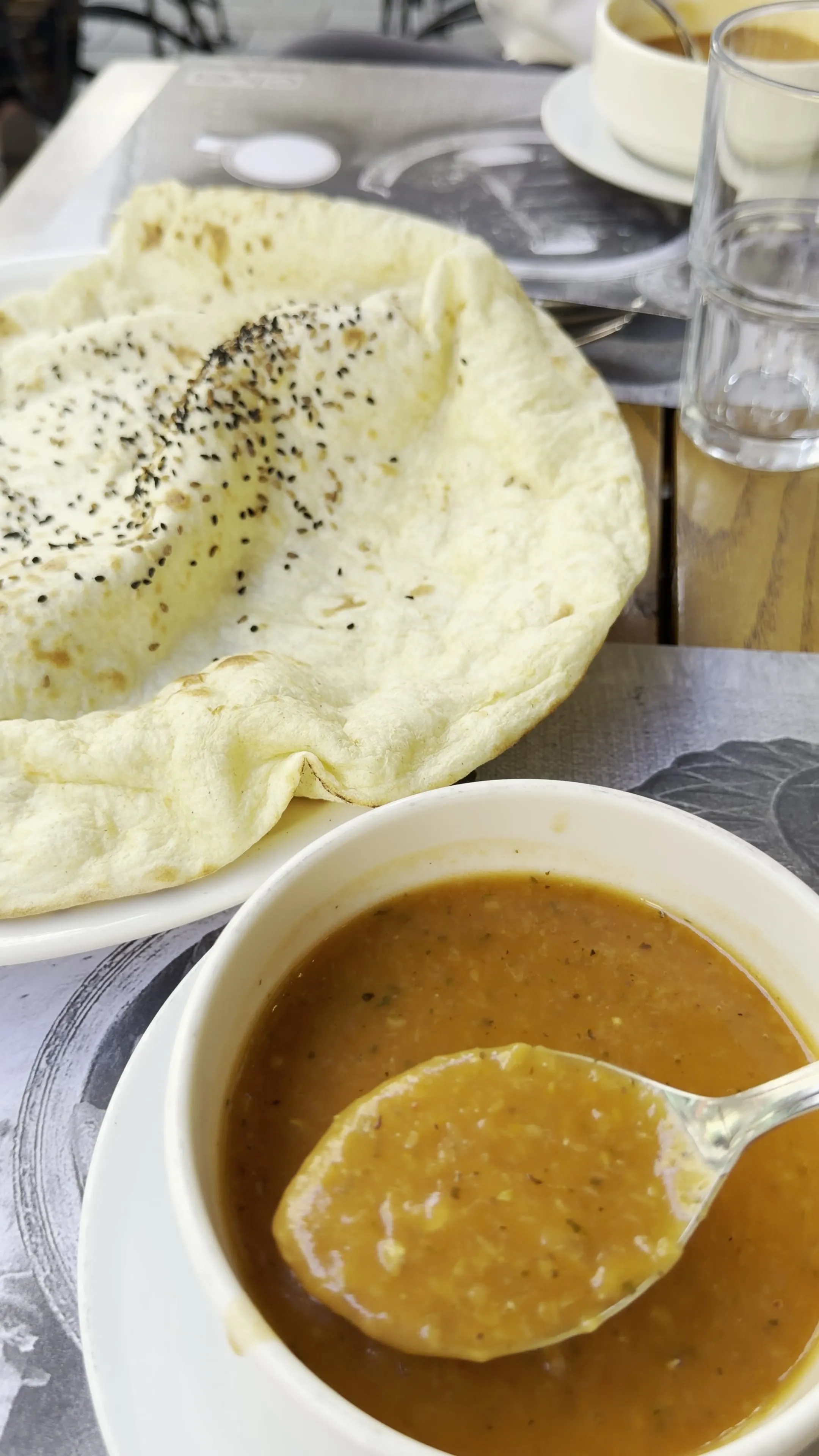
Et suyu is meat stock; tavuk suyu is chicken stock. A soup can have no visible meat and still use either.
Red lentil soup, mercimek çorbası, is a good example: stock and butter can both be part of the recipe. Rice and bulgur deserve the same question. Removing chicken from the top of pilav does not change what the grains were cooked in.
Ask about the pot, not just the garnish: “Bu yemekte et, tavuk veya balık suyu var mı?”
Butter and finishing sauces
Tereyağı means butter, and sadeyağ is clarified butter. Both matter to vegan diners. A vegetable filling may be suitable while the bread around it is brushed with butter; a plain-looking bowl may receive yogurt or melted butter just before it leaves the kitchen.
Hummus also comes in more than one form. Alongside the cold chickpea-and-tahini version, warm versions can carry meat cooked in butter. Ask for the toppings to be described, rather than assuming all hummus is the same.
Fillings and dairy
Sarma means wrapped and dolma means stuffed. Neither word tells you whether the filling contains meat. Karnıyarık, the eggplant dish that can resemble imam bayıldı, has a meat filling.
For vegetarians who eat eggs and dairy, menemen, cheese-filled gözleme, and mücver can widen the choice. Ask about any sucuk or meat additions. For vegans, check the dough, filling, cooking fat, and topping separately.
At a meze counter, haydari, cacık, and dishes described as yoğurtlu contain yogurt. Peynirli means with cheese. Those are useful words to recognize before pointing.
Cheese and rennet
Cheese is not automatically suitable for every vegetarian. Peynir mayası is a general term for a cheese-making coagulant; the phrase alone does not tell you whether its source is animal, plant, or microbial. If you avoid animal rennet, ask: “Bu peynirde hayvansal kaynaklı peynir mayası kullanılmış mı? Ambalajdan veya tedarikçiden kontrol edebilir misiniz?” A server may need the package or supplier information to answer.
“Without meat” does not answer that question. If the kitchen cannot establish the enzyme source, choose another dish rather than expecting the cheese’s appearance to tell you.
Turkish phrases to save on your phone
Start with your dietary label, then name the ingredients that matter to you. These are ordering phrases, not an allergy card.
| Say this | Meaning |
|---|---|
| Vejetaryenim. Et, tavuk, balık ve deniz ürünleri yemiyorum. | I am vegetarian. I do not eat meat, chicken, fish, or seafood. |
| Veganım. Et, tavuk, balık, deniz ürünleri, süt ürünleri, yumurta ve bal dâhil hiçbir hayvansal ürün tüketmiyorum. | I am vegan. I do not consume any animal products, including meat, poultry, fish, seafood, dairy, eggs, or honey. |
| Bu yemekte et, tavuk veya balık suyu var mı? | Does this dish contain meat, chicken, or fish stock? |
| Bu yemekte tereyağı, süt, yoğurt, peynir, yumurta veya bal var mı? | Does this dish contain butter, milk, yogurt, cheese, egg, or honey? |
| İçinde neler var? | What is in it? |
| Mutfağa sorup kontrol eder misiniz? | Could you ask the kitchen and check? |
Etsiz, meaning without meat, is useful shorthand. On its own it leaves too much unstated: chicken, seafood, stock, and dairy still need attention according to what you avoid.
Pointing helps identify the tray. It does not replace the conversation about how the food was made.
Building a meal in an ordinary restaurant
At a lokanta
Go when the lunch counter has a selection to choose from, and ask which dishes meet your needs before ordering. A vegetable dish, a bean dish, and bread can make a complete meal without needing a replacement for grilled meat.
Check rice separately, even when it is the automatic accompaniment. If a dish is already cooked with stock or butter, the server cannot remove those ingredients. A different tray is the practical solution.
For examples of old-school lokantas across the city, see our local Istanbul restaurant guide.
At a meze restaurant
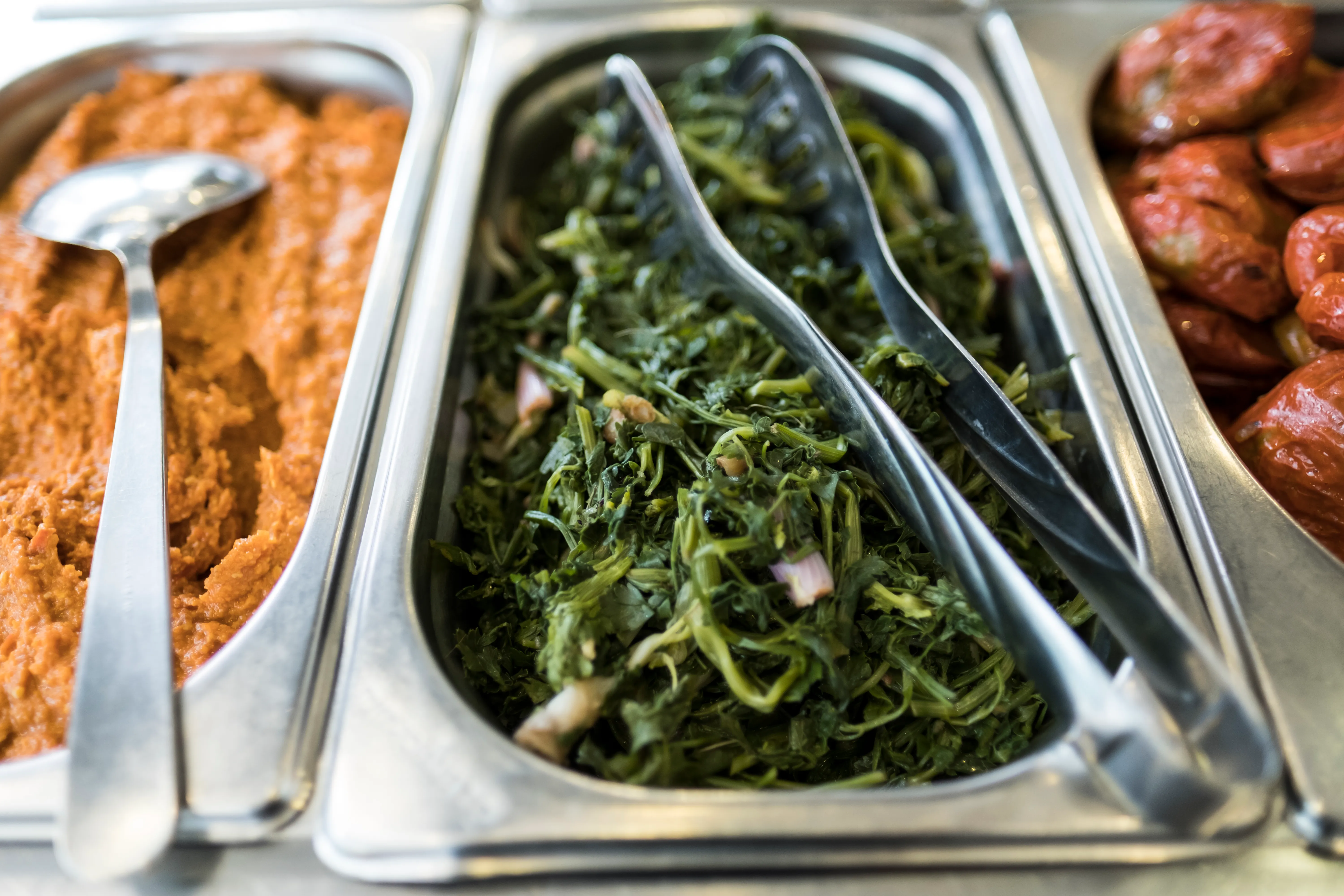
Choose a few plates with different textures: a bean purée, vegetables, a salad, perhaps stuffed leaves once you have checked the filling. Ask whether a main course is expected or whether you can make a meal of meze.
Our guide to Turkish mezes gives you more dishes to recognize. Use it as a starting vocabulary, not as proof that a plate suits your diet.
For vegan eating, do not let the whole order become “whatever has no yogurt.” Check warm dishes and toppings too. For vegetarian eating, remember that seafood meze is still seafood, even when it arrives among vegetable plates.
At breakfast
Olives, tomatoes, cucumber, and bread give you a place to start. Vegetarians who eat dairy and eggs have more choices, including cheese and menemen. Vegans should ask about bread ingredients, spreads, and any butter added at service.
If your hotel breakfast is included, use what works for you. You can still spend a morning outside with a bakery order or a café breakfast. A large fixed spread is not necessary every day.
See what to order at a Turkish breakfast before paying for a whole table of dishes you may not eat.
For a quick snack
Plain corn, roasted chestnuts, and bread can be useful options, with preparation and additions checked. For simit, ask about the actual product rather than assuming every bakery uses the same dough.
At a çiğ köfte shop, look for etsiz çiğ köfte, the meat-free version, and check the wrap and sauces. The name çiğ köfte alone is not an ingredient list.
If you want dedicated venues rather than help with ordinary menus, use the separate vegetarian restaurants in Istanbul guide.
Turkey requires food-service businesses to provide information about specified allergens, but that information does not answer every vegan or vegetarian question. Ask for the kitchen’s ingredient details as well. Our food-allergy guide covers that conversation in more depth.
If you want help choosing a food tour
Our Taste of Two Continents tour offers the broadest choice among our tours for vegetarian and vegan guests. Vegetarian alternatives are available at most stops; vegan guests will encounter several stops without a suitable alternative.
Read the current dietary FAQ and tell us exactly what you avoid before booking. That lets you judge the food you can enjoy, rather than arriving with the expectation that every tasting can be adapted.