Tipping in Istanbul: How Much, When, and Where
How much to tip in Istanbul: 10 to 20 percent at sit-down restaurants, round up or 5 to 10 percent at cafes and kebab shops, nothing for street food. Tip in cash.
How much do you actually tip in Istanbul?
Istanbul runs on a lighter tipping culture than the United States. Waiters here are not living on tips the way American servers do, and nobody stands over your shoulder with a percentage screen. The honest baseline: 10 to 20 percent at table service (20 when the service is exceptional), round up everywhere casual, and skip it entirely for street food.
| Where you are | Typical tip | What to know |
|---|---|---|
| Sit-down restaurant (meze, kebab house, fish place) | 10 to 20 percent (20 if the service is exceptional) | Cash on the table is the norm |
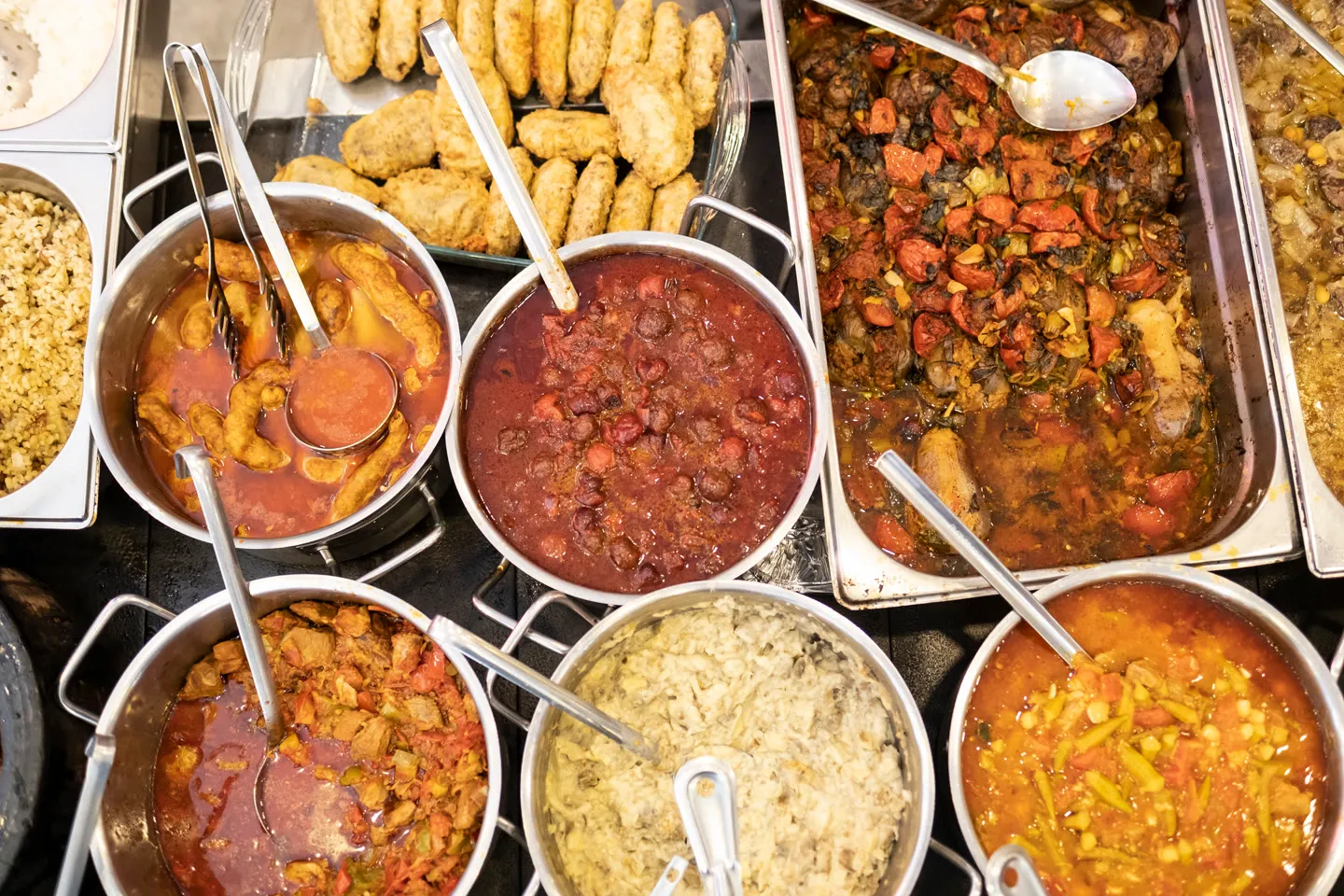
| Lokanta / esnaf restaurant (tray food, fast turnover) | Round up the change | Leaving the coins or a small note is enough |
| Cafe / kahve / third-wave coffee | Round up, or 5 to 10 percent | Counter service rarely expects more |
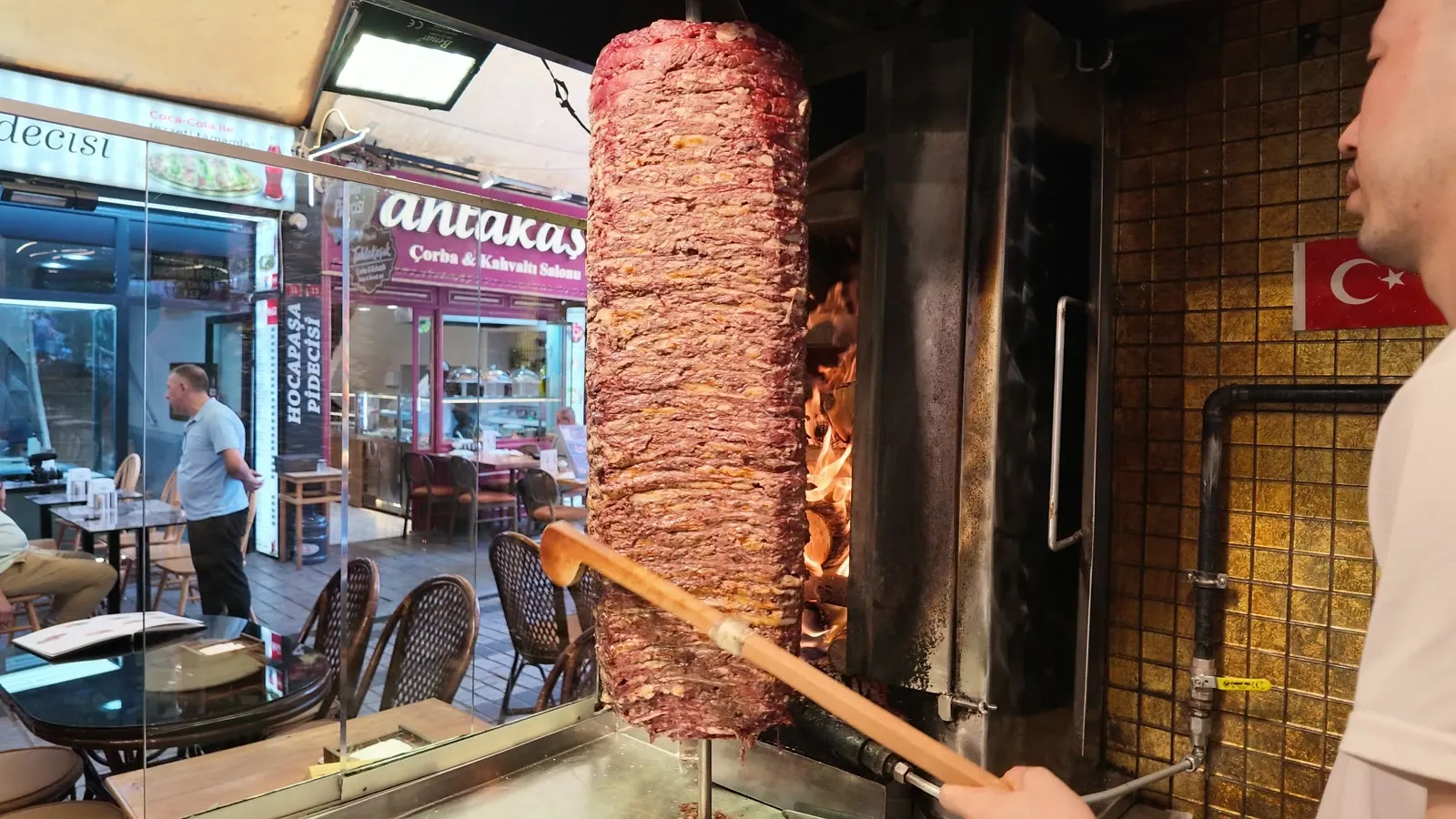
| Kebab shop, dürüm, pide counter | Round up, or 5 to 10 percent | Quick, casual, no pressure either way |
| Street food (simit, balık ekmek, kestane, midye) | Nothing | Cash transaction, no tip culture |
| Hotel bar / upscale rooftop | 10 to 20 percent | Closer to international norms in tourist zones |
| Tour guides | 10 to 20 percent of the price | Customary, never compulsory |
Why does tipping work differently here?
Turkish service culture is built around hospitality, not gratuity. You are treated as a guest first, and the tip is a thank-you, not a wage top-up. That changes the math. A genuine “teşekkürler” and rounding the bill carry real weight, and over-tipping can read as a little odd in a neighborhood lokanta where regulars just leave the coins. The touristed districts run on different math these days: a tip there is still not compulsory, but it has become the expectation.
The word to know is bahşiş (tip). You may also see servis ücreti or servis (service charge) referenced, mostly in tourist-facing places. Since January 30, 2026, Türkiye has banned mandatory service charges and cover (“kuver”) fees added to restaurant and cafe bills, so any tip is now meant to be fully voluntary rather than baked in. The practical takeaway is unchanged: if you want the person who served you to benefit, hand them cash directly, because that is the surest way it reaches them.
How do I tip with a card in Istanbul?
The single most useful thing to know: Most Turkish card machines have no tip line. When the waiter brings the handheld terminal, you tap or insert for the exact bill amount, and that is it. Most of the time there is no screen asking you to choose 15, 18, or 20 percent.
So the practical move is to carry some lira in cash and size the tip from the bill. Set it on the little tray or bill folder, or hand it over directly when you say thank you. If you only have a card and want to tip, you can sometimes tell the waiter a higher total (“make it 600”) before they run the card, but this is hit or miss, so cash is far simpler.
What locals know
- Rounding up is the default, not a percentage. A local finishing lunch at a lokanta does not calculate 10 percent. They leave the coins, or round 240 lira up to 250 or 260, and walk out.
- Cash beats card for tips, almost always. Because most terminals have no tip field and service charges are unreliable, the cash you physically leave is what the staff actually keeps.
- The person who brought your food is who you are tipping. In a small kebab shop or family lokanta that may be the owner, and a tip is graciously accepted, not awkward.
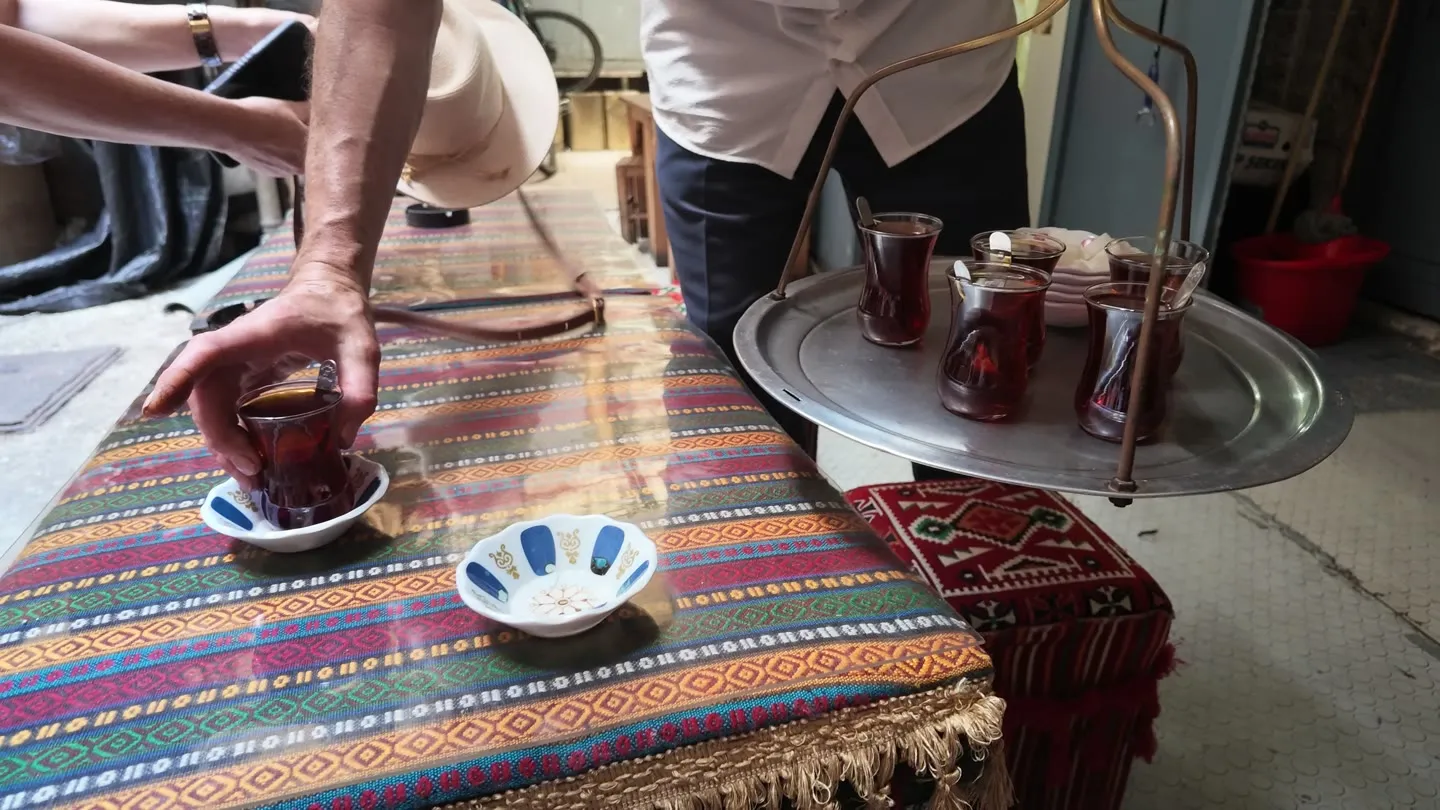
- Tea sellers and çay runners at markets usually do not expect tips; the tea is hospitality.
- At a traditional barber or hamam, tipping is more expected than at a cafe (people often leave around 10 to 15 percent for the attendant at a hamam), though that is outside the food world.
What do visitors get wrong about tipping?
The most common mistake is American-sizing the tip. The 25-percent reflex is not needed here. Generous is fine; 10 to 20 percent already covers it, and in a neighborhood lokanta full of regulars, rounding up is still the custom.
The second mistake is assuming a service line on the bill is the tip and the staff got it. Mandatory service and cover charges were banned in January 2026, and even a voluntary service line does not always reach the server. If you want the person who served you to benefit, a small cash amount handed over is the surest move.
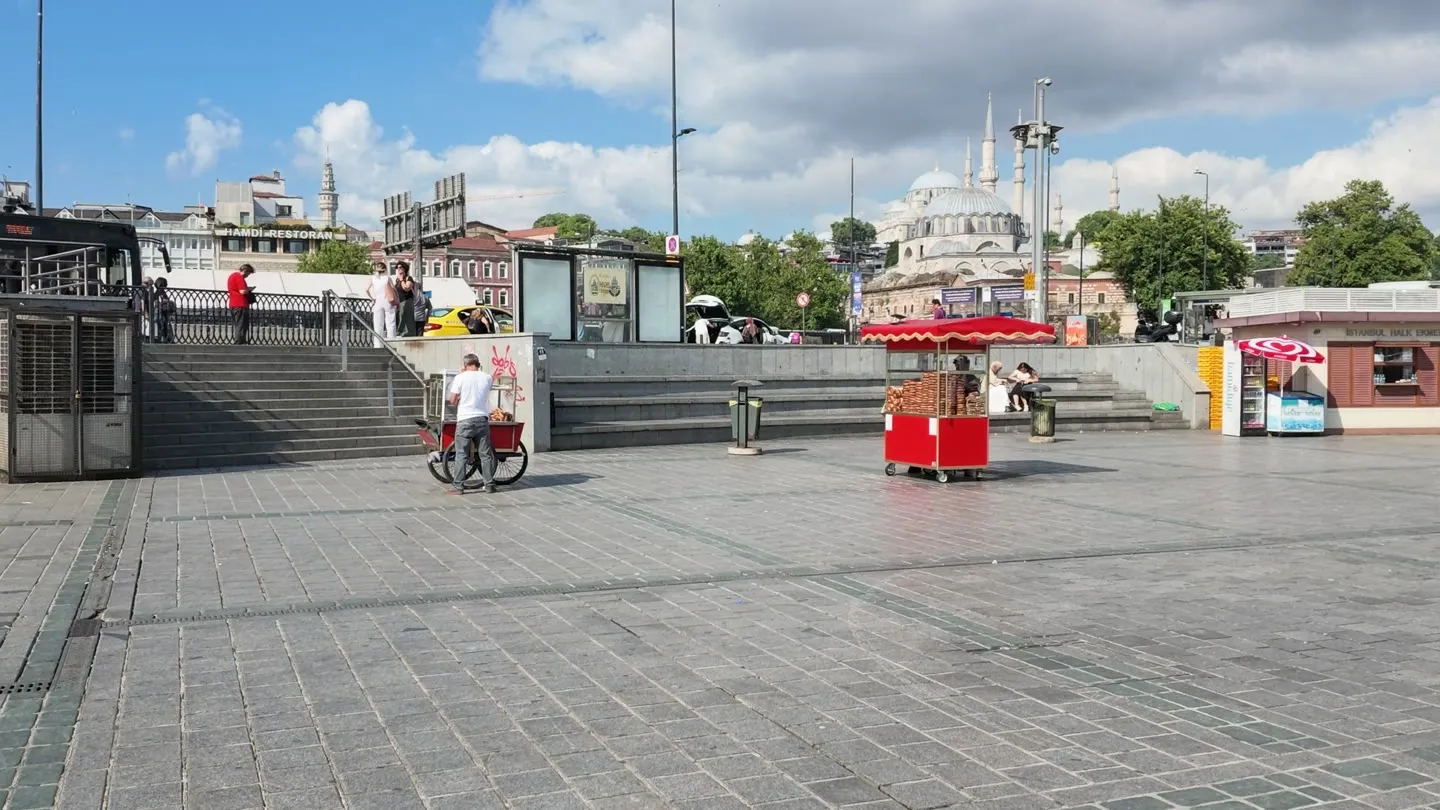
Third: tipping at street food stalls. A simit cart, a chestnut (kestane) seller, a midye dolma vendor, a balık ekmek boat at Eminönü, none of these expect a tip. You pay the price, you take your food, you move on. Trying to tip here just causes confusion. For more on how these stalls actually work, see our Istanbul street food guide.
Fourth: tipping in foreign coins. Notes are fine, dollars and euros included, though lira is easiest for the person receiving it. Coins are the real mistake: foreign coins are hard or impossible for staff to exchange, so that handful of euro cents is worth nothing here.
How do I know when a tip is expected?
Use the service style as your signal:
- Table service, menu handed to you, food brought to the table means a tip is appropriate (10 to 20 percent; 20 if the service is exceptional).
- You order at a counter and carry your own tray means round up or drop a coin, nothing required.
- You pay before you get the food, or it is handed over a counter or out of a cart means no tip.
A good guide will usually point out that the fancier and more tourist-facing the restaurant, the more it leans toward international tipping norms, while the deeper into a residential neighborhood you go, the more “round up the change” is the real custom.
Does tipping change by neighborhood or time of day?
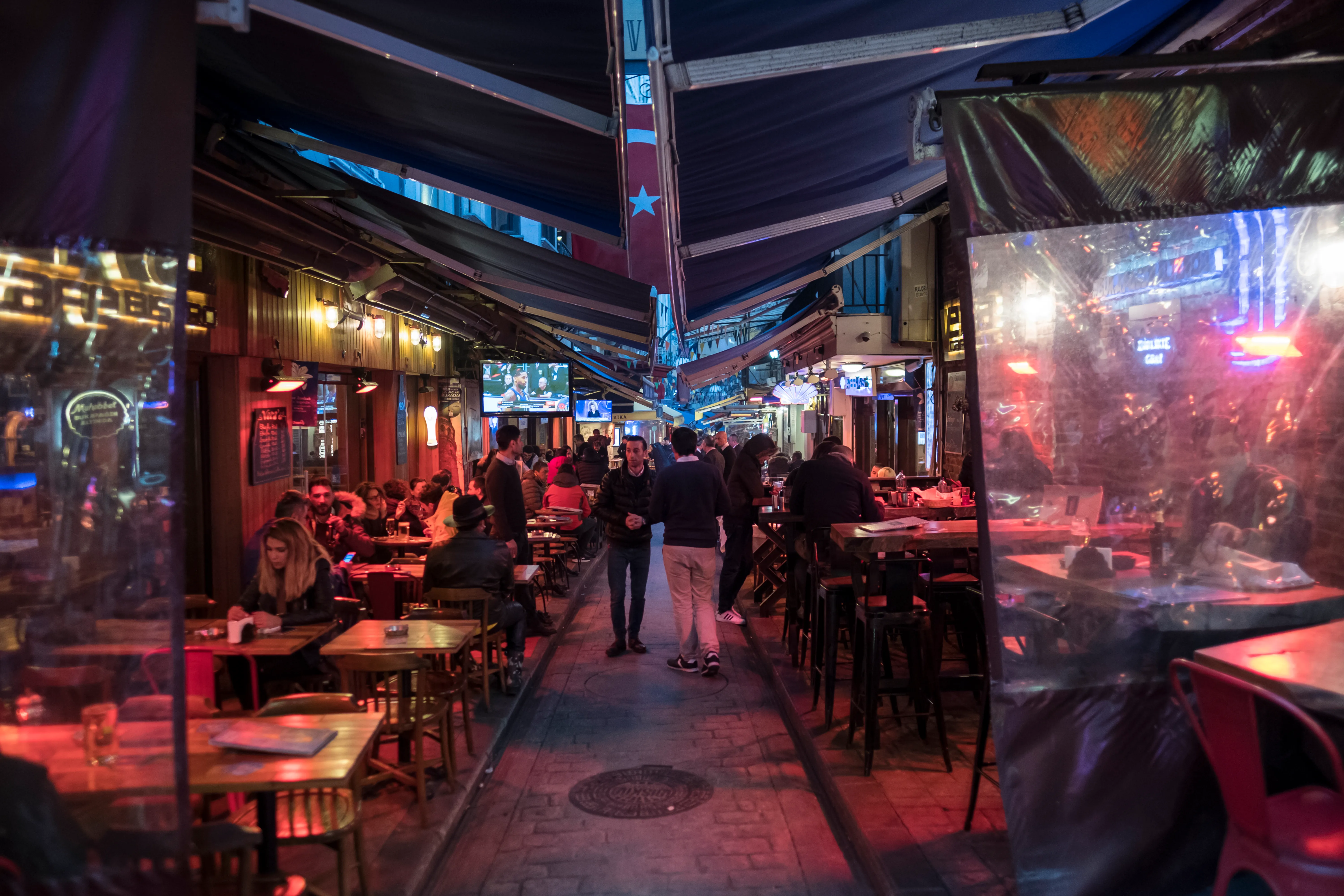
In heavily touristed areas like Sultanahmet and parts of İstiklal, staff are used to international visitors, and a 10 to 20 percent tip reads as completely normal at sit-down places, these days even expected. Cross to a working neighborhood like Kadıköy on the Asian side, or a backstreet lokanta in Karaköy, and the culture shifts back toward simple rounding up. Neither is wrong. Read the room: a loud tourist-menu spot leans toward 10 percent, a quiet place full of regulars wants a round-up and a thank-you.
Breakfast is its own case. A long Turkish breakfast (serpme kahvaltı) is usually full table service, so treat it like a sit-down meal and tip accordingly. A quick simit and tea from a stand is a no-tip street transaction. If you want the lay of the land before you go, our Istanbul food guide covers what to order in each setting.
Should you tip your tour guide in Istanbul?
Yes, if the day earned it. For tour guides, food tours included, the customary range is 10 to 20 percent of the tour price, handed to the guide in cash at the end. It is never compulsory, and no good guide will make you feel that it is; it is simply how guests say the day was worth it. Our own tours work the same way: gratuity is not included in the price and never required. The same range applies to a private guide or driver-guide on a day trip.
FAQ
Do I have to tip in Istanbul?
No, tipping is not mandatory and you will not be pressured. At sit-down restaurants it is customary to leave around 10 to 20 percent (20 if the service is exceptional), but at casual counters and street stalls it is genuinely optional to nonexistent. A small cash tip for good table service is appreciated, not demanded.
Should I tip if there is a service charge on the bill?
Since January 30, 2026, Türkiye has banned mandatory service and cover charges added to restaurant bills, so any tip is voluntary. If you see a service line and want the person who served you to benefit, a small amount of cash handed over is the surest way, since a charge on the bill does not reliably reach the server. If you are on a tight budget, leaving nothing extra is acceptable.
Can I tip with a credit card in Istanbul?
Usually not easily. Most Turkish card terminals have no tip line, so you pay the exact bill on the card and tip separately in cash. Keep some lira in cash for tipping rather than relying on the card machine.
How much should I tip for street food or a coffee?
Nothing for street food (simit, balık ekmek, midye, roasted chestnuts), and just round up or drop a coin in the jar for a coffee. These are quick, casual transactions where no tip is expected.
How much should I tip a tour guide in Istanbul?
The customary range is 10 to 20 percent of the tour price, in cash at the end of the tour. It is never compulsory, and it is not included in the listed price of most tours, ours included, but it has become the standard way to say the day was excellent.
Is it better to tip in lira or in dollars and euros?
Cash matters more than the currency. Lira is easiest for the person receiving it, and US dollar or euro notes are fine too. Never tip in foreign coins; they are nearly impossible for staff to exchange. Pull out cash before you sit down.
If you would rather skip the guesswork and just eat well, a guided walk like the Taste of Two Continents food tour handles the ordering, the timing, and the small customs (tips at the food stops included) while you focus on the food. For more on what to order once you are at the table, see the rundown of iconic Istanbul foods.