The Istanbul Meyhane: How a Raki Night Actually Unfolds
Cold meze tray first, hot plates next, fish last, and nobody rushes. How a raki night at an Istanbul meyhane unfolds, from first cloudy pour to serefe.
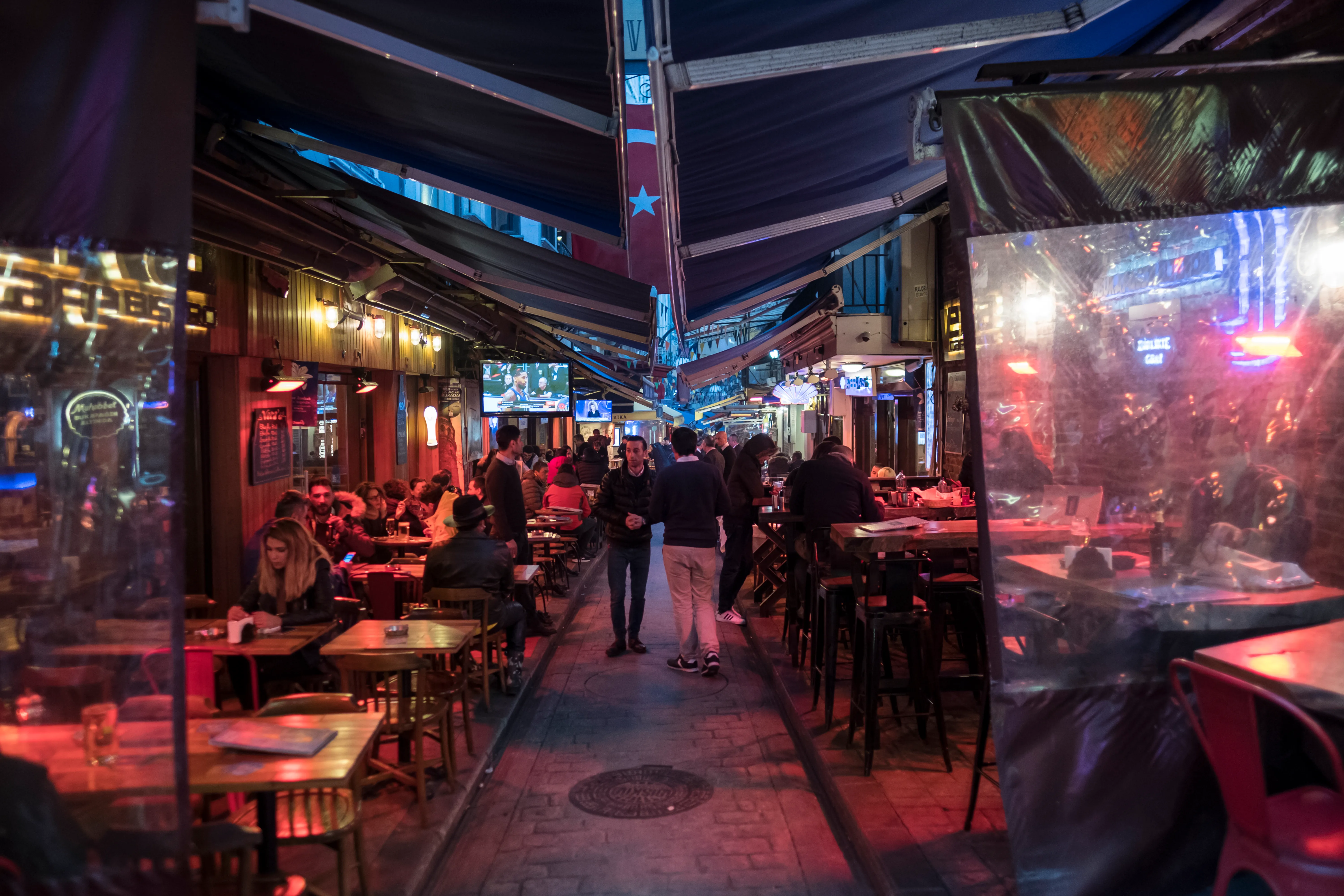
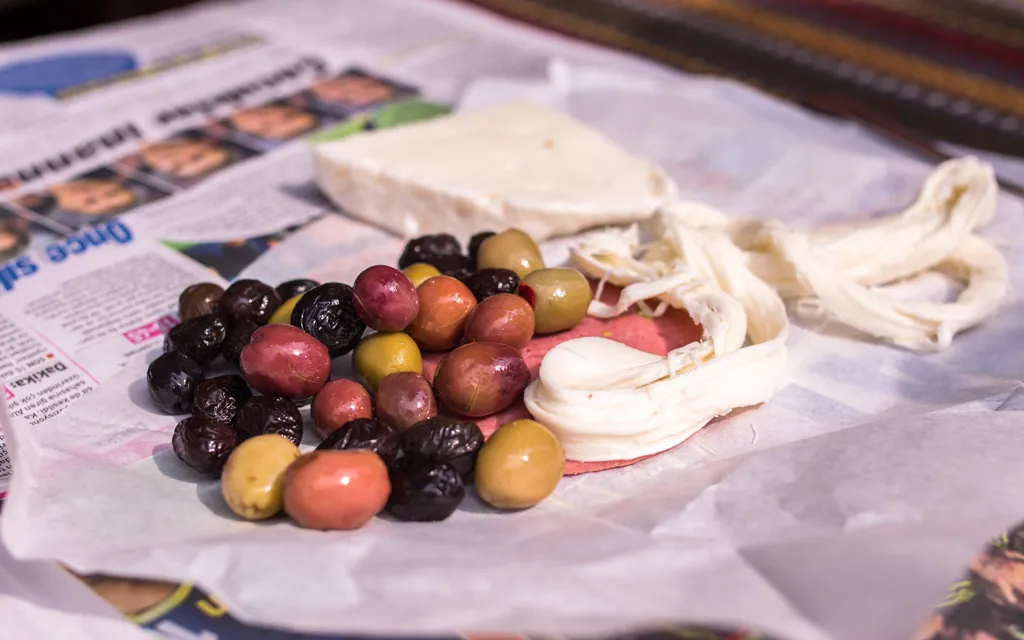
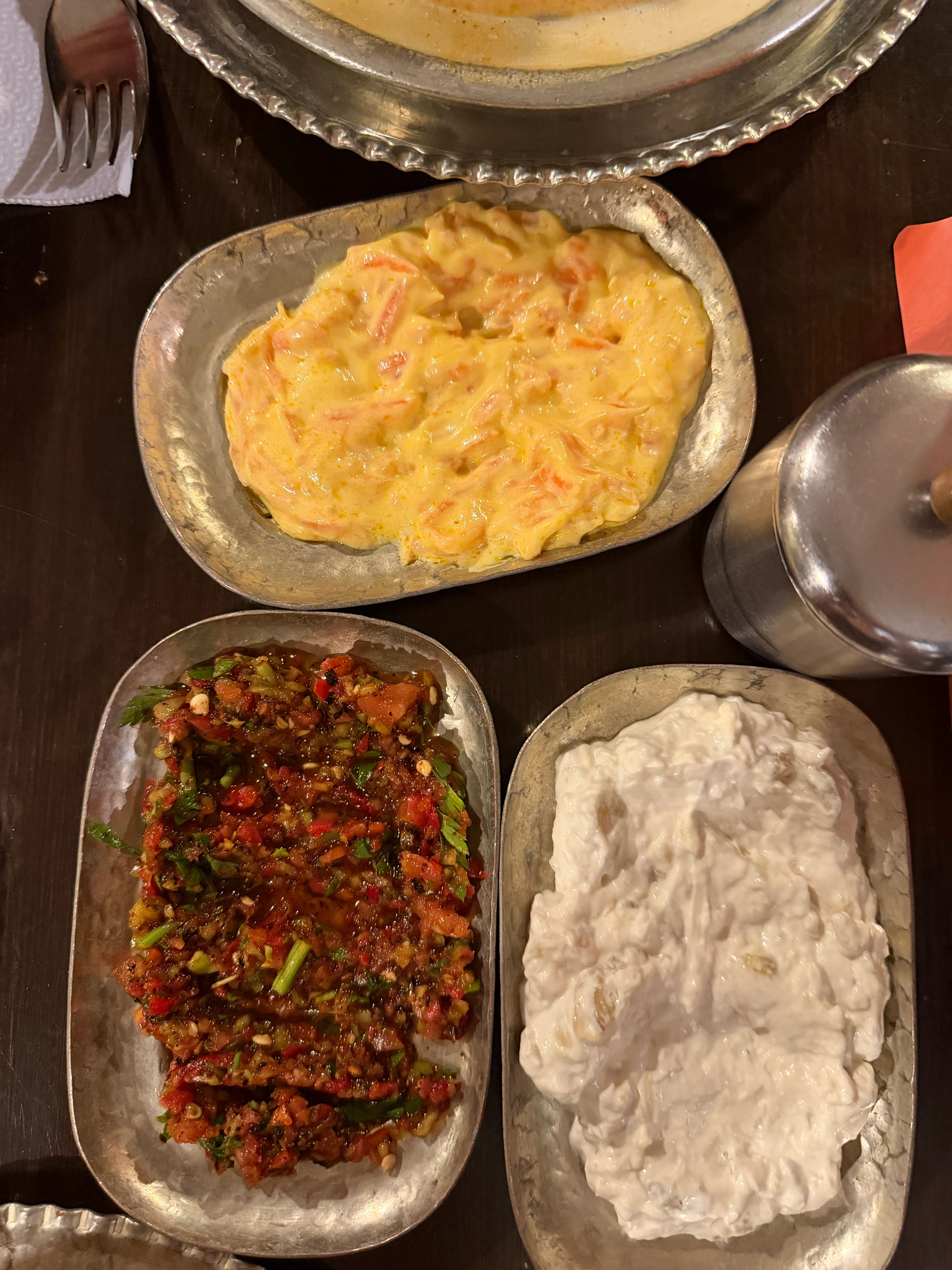
Around eight on a weekend evening in Istanbul, a waiter tilts a wide steel tray over your table: white cheese beside cold melon, a rose-pink slab of lakerda (salt-cured bonito), fava cut into neat cubes, haydari, sea beans dressed in olive oil and lemon. You point at three or four plates. Someone pours two fingers of rakı into a slim glass, tops it with cold water, and the pour blooms milky white, like weather rolling in.
This is the meyhane: an Istanbul tavern built around meze, conversation and, traditionally, rakı. A classic meal often follows a familiar sequence. Cold dishes come first, followed by optional hot plates and perhaps fish, while rakı is sipped across the evening. Our Turkish mezes guide covers the small plates one by one and explains where they fit, while our Istanbul meze restaurants guide covers where to try them. This page is about how the night works.
What a meyhane is for
A meyhane is a tavern where the food, the spirit, and the company share equal billing. The operating principle has a name, keyif, which translates loosely as unhurried pleasure: the state you reach when the table is full, the glass is cloudy, and nobody has anywhere else to be. Dinner is the excuse. The evening is the product.
That principle comes with a social contract. Traditional meyhane meals are usually leisurely, but table times and reservation slots vary by venue. Ask when booking, especially on busy nights. The check is commonly requested when the table is ready to leave. In return, pace yourself, share the plates, and treat the people at the table as the main event. The meyhane concentrates several qualities associated with Turkish food culture: shared dishes, long meals, and food as the engine of company.
The institution has deep roots, but its history is not an unbroken chain of identical taverns. Ottoman Istanbul’s port districts, especially Galata, became important drinking and dining areas, with many establishments associated with the city’s Greek, Armenian, and Jewish communities. Evliya Çelebi also described Galata as a district of taverns. The form changed through regulation, migration, and shifts in the city’s population; a Turkish academic study of Istanbul meyhane food from the 16th to the 20th century traces both continuities and change. Today’s word covers everything from formal old-school rooms with white-jacketed waiters to five-table neighborhood places where the owner cooks and pours.
The shape of the night, course by course
A traditional meyhane meal often moves from cold mezes to hot plates and an optional fish course, but the sequence varies by venue. In some classic rooms the cold mezes come to you on a large tray; elsewhere you choose from a refrigerated case or menu. Ask how plates are priced and whether you can add more later before filling the table.
| Stage | What arrives | How to handle it |
|---|---|---|
| The setup | Bread, two slim glasses per person, cold water, an ice bucket | Build the first rakı: spirit, then water, then ice if you take it |
| The cold tray | A selection such as white cheese, melon, fava, haydari, lakerda, and dressed greens | Start with three or four plates for two; ask whether you can add more later |
| Ara sıcak (the hot round) | Fried and seared small plates: calamari, sigara böreği (crisp cheese rolls), grilled hellim cheese | Order one or two once the cold plates slow down |
| The main | Usually a whole grilled fish, sometimes köfte or lamb | Decide late; skip it entirely if the table is full and happy |
| The close | Sliced fruit, sometimes a spoonful of helva, then Turkish coffee or tea | Let it land; ask for the check whenever you are ready |
Two details soften the structure. A light fruit plate may appear at the end, sometimes as a courtesy, but never assume an unpriced item is free if the distinction matters to you. And while the arc rarely reverses, it stretches: a table deep in conversation might pause a long time between the cold and hot rounds. That pacing is part of the broader meal culture described in our complete guide to Turkish cuisine.
The rakı ritual: the pour, the cloud, the pace
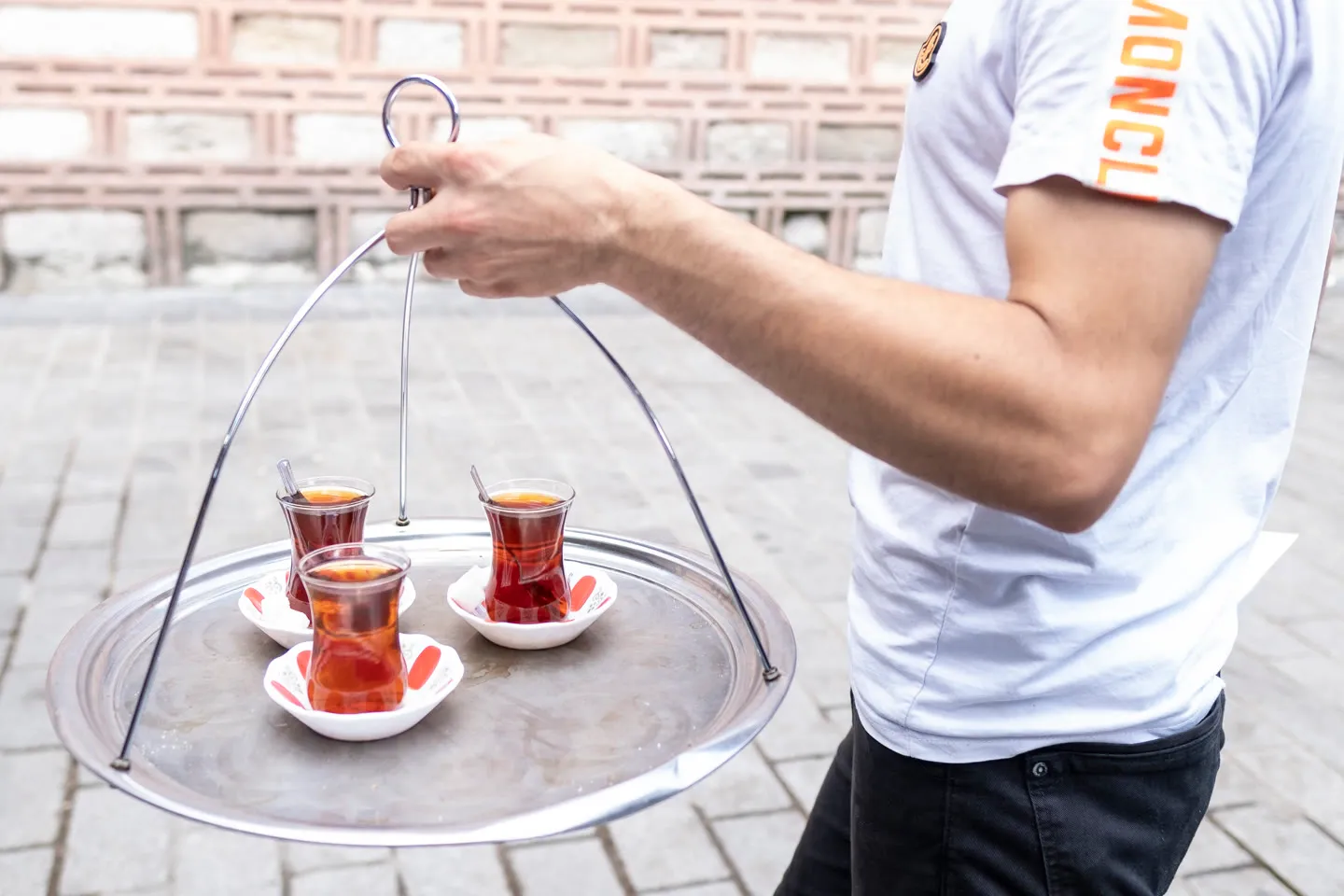
Rakı (spelled raki on English menus) is an anise-flavored grape spirit, and it comes with its own glassware and choreography. A drinker will often have two slim glasses: one for rakı and one for plain water. Many drinkers add rakı first, cold water second and ice last, if they use it. Water turns the clear spirit cloudy white; rakı is commonly nicknamed aslan sütü, “lion’s milk.”
Then it slows down, on purpose. Rakı is a full-strength spirit, and everything around it stretches the pace: food between sips, plain water alongside, and repeated toasts. You can order a tek or duble by the glass or share a sealed bottle. Some drink it sek, straight, with water on the side; many dilute it. Ask for the current bottle and glass prices before ordering, since brand and venue make a large difference. For the spirit’s full story, see our Turkish rakı guide.
Şerefe: the toast and the table’s manners
Şerefe is the usual toast. At many tables people make eye contact as glasses meet. Some drinkers also tap the glass lightly on the table; explanations for the gesture vary. Match the tone of your own table rather than worrying about a rigid script.
Two quiet courtesies carry the evening. Keep an eye on your neighbor’s water glass and match the table’s drinking pace loosely. No one should pressure you to drink more, and a kadeh of maden suyu, sparkling mineral water, can join the toast.
Fasıl: the music the room sings
Some meyhanes host fasıl on selected nights. An ensemble may include clarinet, violin, kanun (a plucked zither), and darbuka, but the lineup and format vary. The music may be seated or move table to table; in a participatory room, guests may sing along and the volume can rise as the evening develops.
Ask the venue whether requests are taken, whether the musicians move between tables, and whether there is a music charge or customary tip. Do not assume a meyhane includes a staged floor show; visitor-oriented “Turkish night” venues are a different format. For where a meyhane evening sits among the city’s other after-dark options, our guide to Istanbul at night maps the wider field.
How to order without over-ordering
Everything at a meyhane is small, inexpensive-looking, and easy to say yes to, which is exactly how tables end up buried under plates nobody can finish. A useful starting point for two people is three or four cold mezes and one or two hot plates, with any fish decided later. Start small; in many rooms you can add plates as the evening develops.
The fish deserves its own minute. Ask what came in that day and what is in season; the opening of our seafood restaurant guide gives you the local fish names. Whole fish may be priced by weight, so confirming the weight and total price before it goes to the grill is normal practice. If that course becomes your favorite chapter, the same guide goes deeper on fish-first rooms.
Expect the total to land in full-dinner-out territory, above an everyday lokanta lunch and below a hotel tasting menu. The two levers that move the check are the fish and whether the rakı comes by the glass or by the bottle.
Tourist meyhane or neighborhood meyhane: reading the room
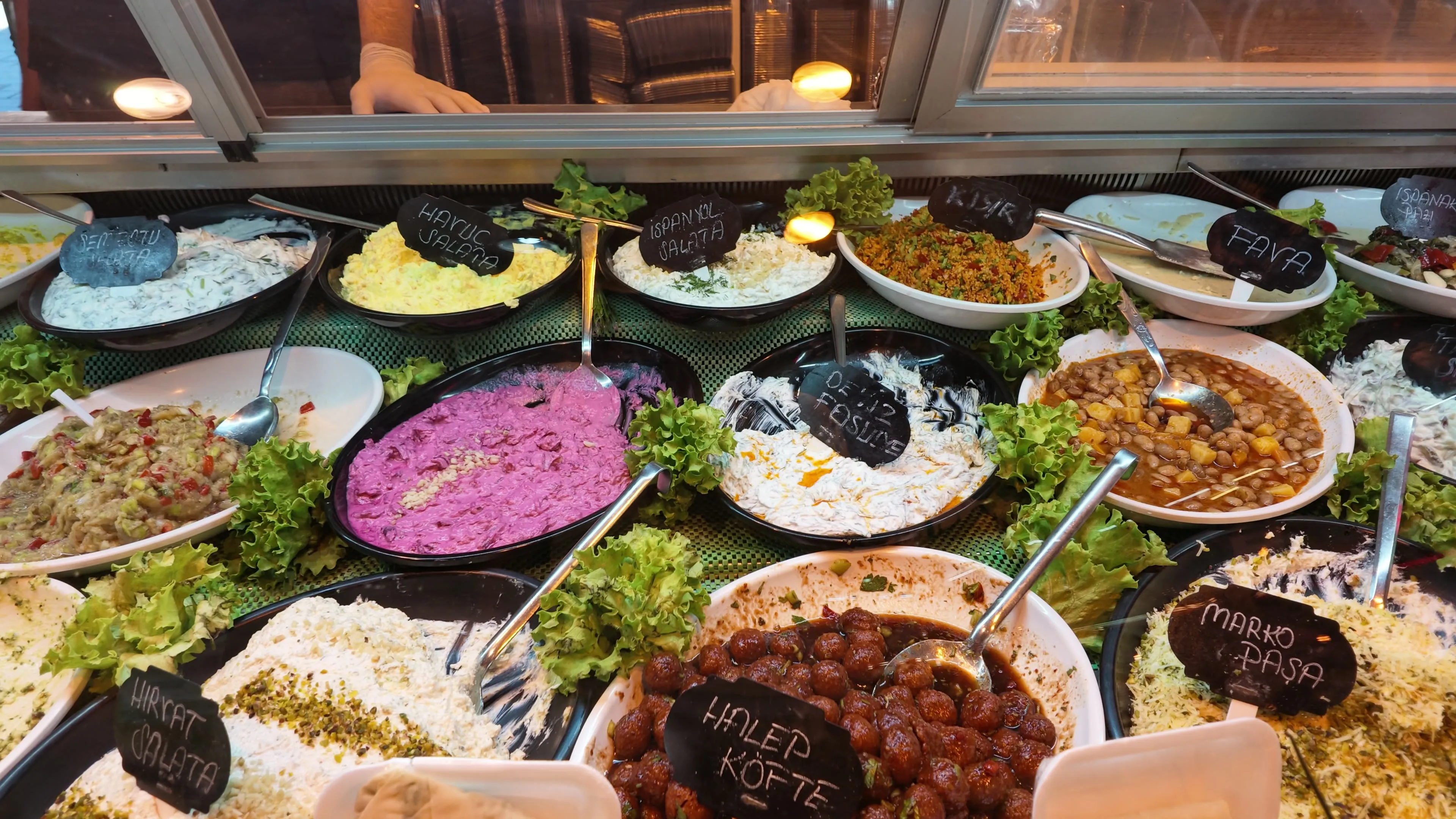
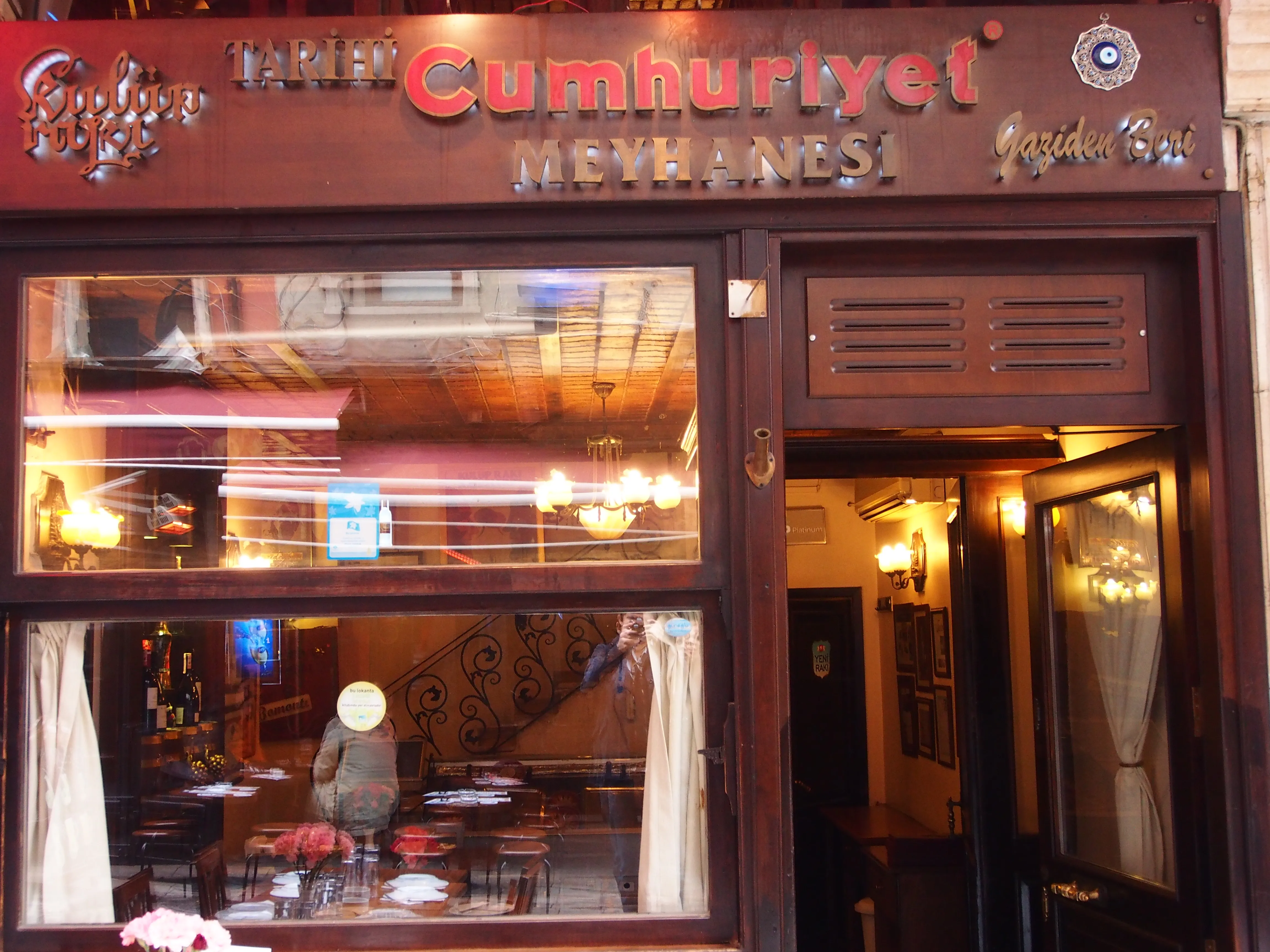
Both kinds exist, both can be a good night, and the difference shows before you sit down. On the busiest pedestrian lanes, meyhanes run at visitor rhythm: hosts out front, menus in six languages, courses landing fast. In residential districts the same institution runs slower, quieter, and more seasonally. Neither deserves shame; they sell different evenings.
| Signal | More visitor-facing clues | More neighborhood-style clues |
|---|---|---|
| Out front | A host may work the lane with menus | A smaller sign and less active street recruitment |
| The menu | Often photographed or multilingual | May be shorter, handwritten, or led by the counter |
| The cold tray | A fixed core lineup is more likely | Market-led changes may be more visible |
| The music | May be amplified and regularly scheduled | Fasıl may run only on selected nights |
| The crowd | Faster turnover is more likely | Longer meals are more common |
| The pace | Courses may arrive quickly or together | Rounds may be paced more slowly |
These are clues, not a scoring system. The famous strips can be honest fun: loud, lit, and easy to enter. Neighborhood rooms often ask for a reservation, some pointing at the tray, and patience between rounds. They can offer a more local pace in return. When you want names, the meze-restaurants guide linked above does the naming.
What tourists get wrong
- Drinking rakı like a shot. Rakı is a sipping spirit stretched across three or four hours of food. Knocking back a kadeh empties your night early and impresses nobody.
- Ordering the whole spread at once. Twelve plates arriving together means cold calamari and warm fava by hour two. Order in rounds where the venue allows it.
- Budgeting ninety minutes. A meyhane is the evening’s main event. Booking a show or a second dinner behind it guarantees you rush the best part.
- Expecting a belly dancer. Do not assume there will be a floor show. Entertainment varies: some rooms are conversation-led, some host fasıl, and visitor-oriented venues may offer staged shows. Check before booking.
- Skipping the water. Keep plain water alongside rakı, eat, and pace yourself, but remember that water does not prevent intoxication. Never drive after drinking.
Where to start
If a full meyhane night feels like a big first move, ease into the city’s evening food with company. Our Istanbul evening food tour explores Beyoğlu after dark through a progressive dinner. Check the tour page for current days, start time, menu, group size, and price. Then book a meyhane for another free evening and use this guide to pace the night.
FAQ
Do I have to drink alcohol at a meyhane?
No. The kitchen sends the same mezes whether your glass holds rakı or maden suyu, and mixed tables where some drink and some abstain are ordinary. Toast with whatever you are holding.
How long does a meyhane night take?
Allow roughly three hours for the full experience, longer if the table is settled in. You can eat a shorter meze dinner and leave sooner; just tell the waiter you want a quicker meal so the hot round is not paced for a long evening.
Do I need a reservation?
Reserve for Friday and Saturday nights, especially at small rooms. Weeknights are easier but not guaranteed. If live fasıl matters, ask the restaurant directly which nights the musicians play and whether there is a set menu or music charge.
How expensive is a meyhane night?
Think full-dinner-out territory: clearly above a casual lokanta meal, well below fine dining. Meze plates are individually modest, and the check is driven mostly by two choices, whether you order a whole fish (priced by weight, confirmed before cooking) and whether the rakı comes by the glass or by the bottle.