Best Areas to Stay in Istanbul for Food: 6 Neighborhoods Compared
Compare six Istanbul areas by food, hotel choice and travel time to Hagia Sophia, from local Kadıköy to balanced Karaköy and sight-first Sultanahmet.
Where you stay in Istanbul decides more than the length of your sightseeing commute. It decides what is open around you at breakfast, whether you can walk home after a meyhane dinner, and how much of each day disappears into transfers.
I have ranked six bases by food, then added the practical part that food guides often leave out: hotel choice, hills, noise, and the usual journey to Hagia Sophia. The ranking is our local judgment, based on where we eat and take guests. The transport routes and times are practical estimates, not promises from a hotel door.
First decide what matters most
If the trip is mainly about food, I would choose Kadıköy. The market, meyhanes, bakeries, coffee shops, and late-night counters sit inside a neighborhood where people still shop and eat as part of daily life.
For a first visit, my recommendation changes to Karaköy or the lower part of Galata. You get strong food around the hotel, a ferry to Kadıköy, and a direct tram to the old city. From Karaköy station, Sultanahmet is four stops on the T1 line. Allow about 15 to 25 minutes once walking and waiting are included. A hotel farther uphill in Galata will add time.
If the priority is Hagia Sophia, the Blue Mosque, Topkapı Palace, and the Basilica Cistern, stay in Sultanahmet. You can walk to the main sights early, return to the hotel during the day, and avoid commuting across the city. Food becomes the trade-off, so choose restaurants before you arrive.
The times below assume a hotel close to the useful pier, tram stop, or funicular. Istanbul blocks can involve steep hills, crowded platforms, and a wait for the next boat. Treat every range as planning time, not a timetable.
Six Istanbul bases at a glance
| Base | Our food rank | Best for | Typical trip to Hagia Sophia | Main trade-off |
|---|---|---|---|---|
| Kadıköy | 1 | Market eating, meyhanes, joining local life | About 30 to 50 minutes | Fewer hotels and a cross-water commute |
| Beyoğlu and Cihangir | 2 | Late dinners, meyhanes, nightlife | About 25 to 40 minutes | Tourist crowds, noise, and steep streets |
| Karaköy and Galata | 3 | The best food-and-sightseeing balance | About 15 to 30 minutes | Higher prices, weekend lines, and Galata’s hills |
| Beşiktaş | 4 | Local eating and good-value student favorites | About 30 to 45 minutes | No direct tram; connect through Kabataş |
| Fatih, Aksaray, and Beyazıt | 5 | Regional Turkish food near the old city | About 5 to 30 minutes | A broad area; hotel location matters |
| Sultanahmet | 6 | First-time sightseeing and early starts | About 0 to 10 minutes | Tourist-oriented food and higher restaurant prices |
1. Kadıköy: choose it when food comes first
Kadıköy has the strongest local food life of the six. The market quarter puts fishmongers, greengrocers, pickle shops, bakeries, lokantas, and meyhanes into a compact grid beside the ferry piers. Moda and Yeldeğirmeni add coffee shops, bakeries, and neighborhood restaurants without turning the whole area into a visitor district.
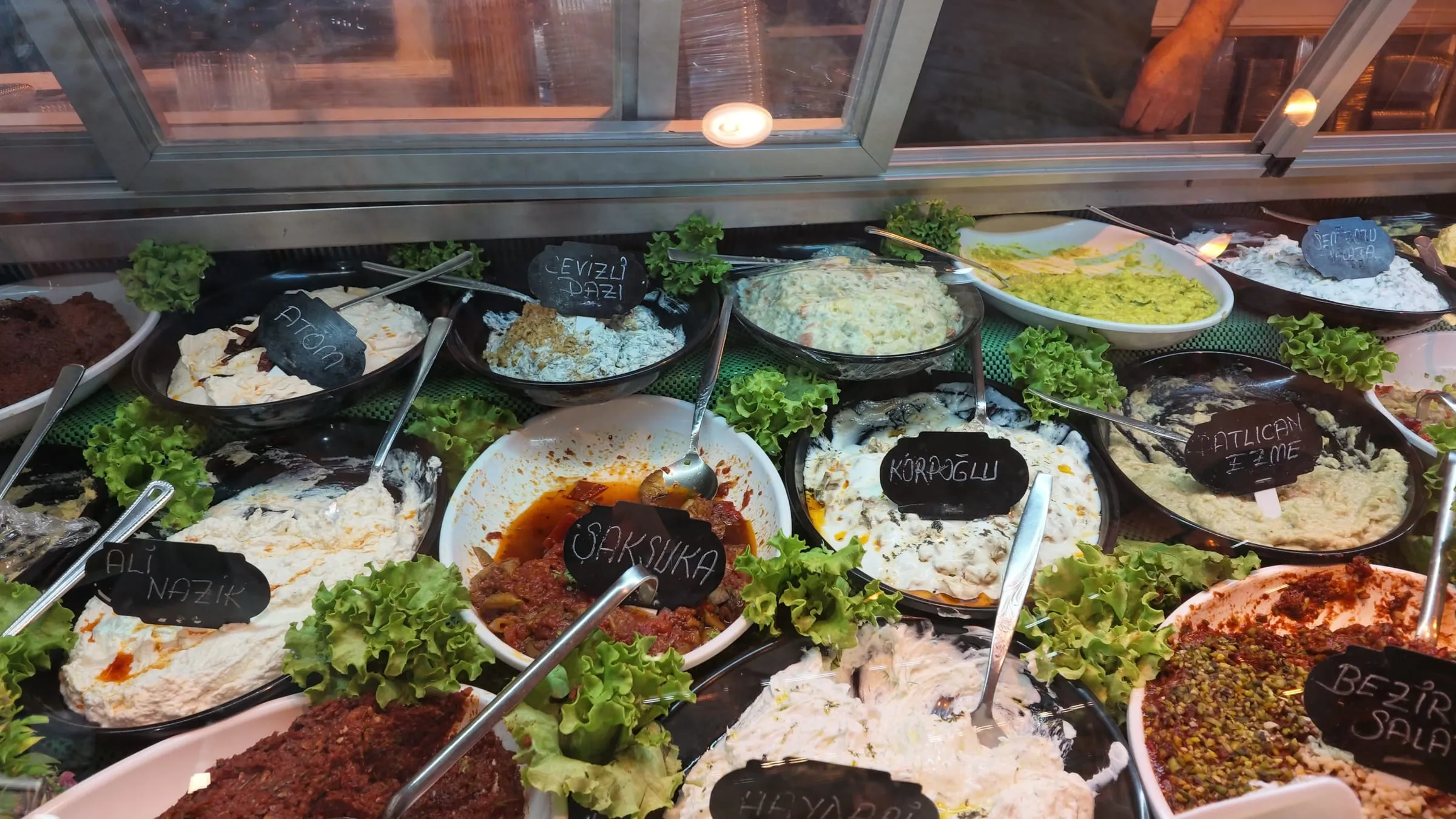
This is the place to stay if you want to join the local rhythm. Breakfast can be a simit or börek on the way out. Lunch comes from the steam trays at a lokanta. In the evening, you can sit down for meze and rakı without planning a return trip across the water. Our Kadıköy restaurant guide covers the places we rate highest around the market and nearby streets.
Kadıköy’s practical weakness is accommodation. There are hotels, but the choice is much thinner than in Sultanahmet, Karaköy, or around Taksim. That can mean fewer good options at the dates, comfort level, or price you want.
The old city is the other cost. The current Kadıköy, Karaköy and Eminönü ferry timetable shows how much of the journey is spent on the water before the final tram or walk. From a hotel near Kadıköy pier, allow roughly 30 to 50 minutes to reach Sultanahmet. A smooth connection can be quicker. Missing a boat can make it longer.
The rail alternative is useful too. Take the M4 metro one stop from Kadıköy to Ayrılık Çeşmesi, change to Marmaray, and get off at Sirkeci for the final walk or T1 tram to Sultanahmet. I would not count on a taxi saving time because the road route can be slower in traffic.
2. Beyoğlu and Cihangir: best for eating after dark
Beyoğlu works for travelers who want dinner to continue into the night. The streets off İstiklal hold meyhanes, ocakbaşı grills, regional restaurants, wine bars, and the late-night food around Taksim. Cihangir is quieter than the main avenue, with cafes and neighborhood restaurants on the slopes below the square. Our Taksim and Beyoğlu restaurant guide gives you a researched list instead of leaving you to choose from the busiest strip.
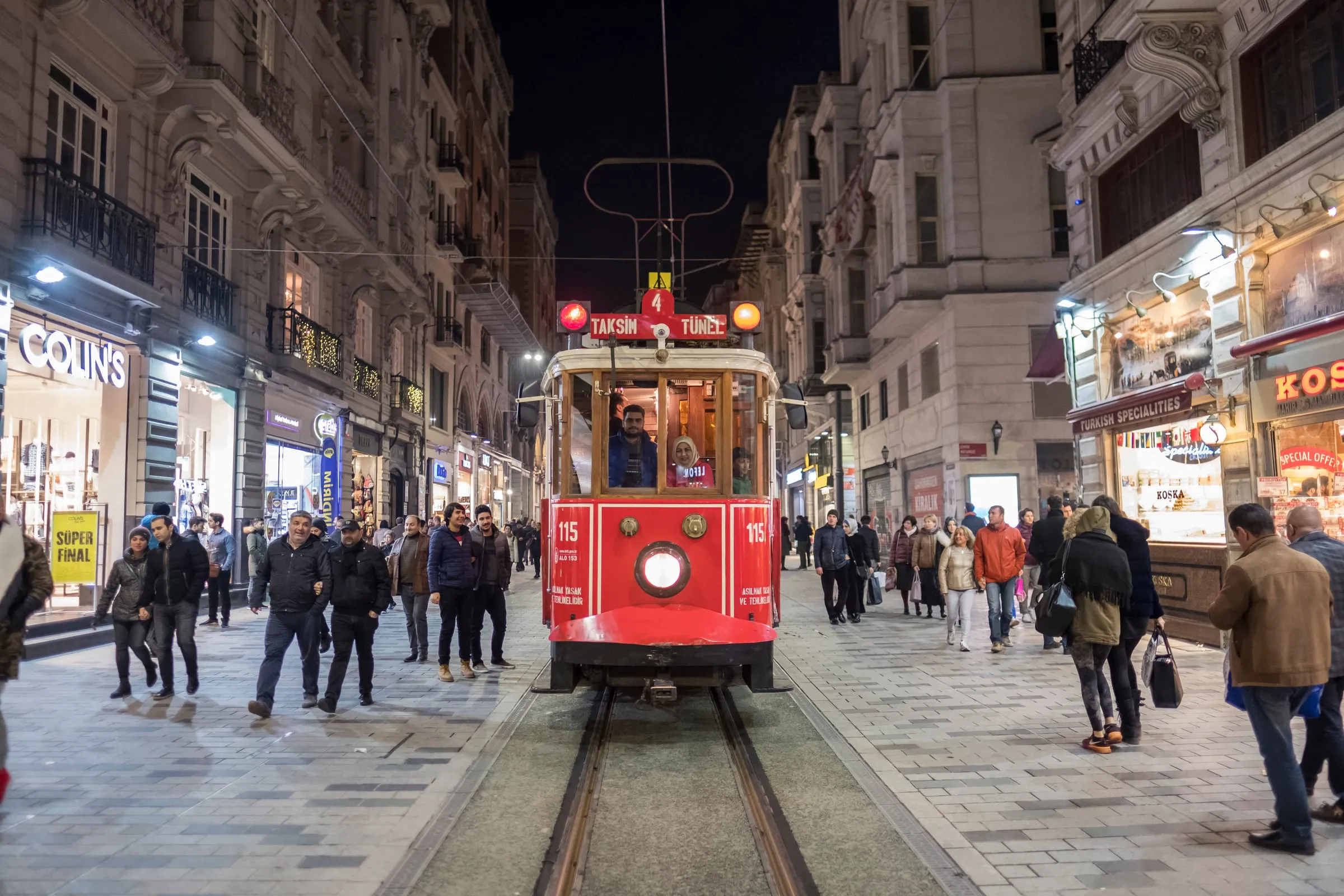
This is still a major visitor district. İstiklal is crowded, restaurant quality varies, and a room too close to the avenue can be noisy late into the night. The side streets are usually a better place to look for a hotel.
The hills matter as much as the noise. Cihangir, Galata, and the streets between the waterfront and İstiklal can be very steep. Check the hotel’s exact position before booking, especially if anyone in the group has limited mobility or you expect to return on foot after dinner.
For the old city, the F1 funicular connects Taksim with Kabataş in 2.5 minutes, where you can change to the T1 tram. The complete hotel-to-Hagia-Sophia trip usually takes longer because it includes walking and two waits.
3. Karaköy and Galata: the best first-visit balance
For a first trip, this is where I would start. Karaköy has lokantas, fish restaurants, baklava, cafes, and newer dining rooms within a short walk. Galata adds small restaurants and bars around the tower. Our Karaköy restaurant guide covers both everyday and special-occasion choices.
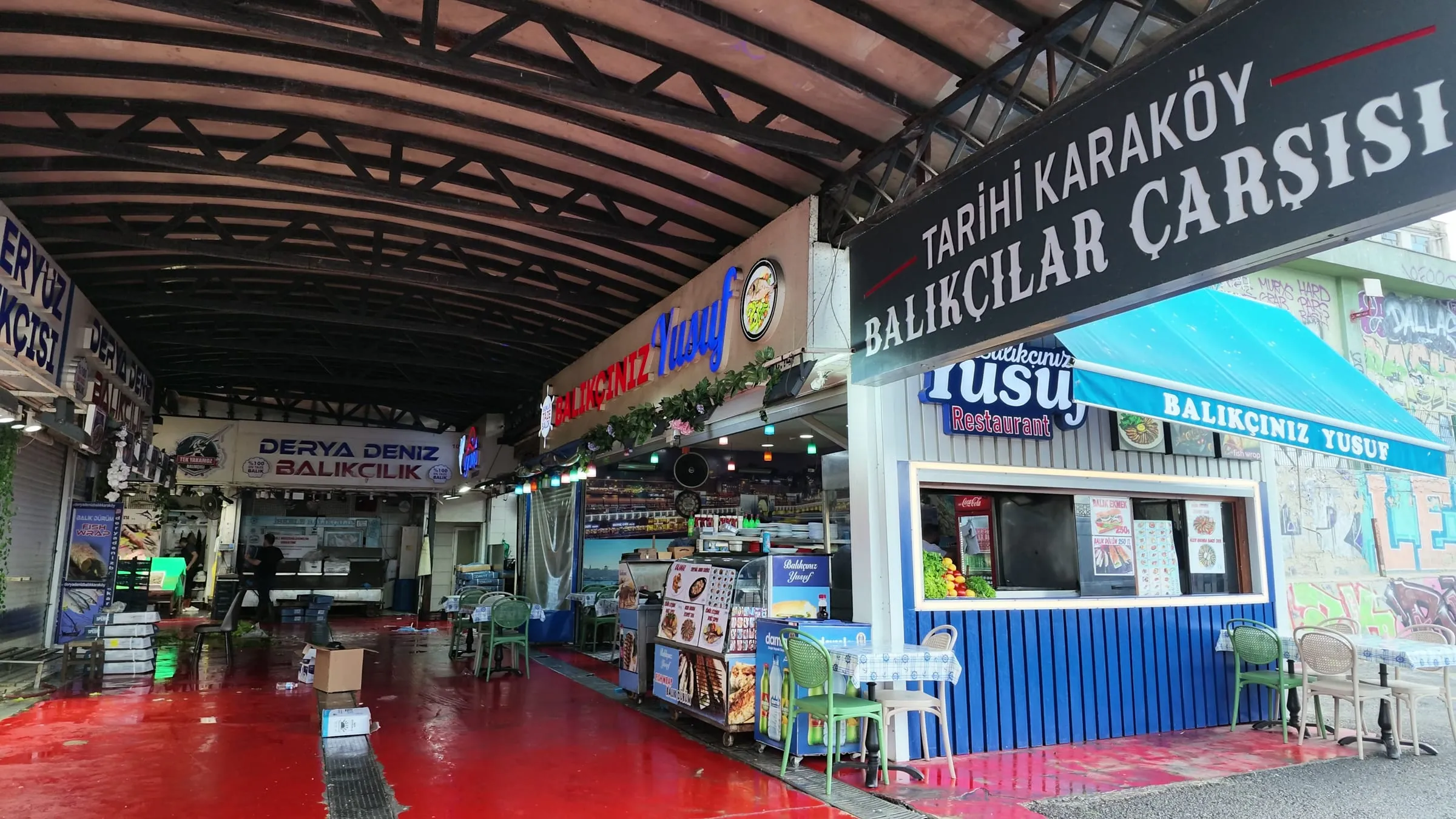
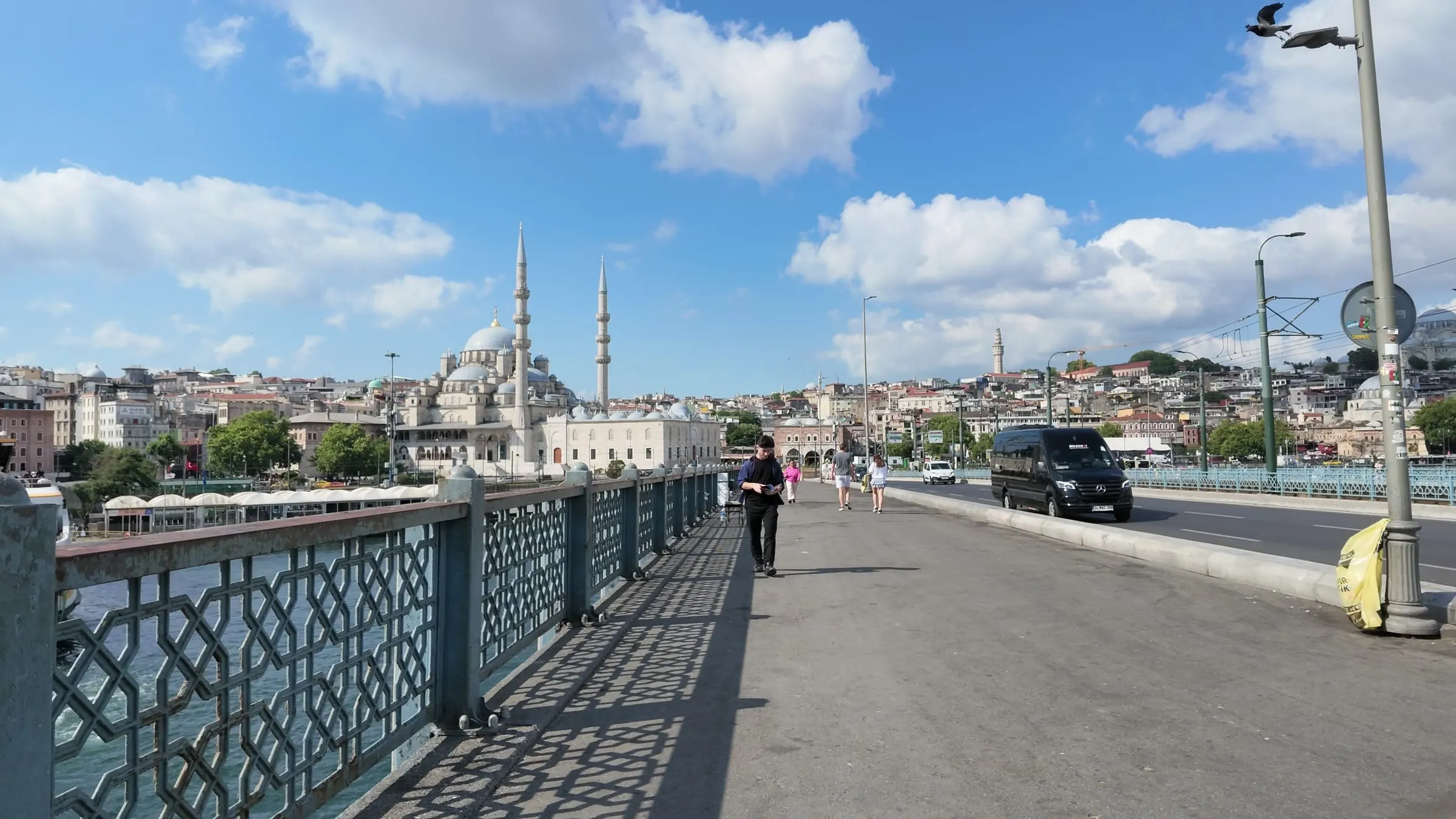
The location makes the case. The T1 tram runs directly from Karaköy to Sultanahmet. Ferries leave for Kadıköy, and walking across the Galata Bridge puts you in Eminönü beside the Spice Bazaar. You can spend the morning sightseeing, return without crossing half the city, and still have a good dinner close to the hotel.
Karaköy is no longer a cheap base. Hotel and restaurant prices have risen with its popularity, and well-known breakfast and bakery counters can have long weekend lines. Galata adds steep streets and uneven paving. A hotel close to the Karaköy tram and ferry stops is easier than one high above the tower, even when the map shows only a short distance.
4. Beşiktaş: local food at student-friendly prices
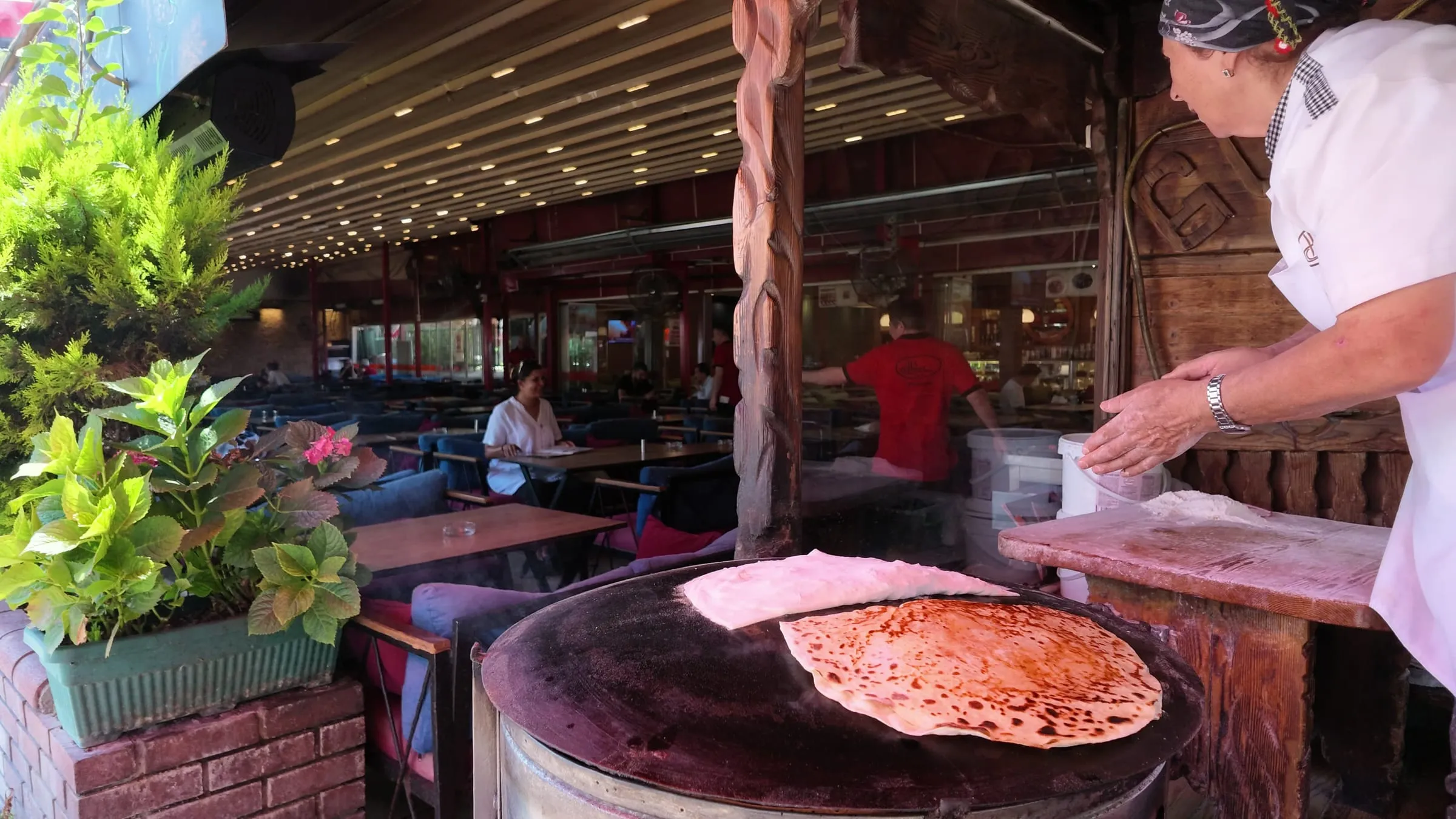
Beşiktaş feels local even though it sits on a busy part of the European shore. The streets around the fish market hold lokantas, breakfast places, köfte shops, bakeries, kokoreç, and stuffed-mussel counters. The area’s large student population helps keep plenty of good everyday food at lower prices than Karaköy or the main visitor zones. Use our Beşiktaş restaurant guide and cheap eats guide to narrow the choices.
The district has sights of its own, including Dolmabahçe Palace, and ferries keep the Asian side within reach. It is less convenient for repeated old-city mornings. The T1 tram begins at Kabataş, not Beşiktaş, so you first need to walk, take a bus, or use a short taxi ride to reach it. From Kabataş, the tram continues directly to Sultanahmet.
5. Fatih, Aksaray, and Beyazıt: regional food near the old city
Fatih needs a definition because Sultanahmet is technically inside the same large district. Here I mean the areas around Aksaray, Laleli, Beyazıt, the Fatih Mosque, and Kadınlar Pazarı, west of the main Sultanahmet visitor zone.
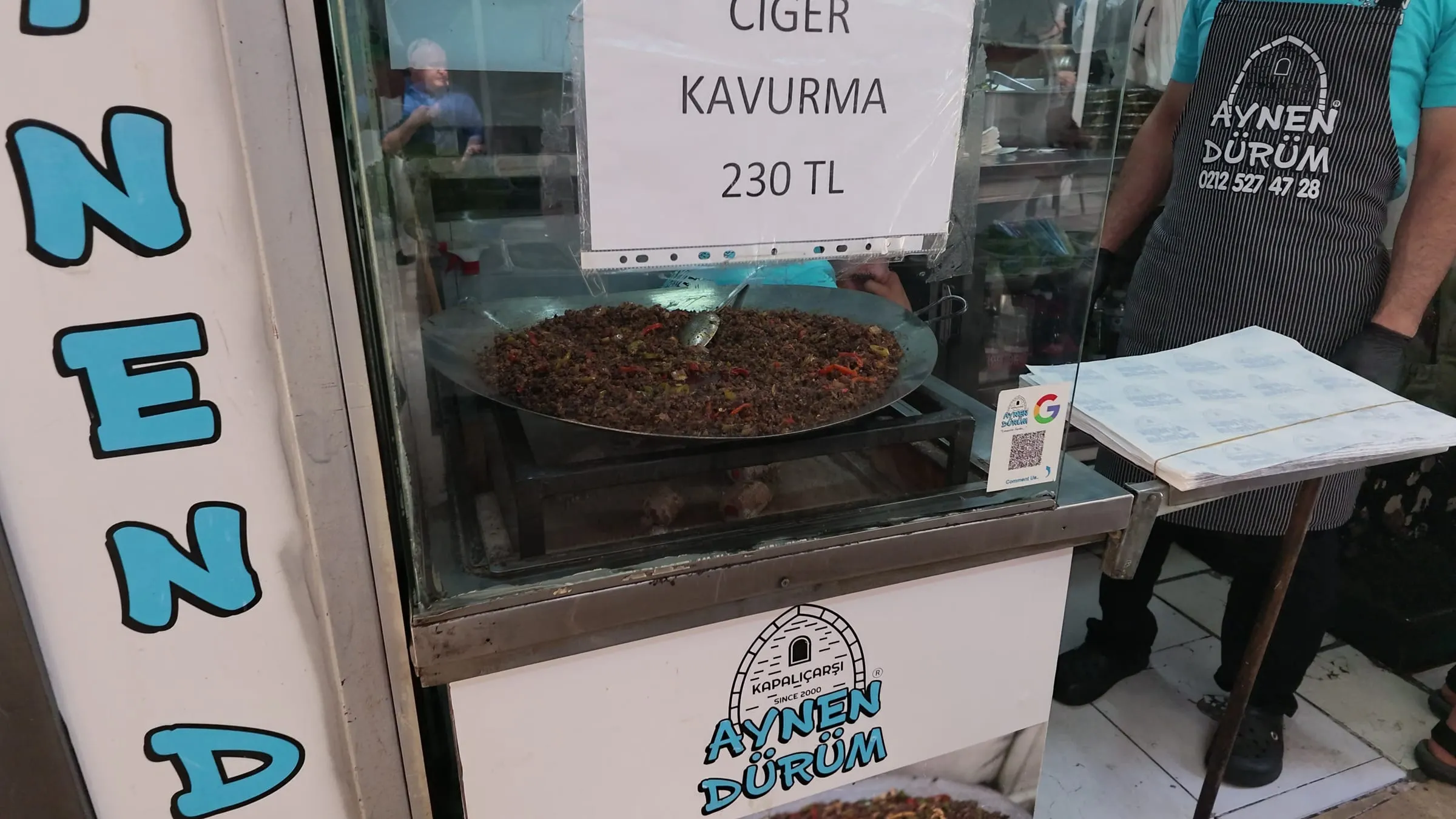
This part of the city is one of the better bases for regional Turkish cooking. You will find büryan lamb and other food from Siirt around Kadınlar Pazarı, Hatay cooking, kebab shops, pide ovens, soup restaurants, and busy lokantas serving nearby workers. Our Fatih restaurant guide is the place to start.
Beyazıt and Aksaray sit directly on the T1 line, so the ride to Sultanahmet can be short. The word “Fatih” covers a much larger area, though. A hotel that looks close on a booking map may require a hill, a bus, or a long walk before you reach the tram. Check the nearest station rather than relying on the district name.
6. Sultanahmet: choose it when sightseeing comes first
Sultanahmet is the easiest base for the first two days of a monument-heavy trip. Hagia Sophia, the Blue Mosque, Topkapı Palace, and the Basilica Cistern are within walking distance. You can start early, avoid a cross-city commute, and return to the hotel when you need a break.
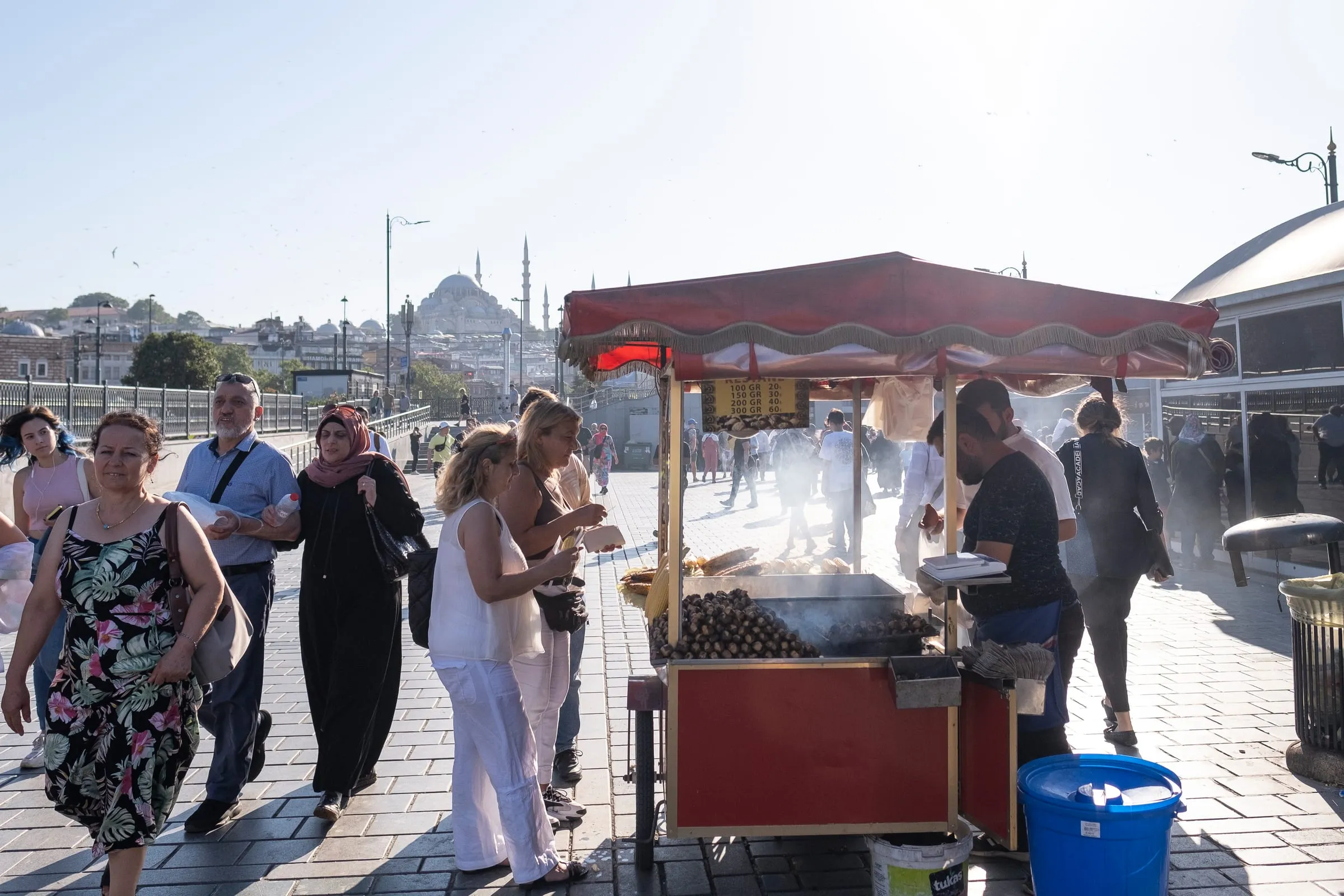
It ranks last here for everyday food. In my experience, the great majority of restaurants immediately around the main sights are designed for one-time visitors. The food can still be enjoyable, but the flavors are often softened for a broad audience and prices are higher than in local neighborhoods. Choosing the nearest restaurant when you become tired and hungry is the easiest way to end up with an average meal.
Good restaurants do exist in and around Sultanahmet. The difference is that you need to research them before sitting down. Our Sultanahmet restaurant guide lists the places we would choose, including options in nearby Sirkeci. Even walking several blocks away from the busiest square improves the choice.
What visitors often get wrong when booking
They spend the whole trip beside the monuments. If you have five or six nights and do not mind repacking, split the stay. Two nights in or near Sultanahmet are useful for the old-city sights. Spend the remaining nights in Karaköy for a practical balance, or move to Kadıköy if you want to eat and spend evenings among locals.
They eat every included breakfast at the hotel. Many Istanbul hotel rates include breakfast, and there is no reason to reject a good room because breakfast comes with it. Use it when it suits the day. Still, go out once or twice for a simit and çay, a plate of börek, or a proper neighborhood breakfast. An included buffet should not keep you inside every morning.
They compare neighborhoods only by straight-line distance. Water, hills, and transfers change the journey. Karaköy and Kadıköy can look close on a map, although the practical trip between them usually means a ferry or rail transfer. Cihangir and Galata can look close to the waterfront, but the climb back to the hotel changes how the distance feels.
They book a district name instead of an exact street. This matters most in Fatih, Beyoğlu, and Galata. Check the walk to the nearest useful tram, funicular, metro station, or ferry pier before comparing room prices.
FAQ
What is the best area to stay in Istanbul for food?
Kadıköy is our choice when food is the main priority. It has the strongest local market and meyhane life of these six areas. The compromise is a thinner hotel selection and roughly 30 to 50 minutes by public transport to Sultanahmet.
Where should a first-time visitor stay in Istanbul?
Karaköy or the lower part of Galata offers the best balance for most first-time visitors. Food is strong, Sultanahmet is on the direct T1 tram line, and ferries connect you with Kadıköy. Choose Sultanahmet instead if sightseeing is clearly more important than food and nightlife.
Is Kadıköy too far from Hagia Sophia?
It is manageable for one or two old-city days, but inconvenient if you plan to return to Sultanahmet every morning. Allow about 30 to 50 minutes from the Kadıköy pier area, using either the ferry route or M4 to Ayrılık Çeşmesi followed by Marmaray to Sirkeci.
Is Sultanahmet a bad place to stay for food?
No. It is simply the weakest food base in this comparison. There are good restaurants, especially when you include nearby Sirkeci, but the concentration of visitor-oriented menus means you should choose before you arrive rather than picking the closest table.
Is it worth splitting an Istanbul stay between two neighborhoods?
Yes, especially with five nights or more. Two nights near Sultanahmet make sightseeing easy. Karaköy is the practical second base, while Kadıköy gives the more local food experience. Keep one hotel if packing and moving would cost more energy than the change is worth.
If you want to understand the difference before choosing a hotel, the Taste of Two Continents tour starts on the European side, crosses by ferry, and continues through Kadıköy’s market streets. It is a useful way to see how differently the two sides eat before deciding where to spend the rest of the trip.